
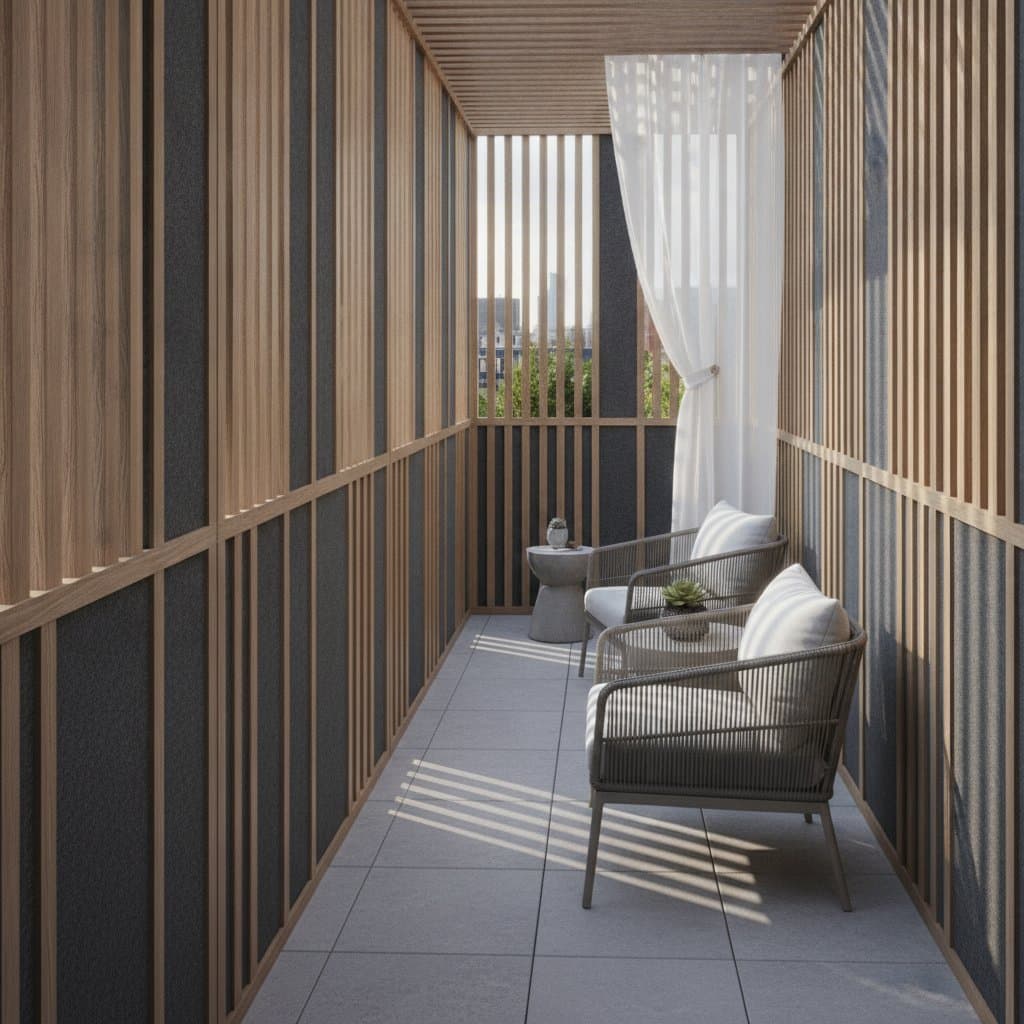
Acoustic Screens Turn Balconies Into Quiet Retreats
Acoustic screens reduce urban noise on balconies by absorbing and blocking sound waves. These panels create private outdoor spaces while preserving airflow and natural light. Proper selection and installation determine how much noise reduction occurs.
How Acoustic Screens Work
Sound travels through air and reflects off hard surfaces. Acoustic panels trap sound energy in porous materials. This process lowers volume from traffic, neighbors, and street activity.
Effective screens combine dense cores with weather resistant outer layers. The core absorbs mid and high frequency sounds. The outer layer blocks wind and moisture without trapping heat.
Material Options
Mineral wool offers strong sound absorption and fire resistance. Recycled polyester fills provide similar performance at lower weight. Both materials maintain effectiveness after repeated exposure to rain when protected by an outer cover.
Choose fabrics such as solution dyed acrylic or coated polyester for the exterior. These resist fading and mildew. Avoid untreated cotton or thin mesh that allows water penetration.
Installation Steps
Measure the railing height and width before ordering panels. Order panels slightly larger than the opening to ensure full coverage.
- Attach mounting brackets to the railing posts with stainless steel clamps.
- Hang the first panel from the top brackets and secure the bottom edge.
- Align adjacent panels so edges overlap by at least two inches.
- Check that all fasteners sit flush to prevent fabric tears.
5. Seal the Gaps
Check corners and seams. Fill small openings with foam tape or flexible caulk. Even tiny gaps can let high pitched noise slip through. A continuous surface is the key to real sound reduction.
6. Test and Adjust
Sit outside for a few minutes once panels are up. Listen for lingering sound from one direction. If it feels louder on one side, add a narrow strip of acoustic foam or a potted plant wall there. Dense greenery adds another layer of absorption.
Safety Considerations
Do not block emergency exits or stairways with panels. Keep at least six inches between any open flame or grill and the screen. Use stainless or galvanized hardware to avoid corrosion. Check weight ratings before attaching heavy panels to railings.
Common Issues and Solutions
Panels sag after rain. Tighten upper fasteners and add a mid level support bar. Moisture can stretch fabric slightly over time.
Sound still leaks from below. Add a small base skirt made from the same acoustic fabric. Attach with hook and loop tape so it can be removed for cleaning.
Wind shakes panels. Add cross braces between clamps or use bungee cords to secure lower corners. Movement causes noise and shortens fabric life.
Project Planning
A small balcony project takes about three hours to complete once all materials are ready. Two people can finish faster and safer.
Cost breakdown:
- Acoustic panels: 100 to 200 dollars
- Mounting hardware: 20 to 50 dollars
- Fabric cover and ties: 30 to 50 dollars
To save money, reuse a metal trellis as a frame or choose recycled acoustic mats. Avoid cutting costs on fasteners or waterproof fabric, since these parts control durability.
Ongoing Care
Inspect panels every few months. Brush off dust and pollen with a soft broom. For deeper cleaning, use mild soap and water on the fabric surface. Let panels air dry fully before reattaching.
If you live in a humid area, spray a light coat of fabric protector once a season to prevent mildew. Store removable panels indoors during long absences or heavy storms. This keeps both the acoustic fill and outer cover in good shape for years.
Moving Forward
Begin with the side that faces the most noise. Add soft touches such as outdoor rugs, cushions, or hanging plants to absorb more sound. Consider upgrading to decorative acoustic panels made from bamboo fiber or recycled felt once the basic system proves effective. The result is a balanced space that offers privacy and calm while remaining open to light and air.