
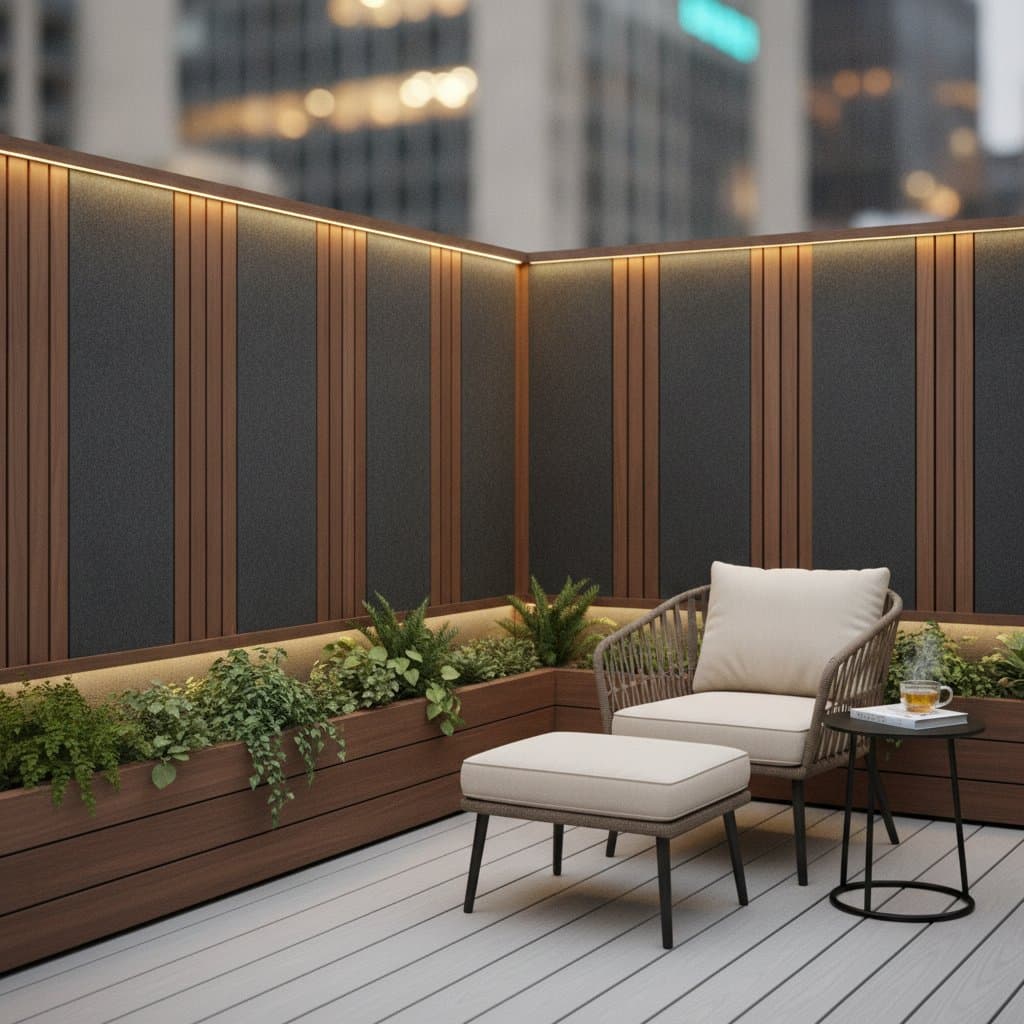
Block Noise on Your Deck with Acoustic Privacy Panels
City decks should feel like small escapes, not echo chambers for traffic and neighbor sounds. Acoustic privacy panels restore calm by absorbing and scattering sound waves. This guide explains their function, suitable materials, and safe installation methods.
Overview
Acoustic privacy panels serve as sound absorbing barriers. They use dense or porous materials to limit noise travel across outdoor spaces. These panels reduce echoes and background noise without creating complete silence.
The result is a more shielded deck area suitable for reading or conversation. Readers will learn material selection, mounting techniques, and seasonal maintenance practices.
Why It Matters
Outdoor noise influences stress levels and rest quality. Panels lower sound pressure through absorption. Even a modest reduction improves clarity during conversations.
Proper installation also provides added privacy and shade. The finished appearance enhances the overall deck structure.
Tools and Materials
Common tools suffice for a complete sound barrier. Prepare all items in advance.
Tools:
- Tape measure of at least 25 feet
- Power drill with driver bits
- Level for alignment
- Utility knife or shears
- Gloves and safety glasses
Materials:
- Acoustic panels with an NRC rating of 0.7 or higher
- Weatherproof wood or metal mounting frame
- Outdoor fabric or vinyl for protection
- Galvanized screws or bolts measuring 2 to 3 inches
- Sealant for edges and joints
Space one panel every 3 to 4 feet along the primary noise source.
Steps
Follow these steps for secure and effective installation.
Step 1: Measure and Plan
Measure the length and height of the railing or wall. Mark panel positions with gaps under 1 inch. Create a sketch of the layout prior to cutting.
Step 2: Build or Place the Frame
Secure the frame to existing posts or walls. Maintain a minimum height of 6 feet. Verify level alignment before final tightening.
Step 3: Mount the Panels
Position panels within the frame. Fasten with screws every 12 inches. Request assistance for heavier panels during placement.
Step 4: Seal and Cover
Apply sealant around all edges. Wrap with weatherproof fabric stretched tightly. This protects the core from moisture.
Step 5: Test and Adjust
Play a sound source on the deck to check performance. Add extensions if reflections persist. Minor changes often improve results noticeably.
Safety Tips
Wear gloves and eye protection during cutting or drilling. Use a stable ladder for elevated work. Confirm the absence of electrical lines before wall attachment. Request help to handle large materials.
Troubleshooting
Small issues may arise after installation.
Issue: Gaps at the bottom
Install a treated wood baseboard or rubber strip to close openings.
Issue: Panels vibrating in wind
Tighten all screws and add corner brackets for stability.
Issue: Moisture inside panels
Remove the cover, allow full drying, and reseal seams with drainage holes facing down.
Maintenance
Keep panels dry and clean for extended service life. Wipe surfaces with mild soap and water regularly. Inspect seams and fasteners twice each season.
Replace damaged fabric promptly. Avoid pressure washing mineral wool or fiberglass cores. Use a soft brush or vacuum instead.
Storage
Consider removable panels in harsh winter climates. Label each panel, unbolt them, and store flat in a dry location. Allow airflow between stacked layers. Inspect frames for damage before reuse.
Budget and Time
A 12 foot by 6 foot barrier costs between 250 and 600 dollars. Higher density materials provide better absorption at increased cost. Two people complete installation in 4 to 6 hours.
A cost saving approach uses recycled pallets with acoustic blankets rated at NRC 0.6. Upgrade to permanent panels later as needed.
When to Call a Pro
Engage a licensed contractor for attachment to brick or shared structures. Verify load capacity and waterproofing requirements. Check local codes for exterior barriers in multi unit buildings. A sound engineer can assess specific density needs.
Seasonal Reminders
- Spring: Tighten hardware after temperature shifts.
- Summer: Remove pollen and dust to maintain fabric performance.
- Fall: Clear debris from bases to prevent moisture buildup.
- Winter: Prevent snow accumulation against panels.
Consistent care preserves absorption effectiveness throughout the year.
Planning Your Installation
Begin by identifying primary noise directions from the deck. Measure affected sections and select one dense panel per 3 feet. Gather appropriate tools and weather rated materials to complete the project.