
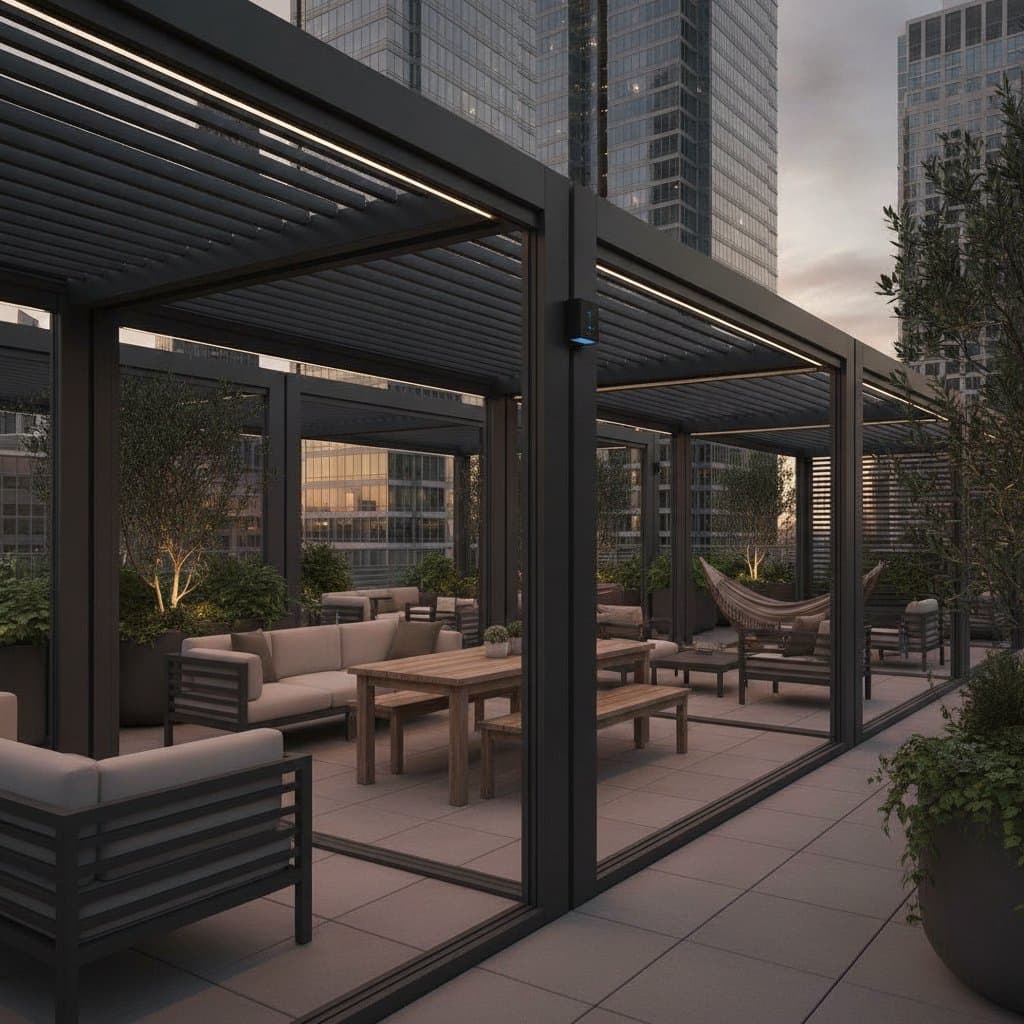
Installing Adjustable Louvers and Panels
Slide or clip the louvers into the frame tracks. Certain systems rely on pivot rods fitted with small bearings while others use brackets that snap directly into place. Verify smooth operation before completing any final tightening.
If a panel binds during movement, loosen the fittings slightly and realign the components. Even spacing allows every louver to tilt without restriction.
For motorized versions, attach actuator arms and sensors only after confirming manual motion. Cycle the system through open and closed positions multiple times to confirm reliable performance.
Adding Functional Accessories
Attach side curtains or privacy screens to block low sun angles during late afternoon hours. Select UV resistant fabrics rated specifically for exterior exposure.
Route lighting cables along interior beams using clips rather than adhesive tape. This method keeps wiring organized and permits straightforward removal during cleaning or future upgrades.
Testing Performance and Fine Tuning
Operate each louver through its complete range of motion. Observe shadow patterns at various times of day and adjust tilt angles by small increments until light and airflow reach a comfortable balance.
Record effective settings for different activities such as morning coffee or evening meals. These notes allow quick return to preferred configurations.
Essential Safety Measures
- Anchor every post firmly before adding overhead components.
- Use a ladder or scaffolding instead of climbing on the frame.
- Apply sealant to all cut edges of metal or wood to block corrosion and rot.
- Connect motorized elements to a ground fault circuit interrupter outlet.
- Keep open flames and heaters away from fabric and wood surfaces.
Common Issues and Solutions
Panels that stick or squeak respond well to cleaning pivot points with mild soap and water followed by a silicone spray lubricant. Avoid oil based products that attract dust.
A frame that shifts in wind requires inspection of anchor bolts and base plates. Tighten hardware and add diagonal bracing under beams if movement persists.
Water that pools on panels indicates insufficient tilt. Increase the angle to at least five degrees and clear any debris from drain holes.
A motor that stops during operation calls for power disconnection followed by removal of obstructions in the track. Reset the control system once the path is clear. Repeated failures warrant professional service.
Cost and Schedule Expectations
A single ten foot pod typically requires a weekend and two people. Assembly usually occupies six to eight hours including setup and cleanup.
Material costs generally fall in these ranges. An aluminum frame kit runs from eight hundred to twelve hundred dollars. Motorized upgrades add four hundred to eight hundred dollars. Anchors, sealant, and hardware total eighty to one hundred fifty dollars. Optional lighting or screens range from one hundred to three hundred dollars.
Professional installation adds five hundred to one thousand dollars depending on height and surface conditions. Rooftop sites with restricted access often justify this expense for safety and warranty protection.
Ongoing Care Routine
With regular attention a modular pergola pod can serve ten to twenty years. Follow a seasonal schedule.
Every three months wipe louvers with a soft cloth and mild detergent. Replace any corroded bolts and clear joints and drains of debris.
Once each year inspect wiring and waterproof seals. Reapply protective coatings on metal surfaces and tighten all fasteners after major storms.
Wood frames need resealing with a UV rated finish every two years. Aluminum surfaces require only non abrasive cleaning to maintain appearance.
Winter Storage Practices
In regions with severe winters bring removable panels and curtains indoors. Label each piece with masking tape to speed reassembly. Store hardware in separate small containers grouped by module.
Place remote controls and sensors in a plastic bin and remove batteries before storage. Cover fixed frames with breathable tarps to limit dust accumulation.
Situations Requiring Professional Help
Engage a professional when the structure occupies a high or uneven rooftop. Electrical connections to building power also call for expert handling. Areas with frequent winds above fifty miles per hour need certified load ratings and anchoring methods.
Renters should review building regulations before any drilling or permanent attachment.
Seasonal Adjustments
In spring clean drains and verify louver movement ahead of heavy rains. Check for joints loosened by winter temperature changes.
During summer shift shade angles weekly to reduce midday glare and examine motor cables for sun damage.
In fall clear tracks of debris and lubricate moving parts. Lower louvers slightly to encourage water runoff.
In winter close louvers during snow or ice events and protect remote sensors when not in use.
Planning Your Outdoor Upgrade
Measure available space and note daily sun patterns before ordering components. A modular approach lets you begin with one pod and expand as needs change. Consistent maintenance preserves both function and appearance for many seasons of comfortable outdoor use.