
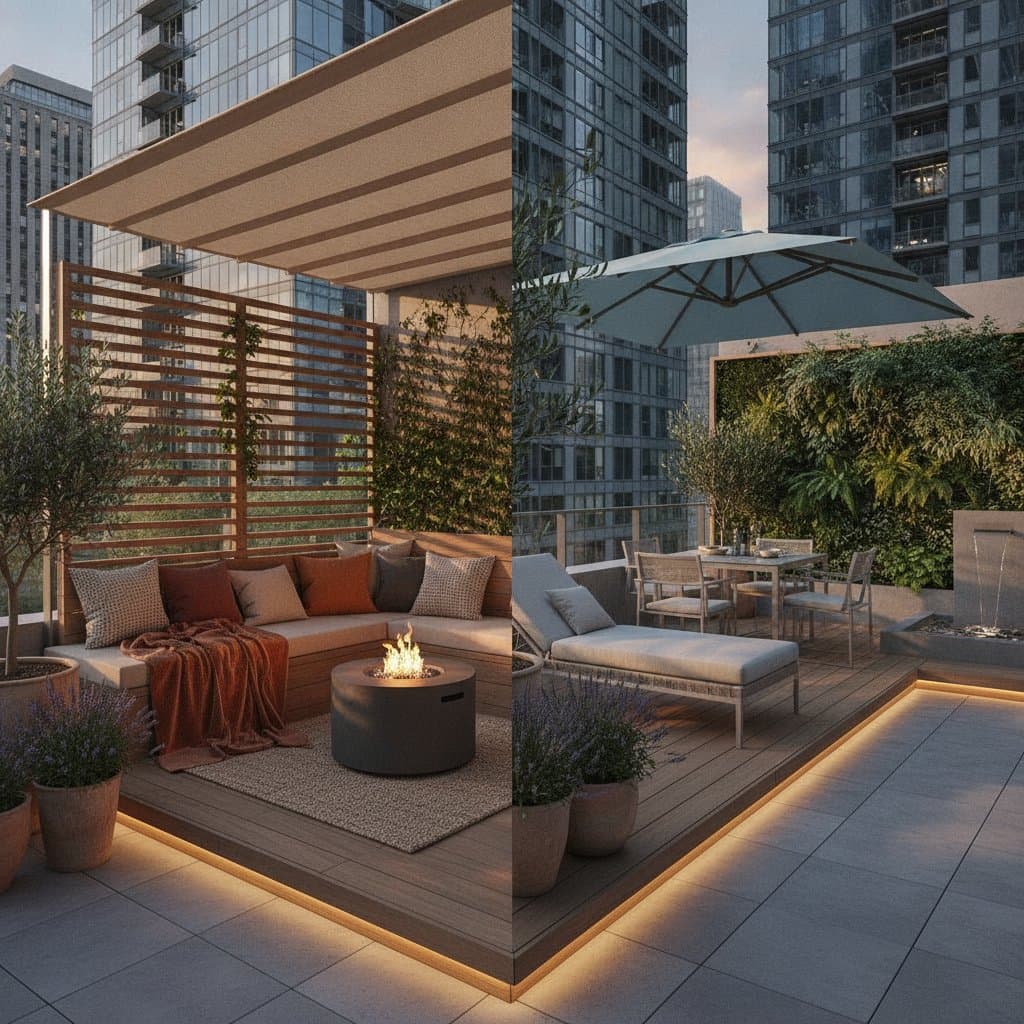
Create Warm and Cool Zones on Your City Balcony
Balconies in urban settings often face uneven exposure to wind, sun, and temperature shifts. Dividing the space into distinct microclimate zones allows each area to serve a purpose throughout the year. This approach relies on targeted barriers, surface choices, and layout decisions rather than major construction.
Assess Your Balcony Conditions First
Measure wind direction at different times of day and note which sections receive direct sun for the longest periods. Observe how rain and shadows from nearby buildings affect specific corners. Record these patterns over several days to identify the most sheltered and exposed spots.
Use a simple notebook or phone photos to map hot spots and drafty edges. This baseline information guides every subsequent change and prevents wasted effort on ineffective additions.
Block Wind with Layered Barriers
Install vertical screens or tall planters along the windward edge to reduce gusts without blocking all airflow. Choose materials such as woven reed panels or dense evergreen shrubs in containers that can withstand constant exposure. Position the tallest barriers at the outer rail and step down heights toward the interior.
Add a second layer of protection with outdoor curtains or folding screens that can be adjusted seasonally. These movable elements let you fine tune airflow on mild days while providing full enclosure during storms. Seal gaps at the floor level with draft stoppers made from rolled towels or foam strips covered in weather resistant fabric.
Balance Light and Shade
Mount retractable awnings or pergola panels over seating areas that receive intense afternoon sun. Select light colored or reflective fabrics to reduce heat absorption. On the opposite side, keep an open zone for morning light by avoiding overhead covers.
Introduce potted trees or trellises with climbing vines to create filtered shade that still permits air movement. Rotate container plants regularly so growth remains even and does not unintentionally block desired light in other zones.
Add Insulation and Heat Retention
Lay outdoor rugs or interlocking deck tiles over cold concrete or metal flooring to create warmer surfaces underfoot. Choose dense materials such as wool blends or woven synthetics that retain heat after sunset. Place low benches or storage ottomans filled with insulating foam along the coolest edges.
In cooler months, set up a small radiant heater focused on one seating cluster rather than attempting to warm the entire balcony. Pair the heater with a windbreak to keep warmth localized and reduce energy use.
Arrange Furniture for Zone Function
Group seating into clusters that match each microclimate. Position a dining table in the most sheltered corner where wind is minimal and shade is consistent. Place a lounge chair in a sunnier section for cooler mornings when extra warmth is welcome.
Keep pathways clear between zones so movement remains comfortable. Use lightweight, stackable pieces that can be shifted as seasons change. Store cushions and throws in a sealed bench to protect them from sudden weather shifts.
Maintain Comfort Across Seasons
Check barriers and coverings each month for wear and tighten any loose fittings before storms arrive. Clean rugs and cushions regularly to prevent moisture buildup that reduces insulating value. Adjust plant placement in spring and fall to match shifting sun angles.
These incremental adjustments keep each zone functional without requiring complete redesigns. Over time the balcony becomes a reliable extension of indoor living space that supports different activities in every season.