
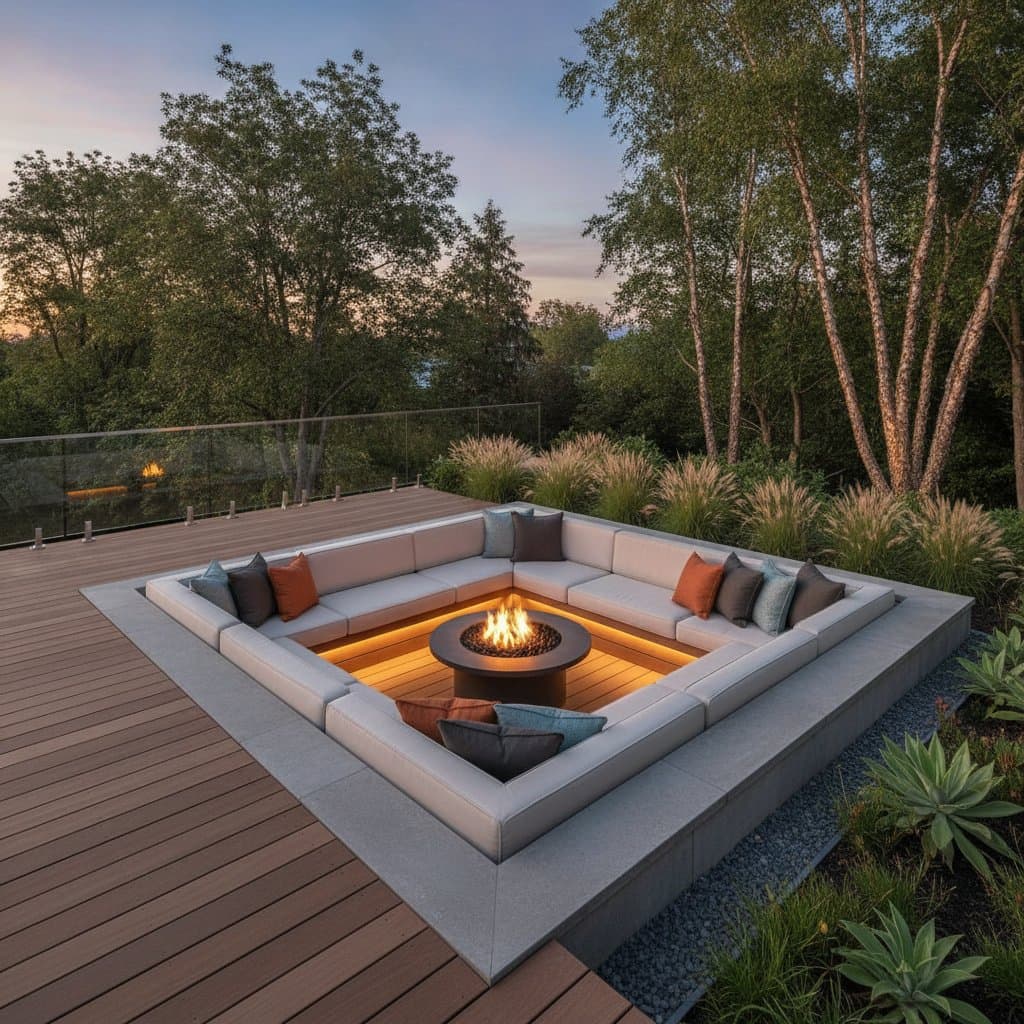
Planning Your Sunken Deck Lounge
A sunken deck lounge lowers the seating area below the main deck surface. This design adds privacy, reduces wind exposure, and creates a defined gathering spot. Select a drop depth of 12 to 24 inches to maintain easy access while achieving the desired effect.
Measure the available space and mark the perimeter with chalk. Confirm local building codes for load requirements and permits before starting construction.
Constructing the Outer Frame
Build the main deck perimeter with pressure treated lumber rated for ground contact. Space joists 16 inches on center and add blocking at the step down transition. Position the framing for the sunken section lower by the planned depth.
Framing the Lounge Floor
Install joists for the lounge floor between beams with metal hangers. Maintain consistent spacing with the main deck. Place gravel and a vapor barrier beneath the area before laying decking boards. Leave an 1/8 inch gap between boards to support drainage.
Adding Steps and Seating
Create a smooth transition with one or two wide steps or continuous bench seating along the edge. Align bench tops with the surrounding deck surface to form a subtle boundary and provide extra seating without visual clutter.
Finishing Surfaces and Lighting
Apply uniform decking boards across both levels for visual continuity. Sand edges smooth and seal cut ends with water repellent finish. Install recessed step lights or low voltage LEDs under bench edges before attaching final trim to conceal wiring.
Safety Considerations
Wear gloves and eye protection during cutting and drilling. Verify that framing supports 40 pounds per square foot. Maintain ventilation beneath the structure to avoid moisture buildup. Keep 36 inches of clearance from any fire feature and secure railings where drops exceed 30 inches.
Addressing Common Issues
Standing water requires a consistent floor slope or added weep holes and drain pipes to gravel beds. Warped boards often result from inadequate gaps or incorrect fasteners. Replace affected boards after drying and use stainless steel screws for reinstallation. Allow at least 2 feet of clearance around furniture to prevent cramped movement.
Ongoing Care Routines
Sweep leaves weekly. Clean surfaces twice each season with mild deck cleaner. Check fasteners for rust and tighten as needed. Reapply water repellent finish every one to two years. Store cushions indoors when not in use.
Composite materials need manufacturer approved cleaners only. Avoid pressure washing above 1500 psi.
Seasonal Maintenance Tasks
Inspect boards and clean drains each spring. Refresh sealant and add UV covers in summer. Remove debris before fall rains. Clear snow with plastic tools in winter without using salt.
Storage Solutions
Place cushions and accessories in weatherproof boxes. Line built in bench compartments with plastic bins. Utilize space under main deck stairs with lattice doors for airflow.
Cost and Timeline Estimates
DIY wood framing costs 10 to 20 dollars per square foot. Composite or built in seating ranges from 25 to 40 dollars per square foot. Professional installation runs 60 to 90 dollars per square foot. An 8 by 8 foot lounge typically totals 800 to 3000 dollars for skilled DIY work completed over three to five weekends.
When Professional Help Is Required
Engage a licensed contractor for decks over 3 feet high, connections to house structures, poor soil drainage, or added gas and electric lines. Request references and insurance documentation. Confirm framing plans and material specifications in advance.