
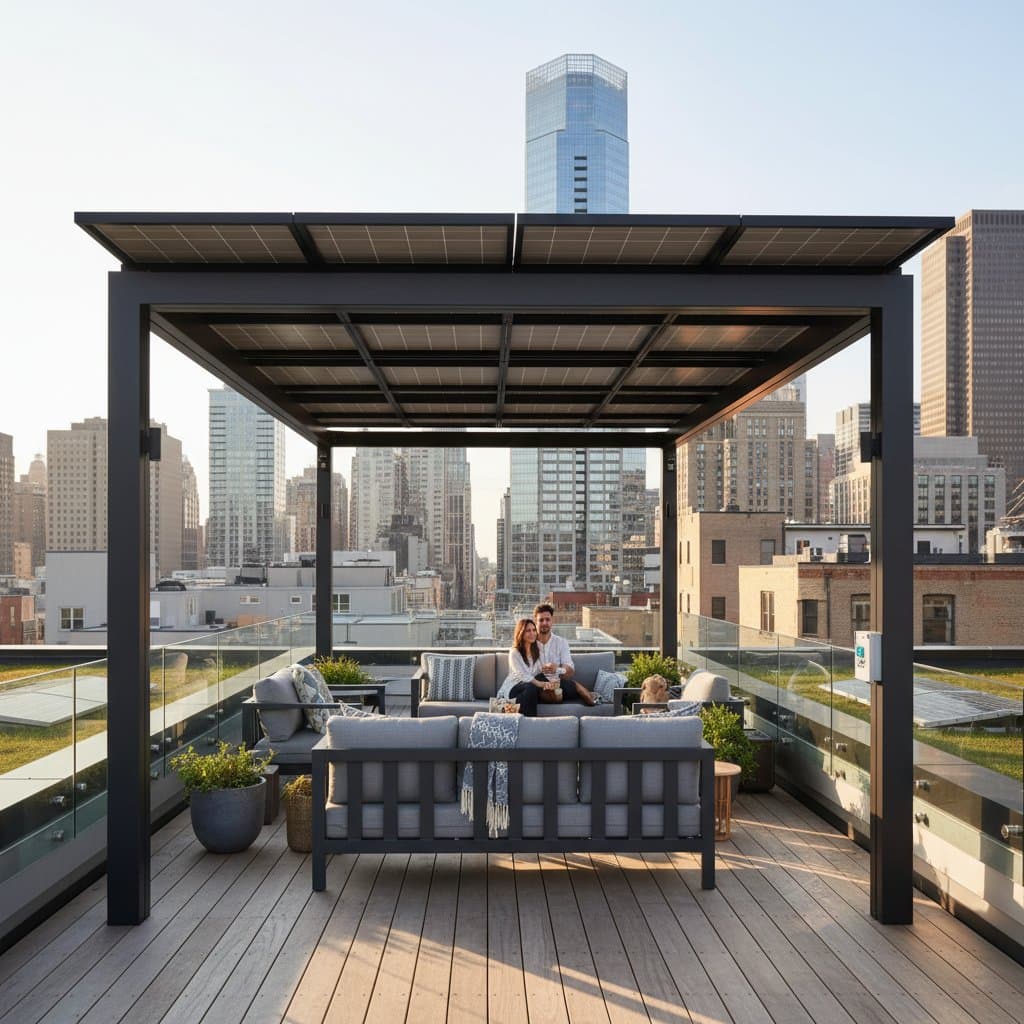
Integrating Solar Power with Shade on Rooftop Decks
A rooftop deck gains new function when fitted with a solar pergola. The structure generates electricity while shielding the surface from direct sun. This approach suits compact urban spaces where floor area remains limited.
Panels mounted overhead supply power to lights, fans, or household circuits. At the same time the overhead array reduces surface heat and protects furniture from ultraviolet exposure. Cooling loads inside the building often decrease as a result.
Required Tools and Materials
Assemble these items before layout work begins:
- Tape measure of at least twenty five feet
- Power drill with masonry bits
- Carpenter level and stable ladder
- Galvanized steel or pressure treated posts sized for the span
- Crossbeams, mounting brackets, and racking rails
- Photovoltaic panels rated for outdoor wind loads
- Outdoor inverter and weatherproof wiring
- Sealant and corrosion resistant fasteners
Confirm every component meets local wind and snow requirements.
Construction Sequence
- Verify roof capacity for an added four to six pounds per square foot. Consult a structural engineer when drawings are unavailable.
- Outline the pergola footprint while preserving access to stairs and railings.
- Bolt posts to joists with reinforced brackets. Maintain plumb alignment and seal every penetration.
- Install crossbeams at sixteen inch centers. Torque all connections to specification.
- Fix racking rails at a ten to twenty degree tilt to promote drainage.
- Secure panels to the rails and complete inverter connections according to electrical code.
- Measure voltage and current at the inverter to confirm correct output.
Wear fall protection and keep a second person present throughout elevated work.
Safety Practices
- Locate hidden wiring and plumbing before any drilling.
- Postpone tasks during rain or high wind.
- Isolate power sources prior to making electrical joints.
- Anchor ladders and maintain clear footing.
Output and Leak Checks
Low production often results from surface dust. Clean panels with mild soap and water to restore efficiency. Indoor flickering may indicate loose inverter connections. Inspect and tighten terminals, then retest output.
Water intrusion around posts usually traces to inadequate flashing. Reapply roofing silicone and reseat fasteners.
Cost and Schedule Expectations
A one hundred square foot installation ranges from three thousand to eight thousand dollars. Material grade and local labor rates determine the final figure. Two or three weekends suffice for most owner builders. Licensed contractors manage permits and reduce liability.
Ongoing Care
Clean panels at the start and end of each season. Inspect bolts for corrosion annually. Replace damaged glass promptly. Remove debris from rafters to preserve drainage paths.
Storage and Accessory Options
Incorporate benches with hinged lids for cushion storage. Position weatherproof bins that also serve as seating. Add hooks to posts for cords and portable lights.
Professional Assistance Thresholds
Complex roof geometry or preexisting moisture issues warrant a certified installer. These specialists validate electrical capacity and prepare interconnection documents for utility incentives.
Site Preparation Steps
Record sun exposure across a full day to confirm six hours of direct light. Select frame dimensions that align with existing architecture. Complete framing one weekend and panel mounting the next. The finished assembly supplies shade and usable electricity without expanding the deck footprint.