
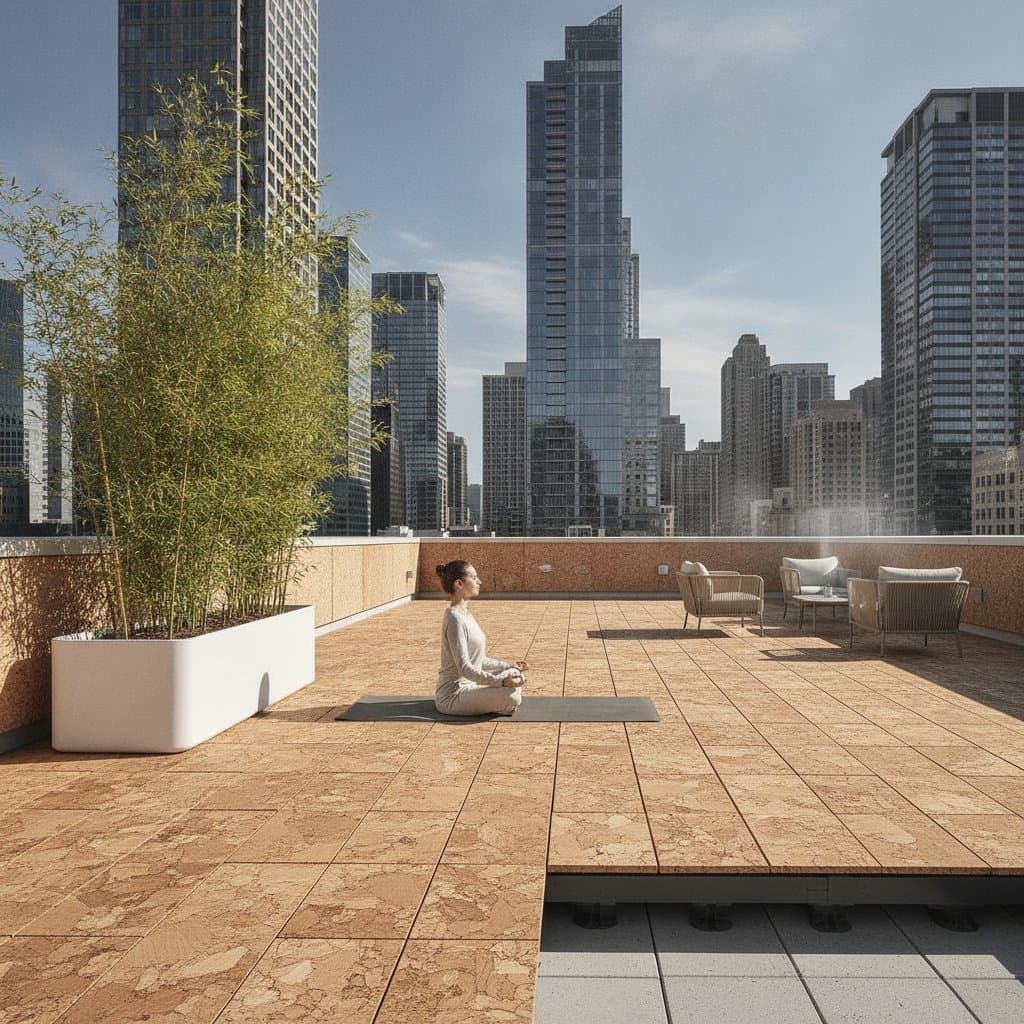
Benefits of Cork Decking in City Environments
Cork decking transforms noisy urban rooftops into calm outdoor areas. The material absorbs sound effectively while remaining cool to the touch even on hot days. It installs over concrete surfaces or pedestal systems with relative ease.
How Cork Reduces Sound and Heat
Sound reduction stems from the cellular structure of cork. Each section contains millions of air-filled chambers that compress under pressure to dampen vibrations. Tests indicate this approach lowers footstep noise by up to 30 percent compared with tile or composite surfaces.
Cork also stabilizes surface temperatures. It stays cooler than metal or stone during direct sun exposure. This quality supports comfortable barefoot use and adds to overall relaxation on rooftops.
The harvesting process removes bark without harming trees. Bark regrows over time to allow repeated collection. This cycle positions cork as a renewable option that combines acoustic performance with environmental responsibility.
Final Inspection After Installation
Walk across the completed deck to detect movement or hollow sounds. Tighten loose edges as needed. Pour a small amount of water to verify drainage patterns. Lift tiles and adjust the slope if water collects in any area.
Safety Practices During Work
Wear protective gloves and eyewear when cutting cork or applying adhesives. Avoid installation on days with high humidity or rain because moisture weakens bonds. Keep tools on stable surfaces at all times. Place slip-resistant mats until the sealant cures fully. Store unused cork indoors to prevent swelling from moisture.
Solutions for Frequent Problems
Tiles that lift at corners usually result from insufficient adhesive or an uneven base. Lift the tile, add more adhesive, and press it down firmly. Place weight on the area until the adhesive dries.
Stains or dark patches often trace to water intrusion through unsealed joints. Clean the surface with a mild soap solution, allow it to dry, and reapply sealant to all seams.
Squeaking or hollow sounds point to air pockets beneath the tiles. Drill a small hole, inject adhesive through it, and roll the surface flat.
Fading color develops after prolonged sun exposure. Recoat the surface with a UV-protective sealant every few years to maintain appearance.
Cost and Schedule Expectations
Material costs for cork decking range from eight to twelve dollars per square foot when adhesive and sealant are included. Professional installation adds five to eight dollars per square foot based on roof complexity. A 100-square-foot rooftop project typically requires about one thousand dollars in materials for a do-it-yourself approach.
Most DIY installations finish in one or two days. Allow an extra day for sealant curing before regular use. Plan work around dry weather to support strong adhesion.
Pedestal supports offer a lower-cost alternative to adhesive in suitable situations. This method permits future removal or repairs. Select high-quality sealant because lower-grade products tend to break down under constant sun.
Regular Maintenance Steps
Sweep the surface weekly to clear dust and grit that cause scratches. Wash monthly with mild soap and water while avoiding harsh chemicals. Reapply protective sealant every two to three years or when water no longer beads on the surface. Check joints after storms for trapped moisture. Shift furniture positions occasionally to limit uneven fading.
Replace a single damaged tile without disturbing the rest of the deck. Store extra tiles in a dry location for quick access when needed.
Organizing Stored Items on the Deck
Cork surfaces absorb sound from shifting objects during wind events. Use raised bins with rubber feet to prevent scuffs. Add pads under metal furniture legs. Secure larger items such as umbrellas or planters against gusts. Label containers and group them by function to maintain order.
Contained storage reduces impact noise and protects the cork over time.
Situations That Require Professional Installation
Hire a licensed installer when the roof shows drainage problems, existing slopes, or waterproofing membranes. Professionals manage moisture flow and avoid leaks into the building structure. Inquire about their experience with cork systems, their method for protecting roof membranes, and the warranty offered on both materials and labor.
Installers can also integrate lighting or railings without damaging the deck base. This approach maintains safety and waterproofing integrity.
Starting Your Own Project
Test a small section of cork decking in one area first. Notice the change in sound and comfort underfoot. Expand the installation once the material meets expectations. Confirm surface preparation, drainage slope, suitable adhesive or pedestals, and climate-appropriate sealant before full commitment.