
7. Test Drainage
Simulate rainfall by pouring water across the roof surface. Observe flow patterns to ensure water channels into gutters or outlets without accumulation. Fine-tune the roof pitch if pooling occurs.
8. Finish with Furniture and Plants
Select furnishings scaled to the pod's dimensions, preserving clear pathways for circulation. Incorporate potted plants to introduce texture, enhance privacy, and soften the space's edges.
Safety Tips
Prioritizing safety during construction and use protects users and extends the structure's lifespan.
- Consult local building codes; permits may apply to installations exceeding specified heights.
- Position open flames, such as fire pits or grills, at minimum 5 feet from the pod.
- Opt for tempered glass in sliding wall options to reduce shatter risks.
- Examine and tighten all fasteners annually, especially ahead of severe weather.
- Regularly clear drainage paths to prevent blockages from debris like leaves.
Troubleshooting Common Issues
Routine checks address most problems before they escalate. Address these frequent concerns promptly.
Water pooling on the roof: Increase the slope to a minimum 3-degree angle. Remove obstructions from louver gaps.
Motor failure: Replace the remote control battery initially. Examine wiring connections and reset circuit breakers. Utilize the manual override crank if available.
Condensation buildup: Drill small ventilation holes near the upper frame to allow moisture escape.
Excessive wind noise: Secure all fittings and adjust side panels for optimal tension.
Inconsistent shading: Align louvers to ensure uniform overlap during adjustment.
Budget and Timeline Considerations
DIY projects with aluminum kits typically require 25 to 35 hours of labor. A team of two can complete assembly across three weekends.
Cost Breakdown:
- Basic manual louver kit: $4,000 to $6,000
- Motorized setup with integrated lighting: $8,000 to $12,000
- Premium custom design featuring glass walls: $20,000 and above
Reduce expenses by selecting manual adjustments over automation or omitting side enclosures. Invest fully in secure anchoring and sealing to safeguard long-term value.
Maintenance Routine
These structures demand less attention than traditional wooden alternatives, yet seasonal care preserves performance.
- Clean surfaces with mild soap and water each season, followed by thorough rinsing.
- Apply silicone lubricant to moving parts for effortless operation.
- Renew deteriorated seals and gaskets to block water intrusion.
- Empty gutters of debris and flush systems with a hose.
- In winter, seal louvers, relocate furniture indoors, and isolate electrical components if unheated.
Consistent maintenance supports a lifespan of 20 years or longer for aluminum and composite models.
Smart Storage Solutions
Integrate functionality to keep the space organized and versatile.
- Construct benches with concealed compartments for storing cushions and accessories.
- Install hooks beneath beams for suspending tools or decorative lighting.
- Attach fold-down shelves to walls for serving trays or plant displays.
- Employ slide-under, weather-resistant bins to conceal items near seating areas.
Such features maintain tidiness without constant reconfiguration.
When to Hire Professionals
Certain scenarios benefit from expert involvement to ensure compliance and safety.
Engage contractors for:
- Attachments to the home structure or rooftop decks.
- Integration of electrical, plumbing, or gas systems.
- Obtaining necessary permits or engineering plans.
- Challenging site conditions like sloped terrain or uneven bases.
Request client references and review completed projects. Professionals should evaluate weight distribution and water management upfront. Installation by experts spans one to two weeks based on project scope.
Design Variations
Tailor the pod to your lifestyle and surroundings with diverse configurations.
- Open-frame retractable canopy: Suited for rental properties or sun-exposed decks handling occasional showers.
- Louvered roof with screening: Perfect for family dining areas needing pest barriers.
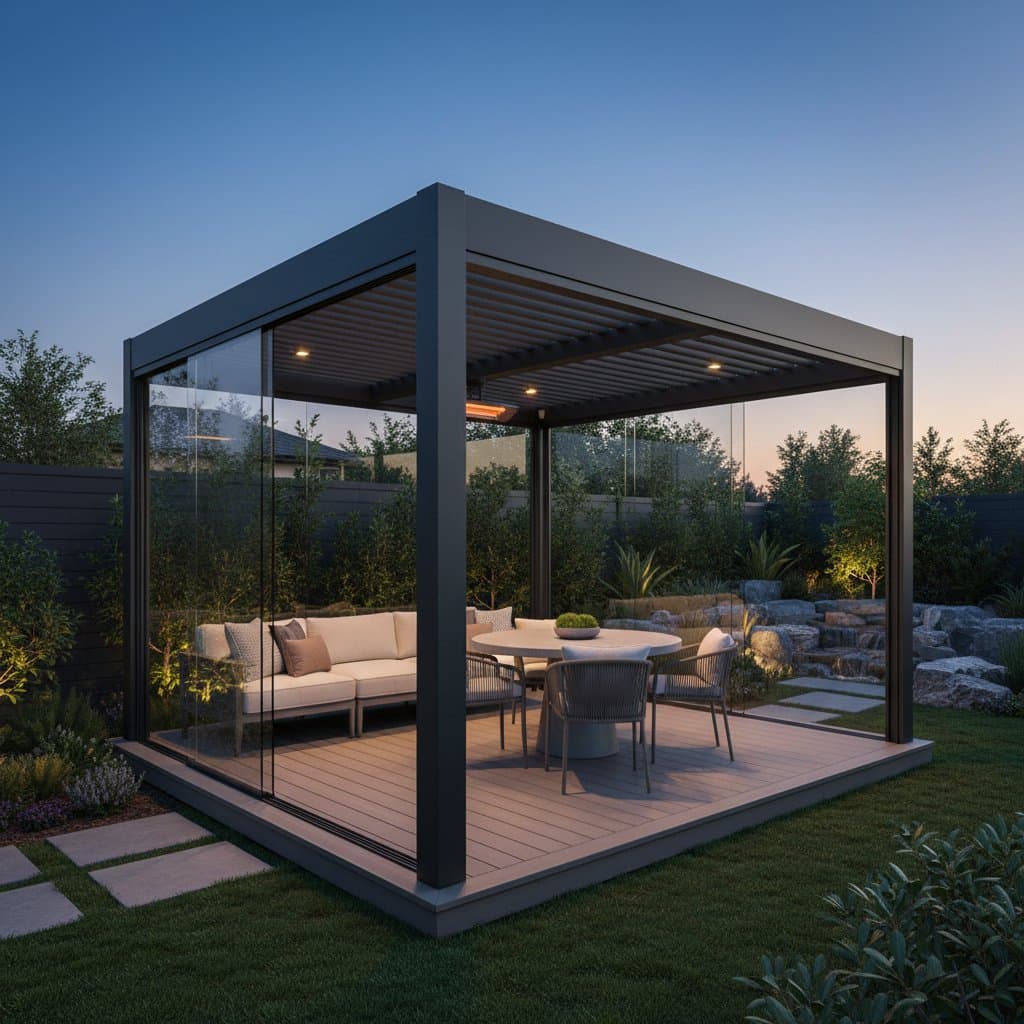
- Enclosed glass sides: Ideal for converting patios into dedicated workspaces or creative studios.
- Hybrid dual-zone layout: Offers solid coverage on one end and open framing on the other for varied activities.
Select finishes that complement your home's exterior for a seamless integration.
Seasonal Care Guide
Adapt maintenance to weather patterns for optimal condition year-round.
Spring: Clean panels thoroughly, operate mechanisms to confirm functionality, and repair any cold-weather damage. Ventilate fully to eliminate residual dampness.
Summer: Verify shade coverage and service filters in ventilation or heating units. Prune nearby vegetation to avoid airflow restrictions.
Fall: Remove fallen leaves from drainage areas. Apply fresh protective coatings to metal surfaces as required.
Winter: Secure panels against precipitation and gusts. Relocate removable items to sheltered storage.
These practices ensure reliability across seasons.
Factors Driving Popularity
Pergola pods gain traction due to their adaptability in compact urban yards, where space efficiency matters. They enhance property value by expanding livable square footage without permanent alterations. Innovations in automation and eco-friendly materials appeal to environmentally conscious buyers seeking sustainable outdoor solutions. As remote work persists, these pods provide inspiring settings that boost productivity and well-being.
Actionable Next Steps
- Establish a budget and decide between manual or automated roof features.
- Evaluate frame materials aligned with your upkeep preferences.
- Coordinate lighting and furniture placement to optimize electrical and access points.