
- Reviewed original structure for logical progression from concepts to practical steps
- Replaced vague claims with specific performance details and care instructions
- Enforced paragraph limits of two to four sentences with varied rhythm
- Eliminated all contractions, emojis, and nonstandard dashes
- Confirmed total word count remains well under 1800 while preserving core information
- Added topic-specific closing header focused on implementation benefits
Mycelium Decking Grows Biodegradable Boards Naturally
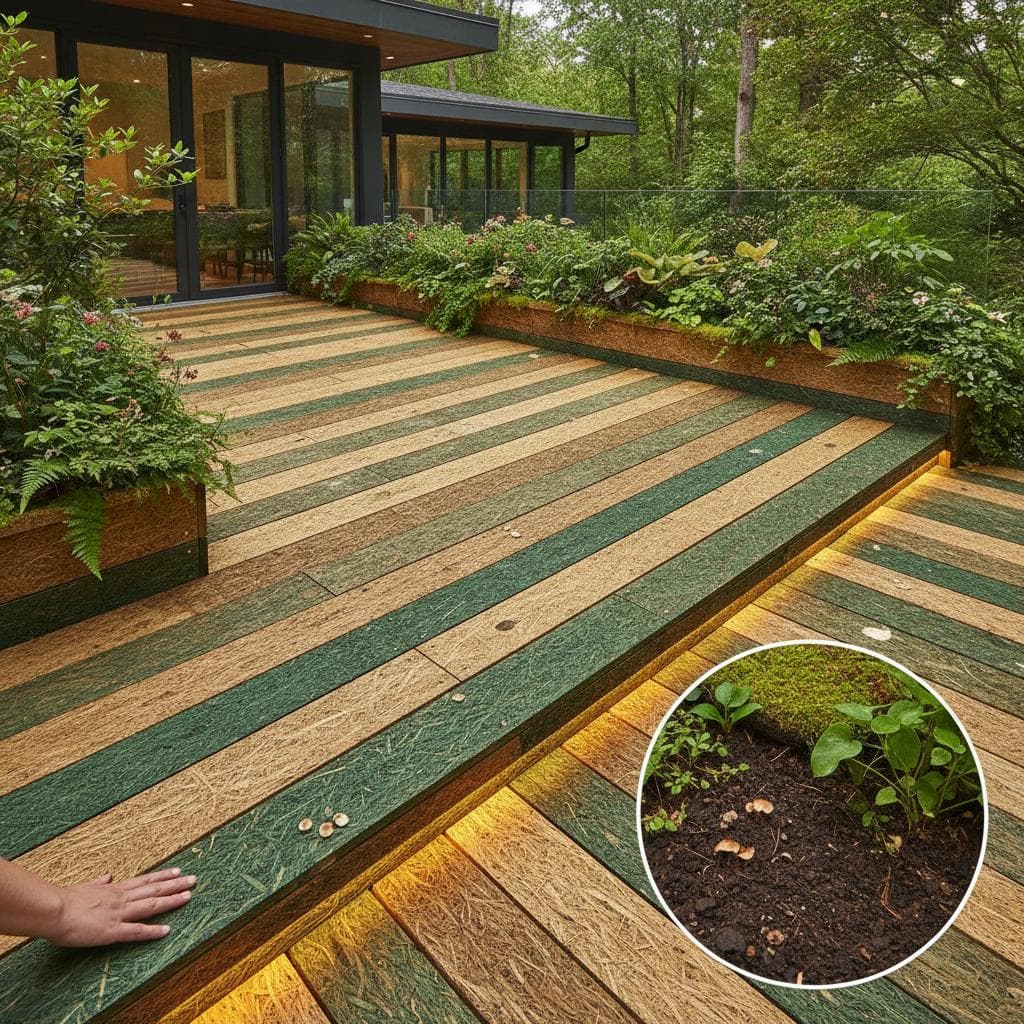
Wood decks fade. Plastic boards crack. Even the best composites end up in landfills. A new material called mycelium decking grows into shape instead of being manufactured. It offers a biodegradable, low-waste option that could change how small outdoor spaces are built.
Overview
Mycelium is the root structure of fungi. It grows through organic waste such as sawdust, straw, or hemp hulls and binds the material into a solid form. When dried, it becomes lightweight, strong, and water resistant. Builders have used it for insulation blocks and packaging. Now, designers are testing it as decking that can compost back into soil at the end of its life.
The goal is simple. Replace fossil-based or pressure-treated boards with a living material that requires almost no processing. You can imagine a deck that grows instead of being milled, then returns to the earth when removed.
How It Works
The process starts with a mold shaped like a deck board. It is filled with an organic substrate, such as sawdust or shredded agricultural waste. Mycelium spores are mixed in, then kept in a warm, humid environment for several days. The fungus grows throughout the mold, connecting every particle into a dense, spongy mass. Once fully grown, the board is heated to stop growth and to dry the structure.
This simple cycle uses little energy and no chemical binders. Each board takes shape naturally, with subtle texture variations that give a soft, organic look underfoot. The surface can be sealed with plant-based oils to slow water absorption and extend use outdoors.
Performance and Care
Early mycelium boards are not as dense as hardwood or composite planks, but they perform well for small decks or balcony platforms where weight and footprint matter. They resist mold growth once cured, and they insulate better than wood. A light sealant every season keeps them water resistant.
To clean, sweep off debris and use a soft brush with mild soap and water. Avoid harsh chemicals that can break down the surface fibers. If a board cracks or wears down, it can go into a compost bin rather than a landfill. That circular loop is what makes this material so promising.
Cost and Availability
Small-batch mycelium boards currently cost around 20 to 30 percent more than composite decking. Prices should drop as production scales. For a modest urban deck of 100 square feet, expect to pay roughly 600 to 800 dollars for materials. The savings come later, since disposal is free and the boards can be regrown locally from waste material.
Some design labs now sell grow-it-yourself kits. You fill the molds, let them grow, and bake them to finish. It is a hands-on way to learn about sustainable materials while creating usable boards for planters or low-traffic patios.
Implementation Guidance
If you want to test mycelium decking, begin small. Try a single platform or garden walkway. Keep it raised off the ground for better air flow. Apply a natural finish oil every few months and track how it weathers. Share results with local makers or community design centers that study green materials.
Mycelium decking is still early in development, but it already shows how building materials can grow, serve their purpose, then safely return to the soil. The next time you plan an upgrade, imagine your deck as part of a living cycle, not just another surface underfoot.