
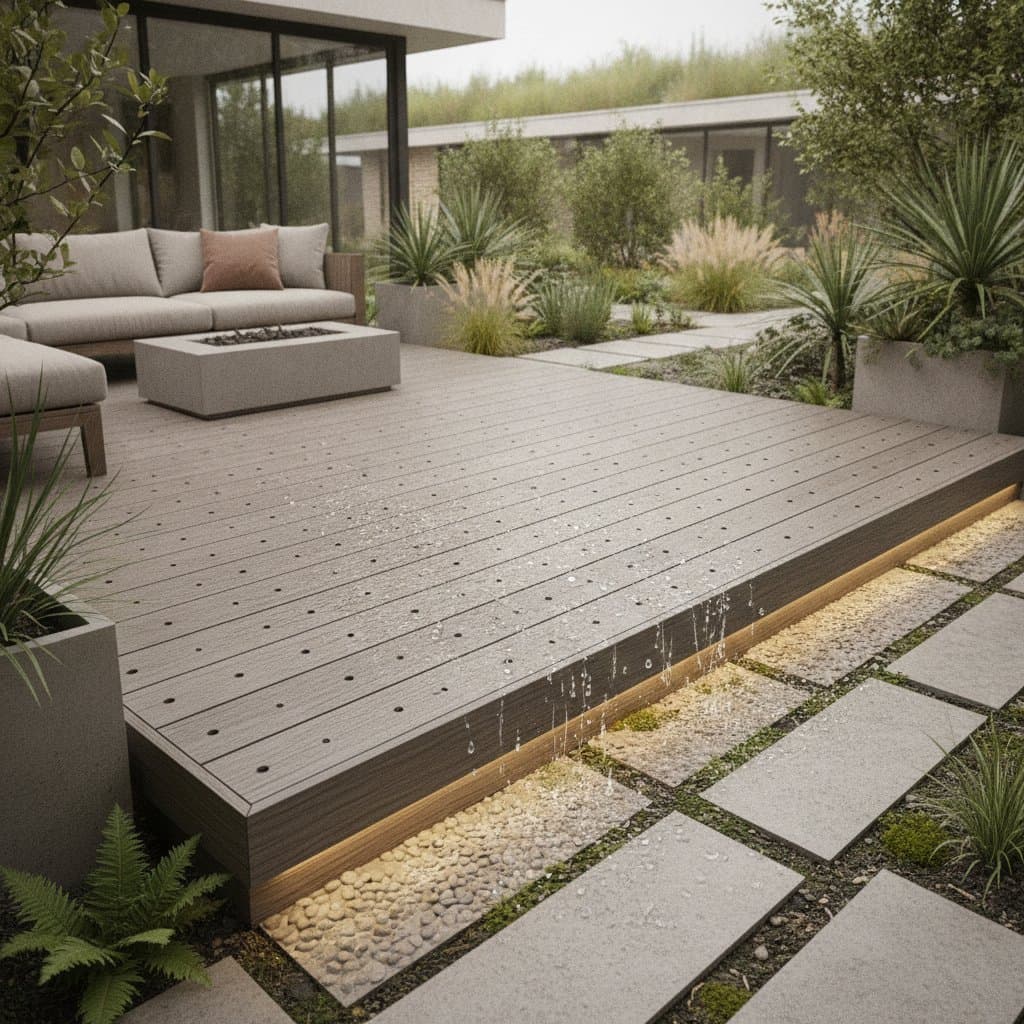
Why Permeable Composite Decking Sets the Eco Standard for 2026
Your deck should interact with its surroundings by allowing water to pass through rather than collect on the surface. Permeable composite decking achieves this by channeling rainfall downward while maintaining structural integrity. The outcome includes reduced surface water, moderated temperatures, and simplified upkeep.
This material suits projects that require a wood appearance, mold resistance, and quick drying after storms. The following sections explain its function, installation sequence, advantages over conventional options, cost considerations, and storage practices.
How Permeable Decking Manages Water
Each board incorporates narrow channels or layered open cores that direct water below the walking surface. Installers maintain consistent gaps of one eighth of an inch between boards and place a permeable base of crushed stone or gravel underneath. This base stores and releases water gradually.
The complete assembly consists of three elements. Surface boards resist expansion and surface damage. Support framing uses aluminum or treated lumber spaced 12 to 16 inches apart. The drainage layer beneath holds stormwater and prevents erosion at the edges.
After rainfall the surface becomes usable within minutes. This characteristic proves useful on rooftops and in confined urban spaces where standing water creates hazards.
Installation Sequence
1. Plan and Measure
Outline the deck footprint with stakes or chalk. Verify that the slope directs water away from structures at a rate of one quarter inch per foot.
2. Prepare the Base
Remove topsoil to a depth of four inches. Spread and compact gravel evenly, then cover it with a weed barrier fabric to protect the drainage layer from soil intrusion.
3. Build the Frame
Position joists at the recommended spacing and secure them with corrosion resistant hardware. Confirm level at multiple points to maintain consistent board alignment.
4. Install Boards
Begin at the house wall and proceed outward. Secure boards with hidden clips or stainless fasteners while preserving the required gap for drainage. Seat each board with a rubber mallet.
5. Add Edge Trim
Attach fascia boards or aluminum edging to protect board ends and conceal the perimeter gaps.
6. Verify Drainage
Apply water to the finished surface and observe flow. Adjust board spacing or slope if water remains on the deck longer than expected.
Comparison with Traditional Materials
Wood decks absorb moisture unevenly, which leads to rot, warping, and frequent refinishing. Composite boards combined with a permeable system avoid these problems by providing an exit path for water.
Key performance differences include effective stormwater passage, resistance to fading and mold growth over a 20 to 25 year lifespan, and use of recycled content that supports waste reduction goals. These attributes help projects meet tightening municipal runoff regulations without additional infrastructure.
Cost and Schedule Expectations
Material prices range from 8 to 14 dollars per square foot, with base preparation adding 1 to 2 dollars per square foot. Labor varies according to site access and elevation.
A ground level 120 square foot patio can be completed in a weekend by two people. Rooftop or elevated structures typically require five to six days. Existing sound framing may be reused provided spacing supports drainage gaps.
Storage Practices on Permeable Surfaces
Heavy containers should rest on raised pads that preserve water flow beneath the deck. Modular benches with open undersides accommodate cushions and tools while maintaining airflow.
Built in storage boxes require drainage holes in their bases to avoid trapped water that could freeze and cause damage. Weatherproof containers made from recycled resin align with the overall sustainability objectives.
Environmental Outcomes
A 200 square foot permeable deck can process approximately 1,200 gallons of rainwater during a significant storm. This volume reduction decreases sediment and pollutant loads reaching storm drains while supporting soil moisture in adjacent planting areas.
Products containing up to 90 percent recycled content lower demand for new wood and plastic. Homeowners gain extended service life and reduced maintenance, and municipalities receive distributed drainage capacity at ground level.
Next Steps for Your Project
Review site drainage patterns and local code requirements before material selection. Consult manufacturer spacing guidelines to ensure long term performance. Proper planning yields an outdoor surface that manages water effectively and maintains appearance with minimal intervention.