
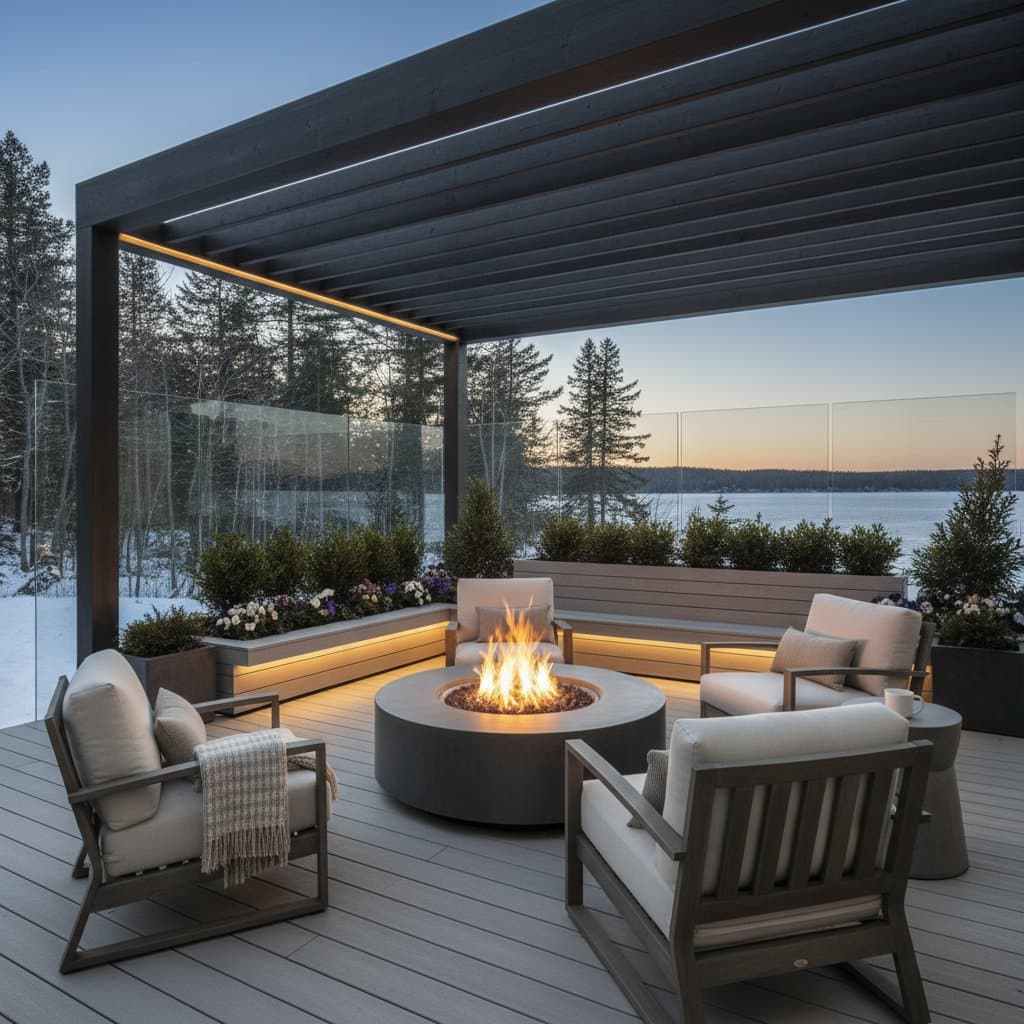
Pergola Fire Pits: 2025's Cozy Deck Game-Changer
Imagine lingering on your deck long after sunset, free from the evening chill. A pergola fire pit addresses this challenge by merging shade, warmth, and inviting ambiance into a single outdoor feature. This setup allows homeowners to extend their time outdoors across all seasons while maintaining comfort and elegance.
This guide details the essentials of a pergola fire pit, its role in contemporary outdoor spaces, and practical methods for installation or purchase. Readers gain insights into required tools, materials, setup procedures, maintenance routines, and cost considerations.
Overview
A pergola fire pit integrates two essential backyard elements. The pergola serves as an open-roof framework that provides diffused shade and a defined boundary. The fire pit introduces heat and serves as a natural gathering point. Combined, these components form an area that balances openness with intimacy.
This arrangement suits compact decks, delineates lounge zones, or enhances leased patios. It emerges as a leading option in outdoor heating solutions, replicating indoor living room functionality in exterior settings. The design fosters relaxation, social interaction, and occasional simple meal preparation.
Key benefits:
- Prolongs usability of outdoor spaces through integrated heating.
- Enhances comfort via partial overhead protection.
- Establishes a distinct area for entertaining.
- Increases overall property attractiveness and potential resale value.
A landscape designer observes, "The pergola fire pit functions as the modern outdoor hearth. It unites structural design with practical comfort within one framework."
Tools and Materials
Homeowners may construct a pergola fire pit from basic components or opt for a prefabricated kit. In both cases, precise measurements form the foundation of the project.
Essential tools:
- Tape measure extending to at least 25 feet (7.6 meters).
- Level and framing square to verify alignment.
- Power drill equipped with bits for masonry and wood.
- Safety glasses, work gloves, and ear protection.
- Concrete mix along with a trowel for post foundations.
- Adjustable wrench set for securing metal hardware.
Primary materials:
- Four support posts measuring 4x4 inches (10x10 centimeters) or greater.
- Crossbeams and rafters in wood or powder-coated aluminum.
- Fire pit in bowl, table, or recessed form, certified for exterior applications.
- Fire-resistant base or paver foundation spanning at least 48 inches (1.2 meters).
- Mounting brackets and screws resistant to corrosion and outdoor exposure.
For additions like illumination or gas supply, select cables and connectors rated for outdoor conditions. Professionals licensed in gas or electrical work must manage those installations.
Steps
1. Plan the Layout
Draw a diagram of the deck space. Outline a square or rectangular footprint for the pergola placement. Ensure a minimum of 3 feet (0.9 meters) clearance around the fire pit to accommodate seating and circulation. Review municipal regulations regarding required separations from structures and barriers.
2. Prepare the Surface
Even out the underlying deck or patio. For wooden platforms, confirm the integrity of joists to bear additional weight. On concrete or stone surfaces, remove dirt and inspect for fissures. A firm base supports posts securely and minimizes instability risks.
3. Set the Pergola Posts
Locate the four corner posts precisely. Fasten them using metal brackets or sink them 12 to 18 inches (30 to 45 centimeters) into concrete footings. Use a level to ensure vertical alignment. Allow concrete to set fully prior to beam attachment.
4. Add Beams and Rafters
Secure horizontal beams atop the posts. Position rafters at intervals of 12 to 18 inches (30 to 45 centimeters) to achieve even shading. Fasten all connections tightly with bolts and screws.
Caution: Refrain from climbing the structure during construction. Employ a sturdy ladder and enlist a helper to steady components.
5. Install the Fire Pit
Position the fire pit centrally under the pergola's open top. Install a heat-proof mat or pavers beneath it. Adhere to specified clearances from the manufacturer, typically 36 inches (0.9 meters) from combustible materials. Engage a certified specialist to link and verify gas units.
6. Add Seating and Lighting
Position chairs or benches in a semicircular pattern. Maintain at least 24 inches (61 centimeters) between the fire pit rim and seating edges. Incorporate string lights or embedded LED fixtures along the beams. Select products designated for outdoor durability.
7. Test and Adjust
Ignite the fire pit during mild weather conditions. Observe smoke dispersion and heat distribution patterns. If smoke accumulates beneath the roofline, elevate rafters or introduce ventilation spaces.
Safety Tips
Prioritize fire prevention through consistent protocols.
- Position a fire extinguisher or water source within 10 feet (3 meters).
- Avoid accelerants like lighter fluid on gas or gel-fueled units.
- Select hardwoods over soft varieties prone to sparking.
- Keep textiles and drapery beyond flame reach.
- Examine gas lines for leaks with a soapy water solution.
Postpone use if winds surpass 10 miles per hour (16 kilometers per hour), as gusts may scatter embers or direct heat undesirably.
Troubleshooting
Smoke Accumulation Under the Roof
Elevate rafters or create openings between beams to improve airflow. Consider incorporating a smokeless insert featuring dual-wall construction for better ventilation.
Uneven Heat Distribution
Rearrange seating to optimize warmth or affix a heat-reflective panel to the cooler side.
Scorching on Deck Surfaces
Relocate the fire pit onto reinforced pavers or a metallic stand. Verify the protective base measures at least 1 inch (2.5 centimeters) in thickness.
Corrosion or Fading
Clean affected metal with gentle soap and apply a heat-tolerant, exterior-grade coating.
Maintenance
Regular upkeep extends the lifespan of a pergola fire pit.
- Clean beams and posts with a moist cloth to eliminate residue.
- Inspect hardware for signs of wear or detachment.
- Remove ashes from wood-burning units after every session.
- Shield the fire pit with a cover during idle periods to repel moisture and particles.
- For gas setups, shut off valves and disconnect fuel sources prior to offseason storage.
Apply a UV-protective sealant to wooden elements every two to three years.
Storage
In regions with harsh winters or heavy precipitation, dismantle components selectively for preservation.
- Detach removable rafters or shading elements.
- Store padded furnishings and protective fabrics in sealed containers.
- Purge and seal gas conduits.
- Encase the fire pit basin in a moisture-resistant wrap.
Elevate stacked metal parts on pallets to deter rust. Position wooden sections away from wet soil.
Budget and Time
Expenses depend on scale and selections, with typical estimates as follows:
- Prefabricated kit for DIY assembly: 900 to 1,800 dollars.
- Bespoke construction including expert labor: 3,000 to 6,000 dollars.
- Gas connection by certified installer: 200 to 400 dollars.
A straightforward installation requires one weekend for a pair of workers. Elaborate projects may span a week, accounting for curing times and refinements.
Seasonal Reminders
Conduct targeted inspections to sustain safety and appeal throughout the year.
Prior to Winter:
- Examine roof fastenings for security.
- Clear the fire bowl of accumulated matter.
- Prepare supplies of seasoned wood or refill fuel reservoirs.
Prior to Summer:
- Clean the frame and reapply sealant to wood if discoloration appears.
- Verify lighting functionality and replace failed elements.
- Wash base stones and assess for damage.
Following Storms:
- Drain standing water from protective covers promptly.
- Allow complete drying of the fire pit before reuse.
Such measures avert structural degradation and material breakdown.
When to Call a Pro
Seek expert intervention for these indicators:
- Odors or signs of gas escape near connections.
- Persistent starting issues despite thorough cleaning.
- Instability or fractures in support posts.
- Faulty wiring or inconsistent illumination.
Consult professionals on regional fire regulations, required offsets, and structural tolerances. Compliance ensures a reliable and lawful installation.
Key Takeaways
A pergola fire pit transcends fleeting styles to deliver enduring enhancements for diverse outdoor areas. Overhead coverage pairs with reliable heating to support consistent enjoyment.
Core Elements of Success:
- Layered shade and warmth create comprehensive usability.
- Construction relies on standard equipment and vigilant precautions.
- Personalization options span illumination, furnishings, and aesthetics.
Proper execution yields a secure, welcoming feature aligned with established safety protocols.
Your Next Steps
Initiate your project with these immediate actions:
- Assess Available Space. Apply tape to outline potential positions, evaluating room for circulation and arrangement.
- Establish Financial Parameters. Differentiate between kit-based and tailored approaches, then research costs for essentials like supports and foundations.
- Incorporate Safety Measures. Identify spots with adequate ventilation and confirm adherence to local ordinances prior to acquisitions.
Completion of these preparations builds momentum. A pergola fire pit elevates standard decks into cherished, versatile havens, infusing gatherings with reliable warmth and serene structure.