
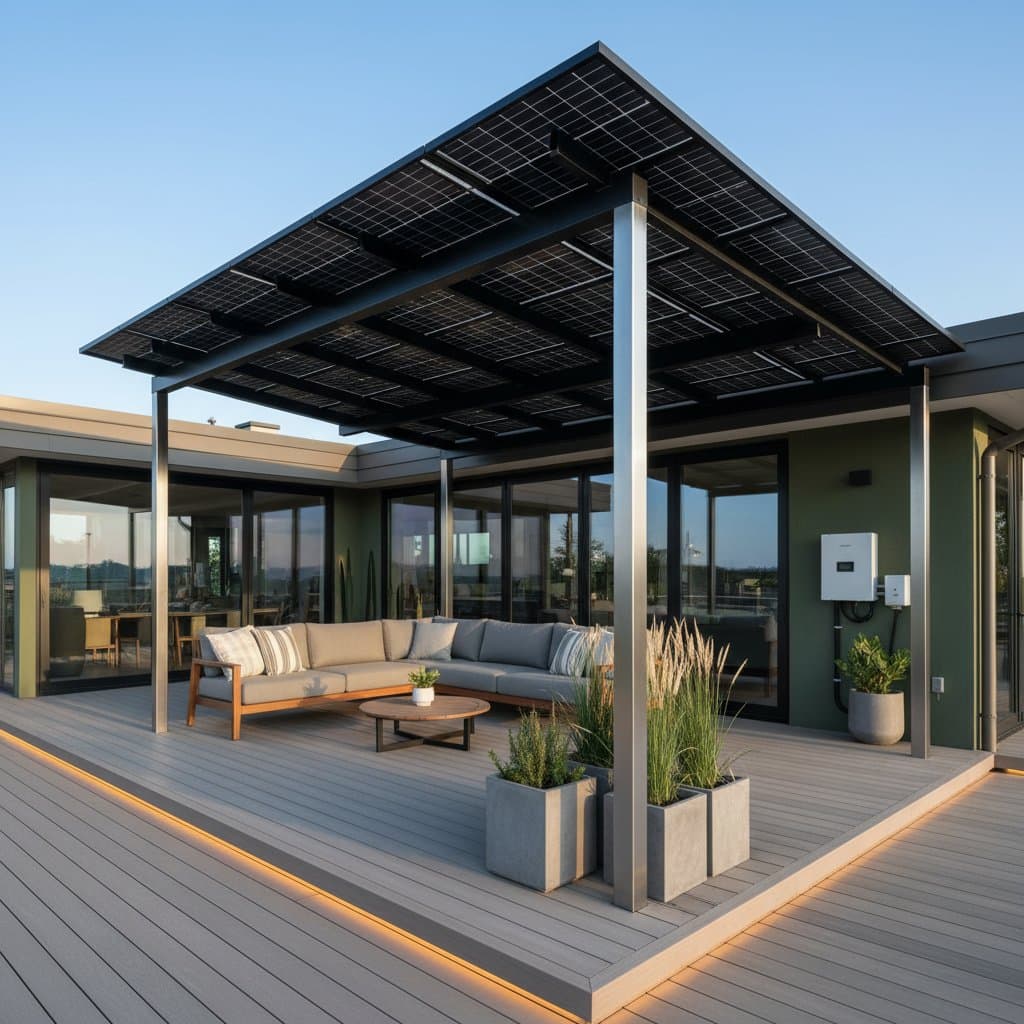
Introduction to Solar Canopies
Solar canopies represent an innovative solution for homeowners seeking to enhance outdoor living spaces. These structures mount solar panels over decks or patios, offering dual benefits of shade and renewable energy production. By capturing sunlight that would otherwise overheat your area, a solar canopy transforms idle roof space into a functional asset.
Homeowners in urban settings, such as New York City, find particular value in this technology. Decks often face intense summer sun, leading to discomfort and higher reliance on indoor cooling. A solar canopy addresses these challenges directly, creating a shaded retreat while feeding electricity back into your home grid.
This guide examines the advantages, design considerations, costs, and practical steps for implementing a solar canopy. Whether you aim to lower utility bills or boost sustainability, these installations deliver long-term rewards.
Key Benefits of Installing a Solar Canopy
One primary advantage lies in the immediate relief from harsh sunlight. The canopy blocks direct rays, lowering deck temperatures by up to 20 degrees Fahrenheit on hot days. This creates a more inviting space for relaxation, dining, or entertaining without the need for portable umbrellas or awnings that require frequent adjustment.
Energy generation forms another core benefit. High-efficiency panels convert sunlight into usable electricity, potentially offsetting 20 to 50 percent of a household's summer power needs, depending on location and size. Excess energy can flow back to the utility grid through net metering programs, earning credits on your bill.
Environmental impact adds further appeal. Solar canopies reduce reliance on fossil fuels, cutting your carbon footprint. They also minimize urban heat island effects by shading impervious surfaces like decking materials, which absorb and radiate heat.
Aesthetically, these structures enhance property value. Modern designs integrate seamlessly with contemporary homes, offering a sleek, high-tech look that signals commitment to green living.
Design and Material Options
Selecting the right design begins with assessing your deck's dimensions and purpose. Standard canopies span 10 by 12 feet, but custom sizes accommodate larger areas up to 20 by 30 feet. Consider fixed versus retractable models; fixed options provide consistent shade and energy output, while retractable ones offer flexibility for varying weather.
Materials play a crucial role in durability and efficiency. Aluminum framing resists corrosion in humid or coastal environments, with powder-coated finishes available in neutral colors to match your home's exterior. Polycarbonate or tempered glass covers protect panels while allowing light diffusion for a brighter shaded area.
Solar panels themselves vary in type. Monocrystalline panels deliver higher efficiency in limited spaces, ideal for compact urban decks. Thin-film options weigh less and flex better for curved designs, though they produce slightly lower output.
Integration with smart home systems elevates functionality. Many canopies connect to apps for monitoring energy production in real time. Add-ons like built-in LED lighting or misting systems further customize the space for evening use or hot afternoons.
Budget and Installation Costs
Initial costs for a solar canopy range from twelve to twenty dollars per square foot, influenced by materials, panel quality, and system capacity. A basic 200-square-foot installation might total four thousand to eight thousand dollars, covering panels, framing, wiring, and inverters. Professional electrical integration ensures compliance with local codes.
Financial incentives significantly offset expenses. Federal tax credits, such as the Investment Tax Credit, reimburse 26 percent of costs through 2022, with state rebates varying by region. Utility companies often provide additional grants for solar projects, potentially reducing payback periods to five to seven years.
Long-term savings justify the investment. Annual energy production can yield one thousand to three thousand dollars in bill reductions, based on sunlight exposure and electricity rates. Increased home resale value, estimated at 3.5 percent premium for solar features, provides another return.
Hire certified installers experienced in rooftop and ground-mount systems. They handle permitting, structural assessments to support canopy weight, and grid connections. Expect the process to take one to two weeks, with minimal disruption to daily routines.
Maintenance for Longevity
Solar canopies require minimal upkeep to maintain peak performance. Clean panels quarterly using a garden hose and soft brush to clear debris like leaves, dust, or bird droppings. Avoid abrasive cleaners that could scratch surfaces and reduce efficiency.
Inspect structural components annually. Tighten bolts and brackets to prevent loosening from wind or thermal expansion. Professional inspections every three years check wiring integrity and panel alignment.
Vegetation management proves essential. Trim overhanging branches from nearby trees to ensure unobstructed sunlight exposure. In shaded urban areas, position the canopy to maximize southern exposure for optimal yield.
Warranty coverage typically spans 25 years for panels and 10 years for framing. Adhering to maintenance schedules preserves these guarantees and sustains energy output at 80 percent efficiency over decades.
Steps to Get Started
Evaluate your deck's suitability before proceeding. Measure available space and confirm at least six hours of daily sunlight. South- or west-facing orientations yield the highest returns; tools like online solar calculators estimate potential output based on your zip code.
- Assess structural integrity. Consult an engineer to verify your deck supports the added weight, typically 3 to 5 pounds per square foot.
- Research local incentives. Visit government websites or contact utilities to identify rebates and financing options.
- Obtain multiple quotes. Solicit bids from at least three NABCEP-certified installers, comparing warranties, timelines, and references.
- Design your layout. Incorporate features like outlets for appliances or integration with home automation for enhanced usability.
- Schedule installation. Coordinate with your installer for permits and grid approval, aiming for spring or fall to avoid peak heat.
Realizing the Full Potential
A solar canopy elevates your deck from a simple outdoor platform to a multifaceted asset. It delivers reliable shade for comfortable gatherings, generates clean energy to power daily needs, and positions your home as a leader in sustainable living. With thoughtful planning and professional execution, this investment yields enduring comfort, financial savings, and environmental contributions right in your backyard.