
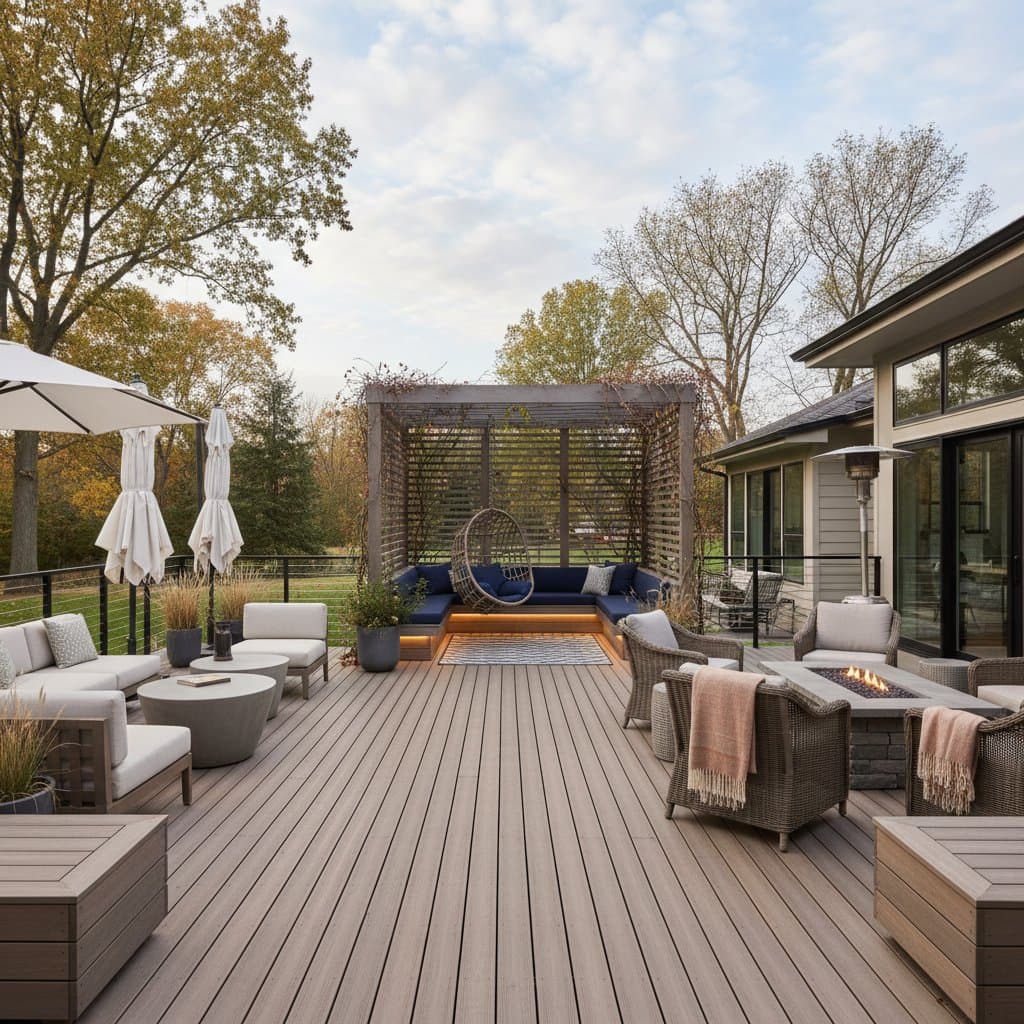
Turn One Deck into Three Seasons with Microzones
Decks often sit idle in early spring, overheat during midsummer, and receive little attention by fall. The solution requires no expansion of the space, only a more intelligent design. Microzones divide the deck into targeted areas that adapt to varying weather conditions, allowing extended use for seating, cooking, and gatherings.
This guide explains how to plan, delineate, and furnish the deck for versatile comfort. Readers learn to incorporate shade, warmth, and wind protection within defined zones while prioritizing safety, organization, and straightforward upkeep.
Overview
A microzone represents a compact section of the deck customized for specific environmental conditions, such as temperature or shelter, through elements like sunlight, shadows, breezes, or flooring choices. Examples include benches, planters, rugs, or varied deck surfaces. These setups create responsive mini-environments suited to seasonal changes, such as a sunlit spot for morning meals, a shaded area for afternoon relaxation, and a sheltered dining space.
Three primary elements guide the design:
- Sun and shade management via deck orientation, umbrellas, or fabric covers.
- Wind deflection and heat retention with screens, tall planters, or heating units.
- Surface materials and furniture selections aligned with intended activities.
Tools and Materials
Implementing microzones demands no major reconstruction. Standard tools and adaptable components suffice for the project.
Tools:
- Tape measure, 25 feet (7.6 meters) in length
- Drill equipped with weather-resistant screws
- Level and stud finder for secure installations
- Utility knife and scissors for cutting fabrics or mats
Materials:
- Outdoor rug, approximately 6 by 9 feet (1.8 by 2.7 meters), to delineate zones
- Two to three sizable planters serving as wind barriers
- One retractable shade sail or adjustable umbrella
- Weatherproof string lights, totaling about 40 feet (12 meters)
- Compact electric or propane heater for cooler periods
- Foldable or stackable chairs for adaptable arrangements
Select movable items to accommodate seasonal adjustments easily.
Steps
1. Map the Deck Layout
Observe the deck from outside at morning, midday, and evening to note patterns of sunlight and shadow. Outline potential zones using chalk or masking tape. Identify at least one spot receiving direct sun for over three hours and another remaining shaded during peak afternoon heat.
2. Define the Microzones
Establish three separate areas:
- Morning zone for coffee or reading, featuring ample sunlight and lightweight furnishings.
- Midday zone for dining or tasks, with modifiable shade and ventilation.
- Evening zone for leisure, incorporating heat sources and ambient lighting.
Allocate a minimum of 6 by 6 feet (1.8 by 1.8 meters) per zone to support seating and circulation comfortably.
3. Establish Surfaces
Employ outdoor rugs or interlocking tiles to mark boundaries. Opt for light-colored materials in exposed areas to deflect heat and darker tones in sheltered spots to retain warmth.
4. Incorporate Vertical Features
Place tall planters or lattice panels along the side facing prevailing winds. These elements reduce drafts and enhance privacy. Secure all installations firmly to avoid toppling, and verify stability following strong winds.
5. Integrate Shade and Lighting
Affix a retractable canopy or umbrella over the midday zone. Suspend string lights above, positioning them 12 inches (30 centimeters) apart for uniform illumination. Employ cords rated for exterior use and elevate outlets above ground level.
6. Introduce Heat and Comfort Layers
Site a portable heater or fire pit within the evening zone. Maintain a clearance of at least 3 feet (0.9 meter) from combustible materials. Provide substantial blankets or cushions, stored in watertight containers when not in use.
7. Evaluate and Refine
Utilize each zone over a week at varied times. Reposition furniture, shift rugs, or adjust shades as needed to achieve equilibrium. Ongoing adjustments based on personal experience optimize the microzones' effectiveness.
Safety Considerations
Select electrical cords designed for outdoor conditions and inspect them for damage prior to connection. Fasten tall planters and screens against wind uplift. Apply non-slip backing beneath rugs and mats, particularly after precipitation. Position propane tanks vertically and at least 5 feet (1.5 meters) from ignition sources. Assess the deck's load-bearing capacity before adding heavy planters or heaters.
Common Issues and Solutions
Issue: Shade sails collect standing water.
Solution: Tilt the installation by lowering one corner 8 inches (20 centimeters) below the opposite side to facilitate drainage.
Issue: Winds topple lightweight chairs.
Solution: Select robust metal frames or anchor legs with sand-filled weights.
Issue: Inconsistent nighttime lighting.
Solution: Install additional string lights along railings or beneath stairs to distribute illumination evenly.
Budget and Timeline
A basic configuration typically ranges from $350 to $700, influenced primarily by the shading mechanism and heating option. Dedicate one weekend to planning and installation, followed by brief tuning sessions.
Reduce expenses by reusing existing planters or opting for solar-powered lights over electrical systems. Prioritize investments in safety equipment and fastening hardware.
Upkeep Practices
Clean surfaces weekly using mild soap and water. Roll rugs aside after intense rain to allow the deck to dry. Inspect screws and anchors each month. Prior to winter storage, seal fabrics and cushions in airtight containers to avert mold. Service heaters and examine cords before spring reactivation.
Seasonal Preparation
Early spring: Clear debris, secure connections, and verify electrical outlets.
Midsummer: Wash fabrics to remove pollen and dust; reposition planters for balanced plant development.
Late fall: Withdraw textiles, shield the heater, and relocate fragile items indoors.
Adhering to these routines ensures prompt readiness for shifting conditions.
Efficient Storage Strategies
Incorporate benches with hinged lids or deck storage boxes for blankets and accessories. Organize containers by zone for swift access. Preserve a 3-foot (0.9 meter) walkway between areas to facilitate safe navigation. In constrained spaces, mount hooks for collapsible chairs. These methods maintain an uncluttered, inviting deck.
Professional Assistance
Consult a contractor for structural modifications, electrical wiring beyond basic outlets, or assessments of deck integrity under added loads. Professionals ensure compliance with local building codes and enhance long-term durability.
Maximize Outdoor Living
Microzones transform a standard deck into a dynamic extension of the home, fostering comfort from spring through fall. With thoughtful planning and periodic tweaks, these setups deliver enduring enjoyment and practical value for urban dwellers seeking extended al fresco experiences.