
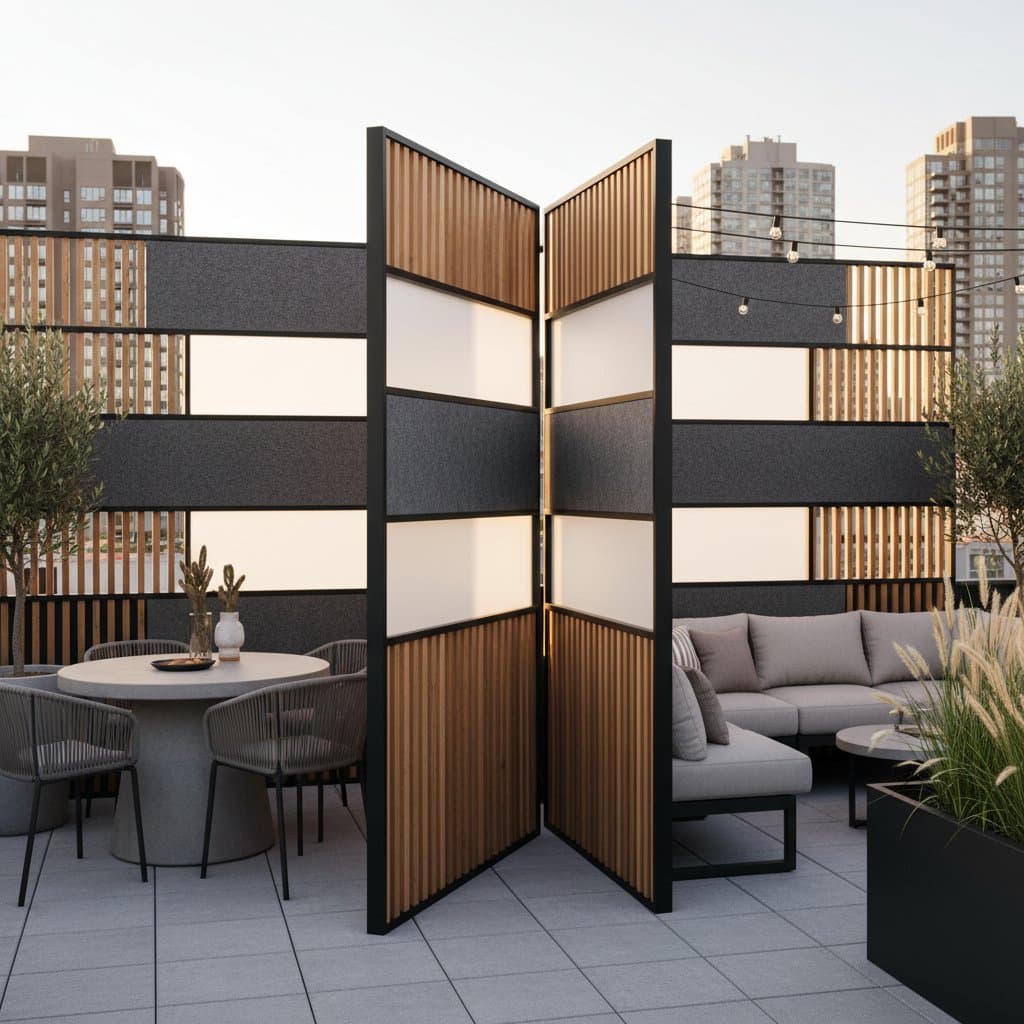
Dual Panels: Block Sound and Divide Decks Seamlessly
Urban decks often expose residents to intrusive noise from streets, neighboring properties, and shared boundaries, hindering relaxation. Dual sound-blocking panels address these challenges effectively. They attenuate noise while partitioning spaces with a sleek, contemporary aesthetic, delivering enhanced privacy, tranquility, and optimized deck utilization.
This guide details the nature of dual panels, their operational principles, and implementation strategies to convert your deck into a serene sanctuary.
Overview
Dual panels consist of layered outdoor screens designed for dual functionality. One layer specializes in sound attenuation, while the other ensures visual screening or demarcates distinct deck areas. A single assembly can diminish noise by as much as 60 percent and simultaneously function as a partition for lounging, dining, or recreational zones.
Typically constructed from composite wood, acrylic, or metal frameworks incorporating acoustic insulation, these panels feature dense builds that absorb and deflect sound waves. The robust structure facilitates secure attachment to deck posts or independent bases. Deploy a single set to shield against street noise or multiple units to form secluded nooks, ideal for compact urban decks where spatial constraints demand multifunctional solutions.
Consider panel dimensions carefully; standard sizes range from 4 to 8 feet in height and 3 to 6 feet in width, allowing customization to fit irregular deck layouts. Opt for weather-resistant materials like UV-protected acrylic to withstand prolonged exposure to elements, ensuring longevity in harsh city environments.
Tools and Materials
Installation of dual panels requires only essential outdoor implements. Assemble the following before commencement:
- Measuring tape, at least 25 feet (7.6 meters) long
- Level and pencil for precise markings
- Drill equipped with outdoor-rated screws
- Mounting brackets or post anchors for stability
- Two or more dual sound-blocking panels, dimensioned appropriately for the deck
- Silicone sealant to weatherproof edges and minimize moisture ingress
- Safety gloves and goggles for protection
Pricing for individual panels varies from 150 to 300 dollars, with premium acoustic variants commanding higher rates due to superior durability and noise reduction efficacy. Factor in additional costs for custom sizing if standard options do not align with your deck configuration.
Steps
Follow these sequential steps to install dual panels efficiently.
- Measure the designated space. Determine the span between deck posts or intended divider locations, verifying that panels align without excessive trimming.
- Secure the supports. Affix brackets or post anchors to the deck framework, ensuring screws engage firmly with the underlying structure.
- Position the initial panel. Elevate it vertically and verify plumb alignment using the level; make necessary adjustments prior to fixation.
- Fasten using screws. Drill into predetermined holes, maintaining clearance from the drill bit to avoid injury.
- Apply sealant to edges. Distribute a narrow silicone bead along seams to repel water and dampen potential vibrations.
- Install subsequent panels. Maintain snug connections at joints to eliminate pathways for sound transmission.
With supports prepared, each panel installs in approximately 30 minutes, enabling completion of a basic setup within a few hours.
Safety Tips
Prioritize safety throughout the process.
- Don gloves when manipulating metal or composite components to guard against sharp edges.
- Employ eye protection during drilling or any abrasive activities.
- Ensure panels remain dry to prevent slippage on wet surfaces.
- Assess the deck's load-bearing capacity to accommodate the panels' weight, consulting a structural expert if modifications exceed standard limits.
Troubleshooting
Address common issues promptly to sustain performance.
If panels vibrate in windy conditions, reinforce brackets or insert rubber washers to absorb movement. For visible gaps between units, apply foam weatherstripping to create airtight seals. Should residual noise persist, inspect peripheral areas for vulnerabilities and incorporate corner return panels to enclose the space fully.
In cases of uneven installation, disassemble and realign using the level tool. Persistent moisture problems indicate inadequate sealing; reapply silicone after thorough cleaning and drying.
Budget and Time
For a modest deck, procure two to three panels at a total expense of 400 to 900 dollars. Expansive decks or advanced acoustic configurations may escalate to 1200 dollars. Homeowners typically finish the endeavor over a weekend, assisted by one additional person for handling larger components.
To economize, integrate standard privacy screens with supplementary acoustic mats for layered soundproofing. However, invest in high-quality mounting hardware to resist storm-induced loosening, as inferior anchors compromise the entire assembly.
Maintaining Your Investment
Preserve panel integrity through routine care. Wash surfaces biannually using mild soap and water, followed by thorough rinsing and drying to avert residue buildup. Inspect and tighten screws once yearly. Examine seals for deterioration and reapply sealant as required. Such diligent upkeep sustains acoustic effectiveness and maintains a polished appearance against urban wear.
Store spare parts like screws and sealant in a dry location for quick access during inspections. In coastal or high-pollution areas, consider annual professional assessments to detect subtle corrosion early.
Implementing Your Deck Upgrade
Initiate the project by installing a single panel section adjacent to the noisiest exposure point. Experience the immediate improvements in auditory and visual seclusion during an outdoor session. Proceed to augment with additional panels based on the positive outcomes.
Observe how the deck evolves into a defined, tranquil extension of your living space rather than a mere elevated platform. Incremental enhancements like these foster quieter urban lifestyles, amplifying comfort and enjoyment in everyday outdoor moments.