
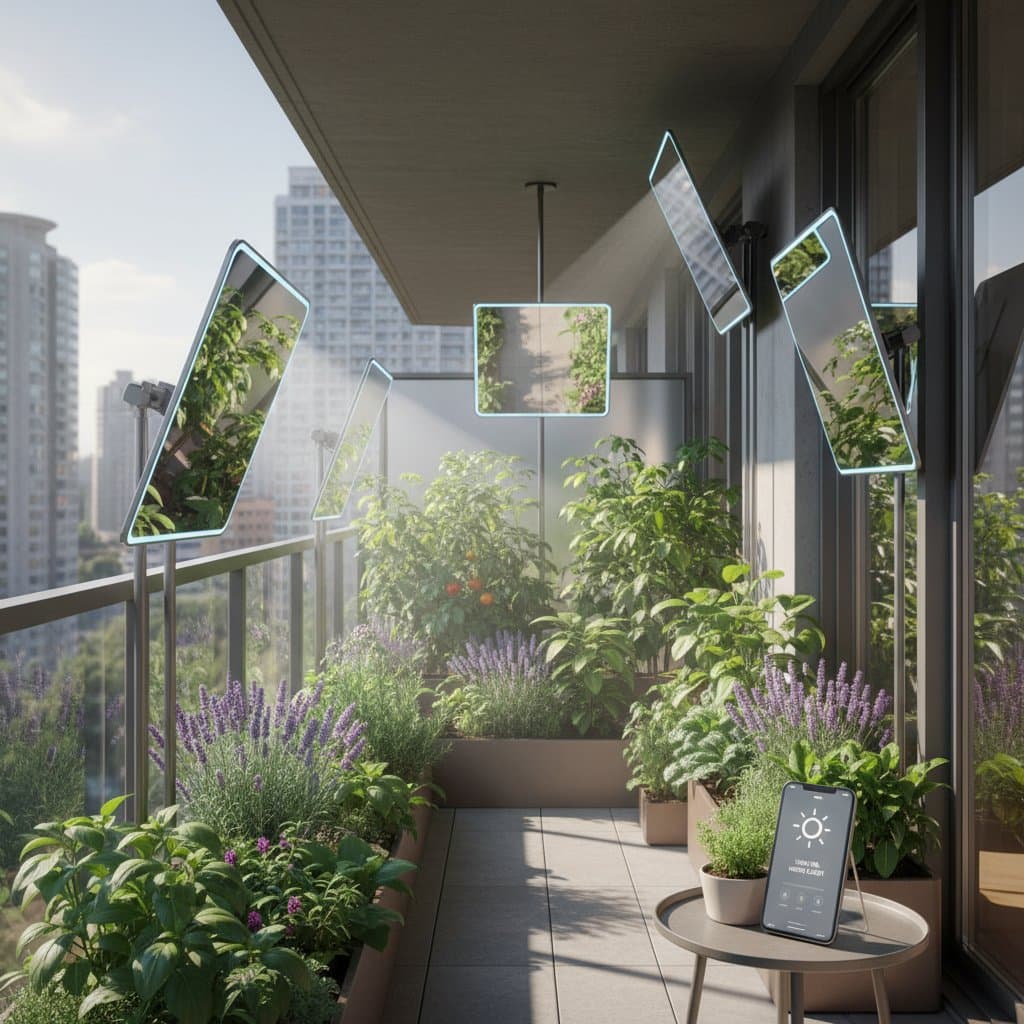
How AI-Powered Mirrors Double Sunlight for Thriving Shaded Balcony Gardens
Urban balconies often provide a serene escape, yet persistent shade hinders plant vitality. Herbs wilt, flowers fade, and vegetables stall despite diligent care. AI-powered mirror systems address this challenge by capturing and redirecting sunlight precisely where it is needed most.
These innovative devices employ compact reflective panels equipped with sensors and motors. They automatically adjust to follow the sun's path, concentrating rays onto shaded areas without introducing excess heat or harsh glare. The result is a balanced light environment that supports robust growth for a variety of plants, from leafy greens to compact fruiting varieties.
This comprehensive guide details the mechanics of AI mirrors, essential purchasing considerations, step-by-step installation, ongoing maintenance, and strategies for seasonal adaptation. Whether you maintain a modest herb collection or aspire to a full micro-farm, these tools offer a sustainable path to balcony abundance.
Essential Tools and Materials
Prepare thoroughly to ensure a smooth and secure setup process. Most AI mirror kits supply the primary components, though supplementary items enhance performance and longevity.
Core kit elements include:
- One to three reflective panels, typically 12 inches (30 centimeters) in diameter, constructed from lightweight, durable aluminum with a high-reflectivity coating.
- Adjustable mounting brackets featuring ball joints for precise angle control.
- Integrated light sensor module connected via a weather-resistant cable.
- Central control unit supporting Bluetooth app connectivity or manual remote operation.
- Protective weather shield to safeguard electronics from rain and debris.
Recommended additional supplies:
- Corrosion-resistant stainless steel screws and wall anchors suitable for outdoor use.
- A digital level and retractable tape measure for accurate positioning.
- Cordless drill equipped with a 1/4-inch (6-millimeter) masonry bit for secure fastening.
- Extension cord or rechargeable solar power bank to supply consistent energy.
- Soft microfiber cloths paired with a non-abrasive glass cleaner for maintenance.
- Optional reflective adhesive film to prototype light paths prior to permanent installation.
Organize cables neatly using UV-resistant adhesive clips or flexible conduit tubing. Always wear safety goggles and work gloves during drilling or panel handling to minimize risks.
Prioritizing Safety in Installation and Use
Safety forms the foundation of any balcony enhancement project. AI mirrors demand careful placement to avoid unintended reflections that could distract drivers or neighbors.
Direct beams toward plant surfaces or trays at ground level, steering clear of windows, pathways, or human eye height. Test angles during peak sun hours to confirm no hazardous glare occurs.
Secure installations withstand urban winds; inspect and tighten all fasteners monthly, particularly following high-wind events or heavy rain. Opt for outdoor-rated extension cords with integrated ground-fault circuit interrupter (GFCI) protection and sealed plug covers to repel moisture.
Before cleaning, power down the system to avoid stressing the tracking motors. Gently wipe panels with a damp cloth, avoiding harsh chemicals that might degrade the reflective surface. Monitor the control unit for warmth during extended operation; if it exceeds comfortable touch temperature, provide ventilation or a ventilated enclosure.
Investment and Time Considerations
Entry-level AI mirror kits range from $120 to $250, varying by panel count and advanced features like automated seasonal programming. Expanding to multiple panels increases coverage area proportionally, yet shared control units keep costs efficient.
Initial assembly requires approximately two hours for drilled mounts or one hour with clamp-based alternatives. Weekly alignment and cleaning routines demand just 10 minutes, integrating seamlessly into routine gardening tasks.
The primary financial advantage lies in sunlight augmentation, eliminating reliance on artificial lighting. Urban dwellers typically allocate $30 to $50 monthly for grow lamps and electricity; mirrors recoup their cost in a single growing season through substantial energy savings and healthier yields.
Adapting to Seasonal Changes
AI mirrors excel with periodic adjustments to align with shifting solar patterns. Tailor your approach to each season for optimal performance.
In spring, recalibrate sensors as daylight extends, directing light to emerging seedlings on elevated shelves. Gradually introduce reflected rays to tender sprouts, fostering strong root development without overwhelming young plants.
Summer demands vigilance against amplified warmth from concentrated light. Select heat-tolerant species and employ fabric shade cloths over sensitive foliage if wilting appears. Position panels to diffuse rather than focus beams during midday peaks.
As autumn arrives, thorough cleaning prevents buildup from falling leaves or pollen, maintaining clarity. Adjust panels to low-angle trajectories, capturing fleeting sunlight to prolong harvests of cool-season crops like kale and radishes.
Winter preparation involves powering down in sub-freezing climates to protect components. Models with cold-resistant lubricants may remain outdoors, but indoor storage allows for wiring inspections and battery recharges, readying the system for renewal.
Professional Assistance for Complex Setups
For balconies elevated above street level or requiring external mounting, professional expertise ensures compliance and durability. Licensed installers navigate structural constraints adeptly.
Engage a specialist when:
- Brackets must affix to building exteriors or load-bearing walls.
- Power sources demand extended wiring through sealed conduits.
- Local regulations mandate permits for visible modifications.
During consultations, inquire about maximum weight capacities, IP-rated waterproofing, and optimal cable management. Such precautions avert structural issues and uphold safety standards.
Key Benefits and Practical Outcomes
AI mirrors leverage sensor-driven automation to mirror sunlight efficiently, potentially doubling effective exposure on obscured surfaces. A single unit suffices for modest spaces, while multiples scale to larger arrays.
Reliable anchoring, precise angling, and protected cabling underpin secure operation. Consistent upkeep preserves reflective efficiency and motor precision, yielding dependable results.
Seasonal fine-tuning sustains productivity across months, accommodating herbs, blooms, and edibles alike. This technology empowers sustainable gardening, diminishing dependence on resource-intensive alternatives.
Implementing Your Balcony Transformation
Commence with a single mirror positioned adjacent to your primary planting zone. Observe light distribution over several days, noting plant responses such as accelerated greening or budding.
Refine based on observations: elevate for overhead coverage or cluster for broader illumination. As confidence grows, incorporate additional units to illuminate overlooked nooks, cultivating a resilient, light-optimized oasis amid city constraints.