
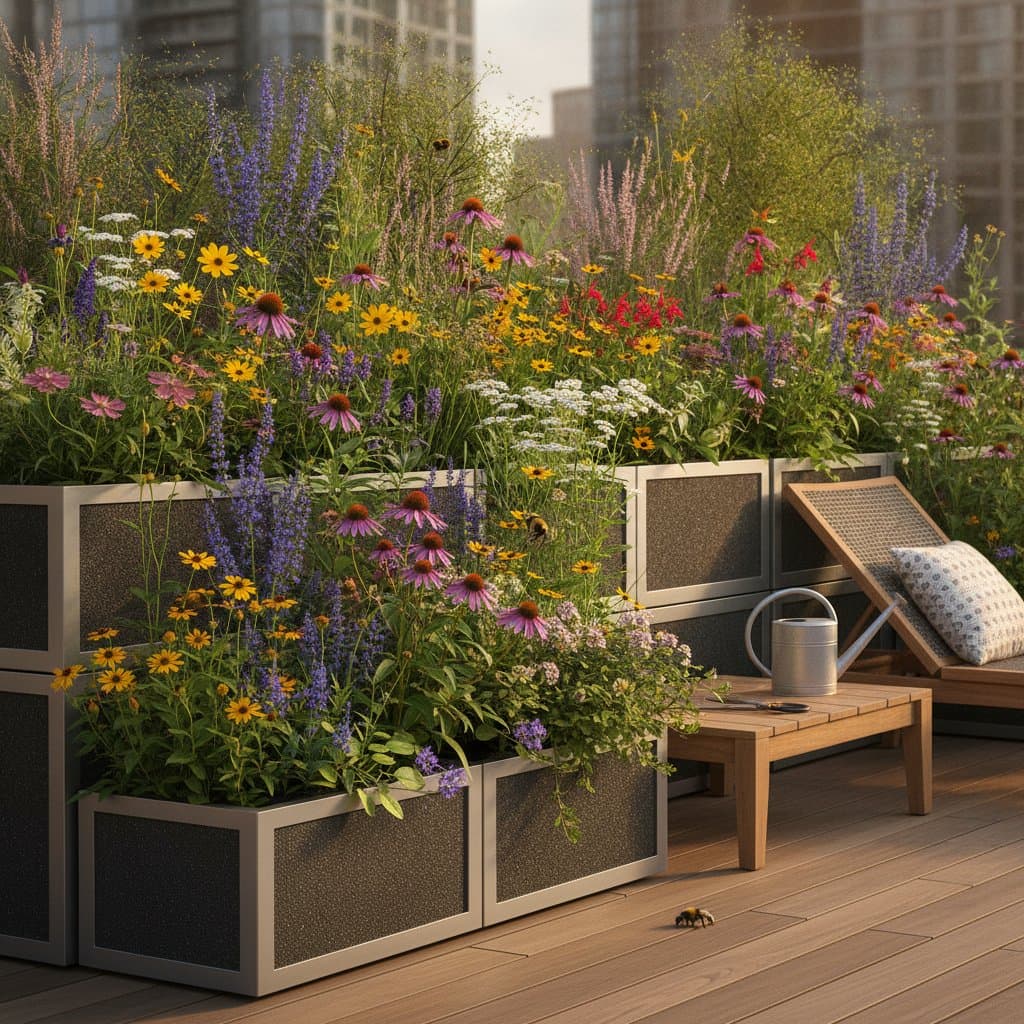
Turn Your Deck Into a Pollinator Meadow
A quiet deck can support bees and other pollinators when transformed into a compact meadow. Even a few square feet of well chosen plants deliver color and movement while creating a functional habitat. The approach relies on containers filled with native species that supply nectar and pollen across multiple seasons.
What Defines a Pollinator Meadow
A pollinator meadow consists of native flowering plants arranged to provide continuous resources for bees, butterflies, and beneficial insects. On a deck the same concept appears in grouped containers rather than in ground beds. The result replaces lost foraging space and contributes to local biodiversity without requiring a large yard.
Native plants succeed because they align with regional bee diets and bloom cycles. Selecting species that flower from spring through fall maintains a steady food supply. This sequence supports pollinator health more effectively than scattered non native ornamentals.
Required Tools and Materials
- Three to six planters, each at least 12 inches deep and 18 inches wide
- Two cubic feet of organic potting mix for every container
- Five to seven native plant species suited to local conditions
- Watering can or hose with gentle spray attachment
- Slow release organic fertilizer formulated for flowers
- Lightweight mulch such as pine bark
- Optional shallow dish filled with pebbles for water access
Site Assessment and Container Placement
Observe sunlight patterns on the deck for at least one full day. Most native meadow plants require six hours of direct sun. Note wind patterns as well, because bees favor sheltered areas that allow easy flight between blooms.
Choose containers made from wood, ceramic, or recycled plastic, each fitted with drainage holes. Position the planters in clusters rather than in isolated spots. Grouping creates the visual density of a meadow patch and improves pollination efficiency.
Soil Preparation and Plant Selection
Fill each container with fresh potting mix amended with compost if the material appears compacted. Avoid synthetic fertilizers that can harm soil organisms. Loosen plant roots before setting them in place, then firm the soil around each specimen.
Select species that bloom in succession. Early options include wild columbine and penstemon. Mid season choices feature bee balm, coneflower, and coreopsis. Late season plants such as goldenrod and asters extend resources into autumn. Place taller varieties toward the back of each cluster and shorter ones in front.
Ongoing Care and Seasonal Adjustments
Water thoroughly after planting and maintain consistent moisture for the first two weeks. Apply one inch of mulch to conserve water and limit weed growth. Provide a shallow water source refreshed every few days so bees can land safely.
Inspect containers weekly. Remove spent blooms to encourage additional flowering. In cold regions, move pots against a sheltered wall before winter. In milder climates, continue light watering during extended dry periods.
Common Issues and Practical Solutions
Wilting flowers often result from excessive heat or insufficient water. Move affected containers to partial shade during peak afternoon sun and increase watering frequency. Sparse bee visits usually indicate limited bloom diversity. Adding more early and late season species corrects the imbalance.
Mold on soil surfaces improves with better airflow and reduced watering. Wind damage decreases when a low screen or railing panel breaks gusts without blocking sunlight. Heavy containers should be secured with brackets or non slip pads from the outset.
Budget Considerations and Long Term Value
Initial costs range from 60 to 120 dollars for containers, soil, and starter plants. Setup requires two to three hours, followed by roughly fifteen minutes of weekly maintenance. The same containers can be refreshed each spring by replacing the top layer of soil and dividing crowded perennials.
A compact deck meadow delivers measurable support for pollinators while enhancing the usability of an urban outdoor space. Consistent seasonal attention sustains both plant health and insect activity year after year.