
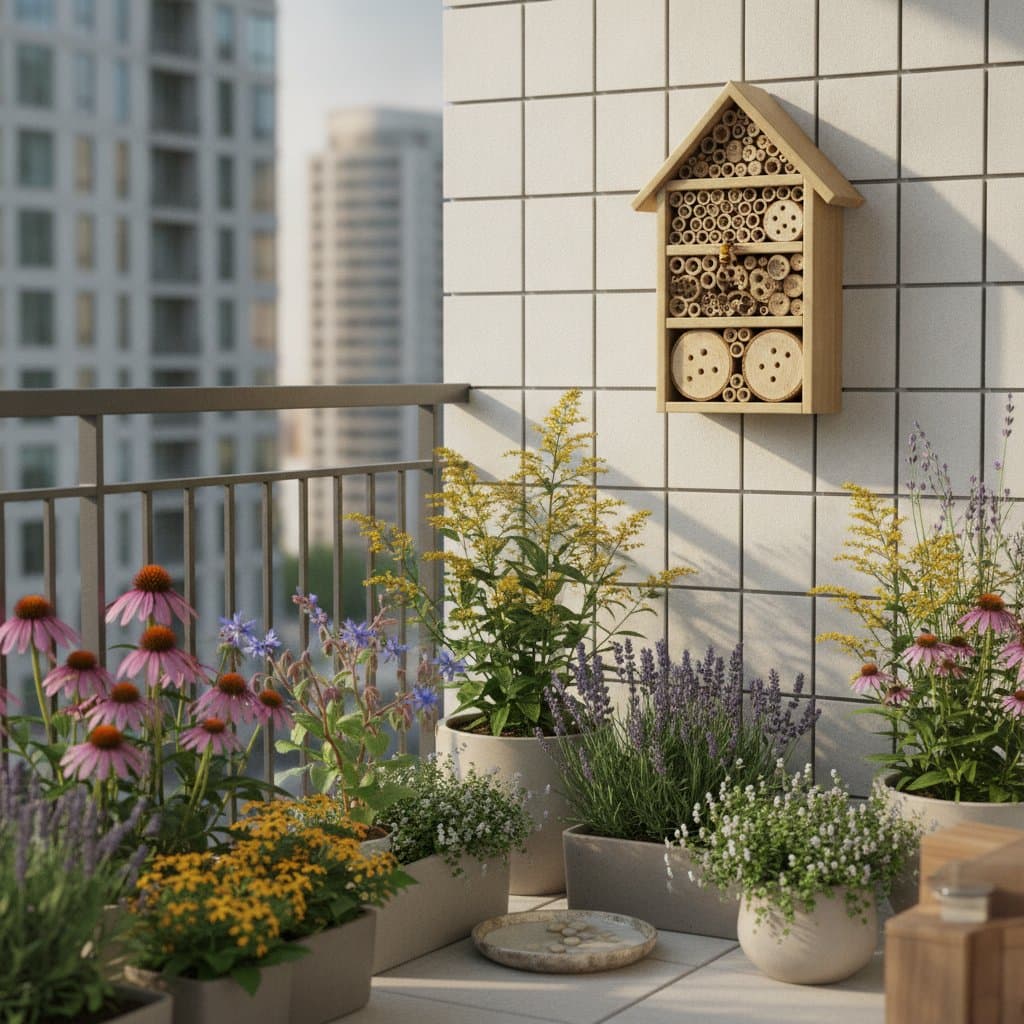
Creating a Bee Hotel for Your Balcony
Bee hotels provide nesting sites for solitary bees that pollinate urban gardens. These structures fit easily on railings or walls and require minimal space. Proper design and placement encourage bees to stay and support nearby plants.
Pairing the Hotel with Nectar Sources
Place planters filled with lavender, thyme, chives, salvia, and native wildflowers around the hotel. Select at least three species that bloom in succession from spring through fall. Set a shallow water dish with pebbles nearby so bees can drink without risk of drowning.
Safety Practices
Keep the structure dry to prevent mold growth. Position it away from bright lights that disrupt insect behavior. Refrain from applying pesticides or fertilizers in the immediate area. Move the hotel only when empty and explain its purpose to children.
Maintain several feet of separation from seating if anyone in the household has a serious allergy.
Common Issues and Solutions
Absence of visiting bees
Incorrect sun exposure, insufficient flowers, or poorly sized holes often deter bees. Turn the hotel to face the morning sun. Add more blooming plants. Swap rough or oversized tubes for smooth ones measuring between 1/8 and 3/8 inch.
Debris-filled holes without bees
Wasps or flies may occupy the cavities. Watch activity closely before clearing material. Remove debris and replace nesting tubes at season end if parasites appear.
Mold or decay
Shade and poor drainage promote rot. Relocate the hotel to a sunnier, drier position and add an overhang. Discard any affected stems.
Bird damage to entrances
Secure fine metal mesh with openings under 1 inch across the front. This barrier stops birds while allowing bee access.
Ongoing Care Schedule
Examine the hotel each season. Most active work occurs in late autumn after nests are sealed.
- Spring: Observe emerging bees without disturbing tubes.
- Summer: Maintain soil moisture and remove spider webs from entrances.
- Autumn: Move the hotel to a dry, unheated space once nests are complete.
- Winter: Keep it in a cool, protected location until spring.
Replace bamboo or reeds every two years. Brush reusable blocks clean with a pipe cleaner to reduce mite buildup.
Storage Guidelines
Label the hotel before indoor storage. Place it in a ventilated cardboard box away from moisture and rodents. Rotate extra nesting materials annually to limit disease.
Track filled holes in a notebook to measure progress over time.
Construction Costs and Effort
Building a basic model requires roughly two hours and under twenty dollars when using garden scraps. Commercial versions range from twenty to sixty dollars. Choose pruned raspberry stems or an adapted birdhouse for low-cost options. Skip glued decorative units that retain moisture.
Secure mounting and smooth hole finishes remain essential for long-term use.
When Expert Advice Helps
Most balcony hotels need no outside assistance. Seek guidance from a local beekeeper if allergies raise concerns or if mites persist despite cleaning.
Ask about regional bee preferences to refine hole sizes and plant selections.
Monthly Tasks by Season
Early spring calls for checking mounts and refreshing empty tubes. Late spring through summer requires consistent bloom and morning watering. Late summer means watching sealed nests without moving the structure. Autumn storage and winter planting plans complete the cycle. Each step takes only minutes yet sustains the habitat.
Starting Your Own Project
Begin with one hotel and three herb planters to establish a functional station. Expand later by varying hole diameters. Record observations each season to refine results.
Select an east-facing, dry wall spot. Gather bamboo or wood and drill holes between 1/8 and 3/8 inch. Add staggered-bloom nectar plants. The finished hotel supports local pollination while fitting neatly into city life.