
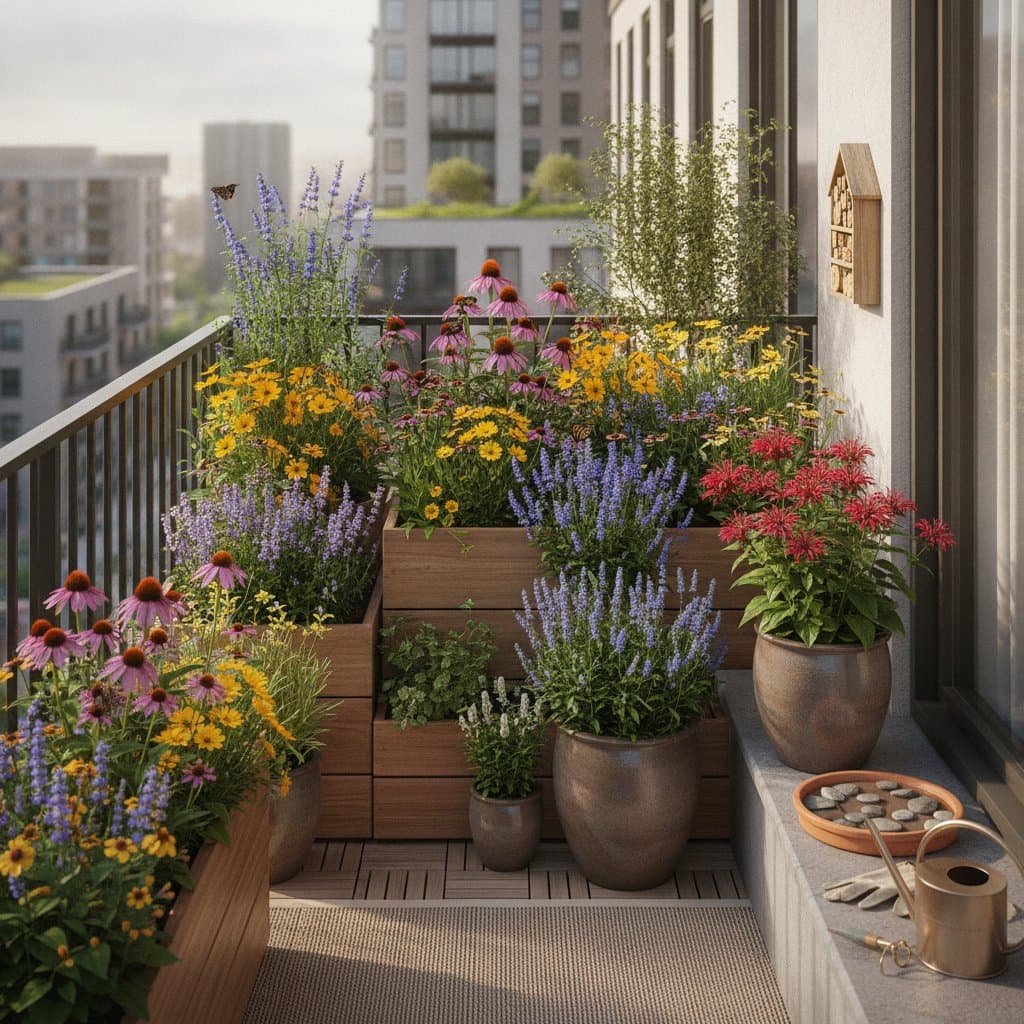
City Balconies Can Fill Critical Gaps for Struggling Bees
Urban balconies offer valuable space for pollinators when natural habitats shrink. A few well chosen containers can supply food and shelter for bees throughout the growing season. The following steps show how to build a productive garden that fits even the smallest outdoor area.
Budget and Time Considerations
Expect to spend between 20 and 30 dollars on basic supplies at the start. Plants and seeds typically cost 25 to 60 dollars, while tools and extras add another 5 to 20 dollars. The initial setup requires roughly half a day. After that, routine care takes 15 to 20 minutes several times each week.
Begin with three containers and expand each season to spread the expense. Reuse existing soil by replacing only the top third with fresh compost. Recycled buckets or wooden crates work well as planters provided they include drainage holes. Avoid treated lumber because chemicals can leach into the soil.
Seasonal Maintenance Tasks
Consistent attention keeps plants healthy and pollinators returning. Follow these routines to match changing conditions.
Spring
- Refresh the soil and compost mixture.
- Divide overgrown perennials.
- Clear debris from bee houses.
Summer
- Water in the early morning to limit evaporation.
- Remove spent blooms each week.
- Monitor metal containers for overheating.
Autumn
- Retain some seed heads for birds.
- Decrease watering as growth slows.
- Shift tender pots against walls for added warmth.
Winter
- Insulate pots with burlap or bubble wrap.
- Water only on mild days.
- Prepare a plant list for the next year.
Set calendar reminders to prevent lapses that could harm the habitat.
Efficient Storage Solutions
Limited balcony space requires thoughtful organization. A bench with a lift up seat stores soil and gloves out of sight. Mount hooks on the wall for small tools. Stack empty pots by size and keep fertilizer in sealed containers. Maintain a notebook or phone log to track care activities.
Situations That Require Professional Help
Most balcony gardens remain manageable without outside assistance. Contact a professional when structural cracks appear, drainage affects neighboring spaces, or heavy installations are planned. An inspection costs between 100 and 250 dollars and confirms weight limits and waterproofing.
Core Practices for Success
- A handful of pots can nourish dozens of pollinators daily.
- Native plants provide reliable support because local bees recognize them.
- Staggered bloom times from spring through fall prevent bees from departing.
- Skip pesticides and synthetic fertilizers to protect the micro ecosystem.
- Proper watering and airflow determine plant vitality.
Starting and Expanding Your Garden
Three pots and three plant varieties that bloom at different times form a solid foundation. Observe which pollinators arrive first and add species that perform well in local light and wind conditions. When neighbors notice activity, they often begin their own plantings. A single block of small habitats can sustain hundreds of insects.
Refresh soil each spring. Introduce one new native species annually. Maintain a shallow water source for visiting bees. Morning coffee beside active flowers becomes more meaningful when the space supports urban biodiversity.