
Preparing the Growing Container
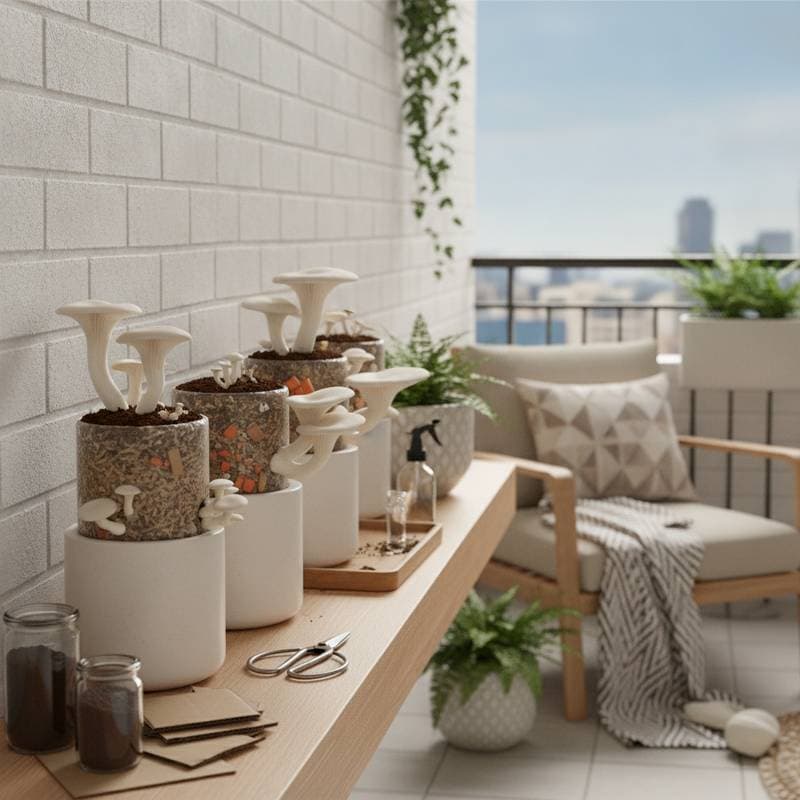
Spoon the prepared mixture into your container. Press the material gently without compacting it. Leave one inch of space at the top. Cover the surface with a breathable cloth and secure it using a rubber band or string. Label the container with the mushroom variety.
Incubating the Culture
Place the container in a shaded and warm area on your balcony or on an indoor shelf away from direct sunlight. Maintain temperatures between 65 and 77 degrees Fahrenheit. Mist the surface once each day. White mycelium should appear and spread through the mixture within two weeks.
Encouraging Fruiting
Once the surface turns mostly white, move the container to a cooler location that receives gentle light. Cut or poke several small holes in the sides to allow mushrooms to emerge. Maintain high humidity through twice-daily misting or by placing a shallow tray of water nearby.
Harvesting the Mushrooms
Mushrooms typically appear one to two weeks after pinheads form. Harvest when the caps reach full expansion. Twist each mushroom gently at the base to remove it. Avoid pulling forcefully, as this can damage the underlying mycelium.
Troubleshooting Common Issues
No white growth after two weeks. The temperature may be too low or the substrate too dry. Move the container to a warmer spot and mist lightly. Add a handful of damp cardboard strips if the mixture remains dry.
Green or black mold on the surface. Excess moisture or insufficient airflow often causes this issue. Remove the affected areas, improve ventilation, and reduce misting frequency.
Mushrooms appear small or thin. Low humidity or limited nutrients may be responsible. Mist more frequently and add a fresh layer of coffee grounds around the edges to nourish the mycelium.
Mushrooms stop growing. The substrate may be exhausted. Mix in new scraps along with a small amount of fresh spawn to restart the process.
Storing Your Harvest
Keep fresh mushrooms in a paper bag inside the refrigerator for up to five days. Avoid plastic bags, which trap moisture and accelerate decay. For surplus mushrooms, slice them and dry in a low oven or dehydrator at 150 degrees Fahrenheit until crisp. Store dried mushrooms in airtight jars.
Refrigerate spare spawn in a clean jar or sealed bag. It remains viable for several weeks when kept dry and cool.
Adjusting for Seasons
Balcony mushroom cultivation succeeds year-round with minor modifications.
Warm seasons. Keep containers shaded and misted to avoid drying. Move them indoors if temperatures rise above 85 degrees Fahrenheit.
Cool seasons. Position containers near indoor walls for added warmth. Wrap them in cardboard or fabric for insulation.
Rainy weather. Shield containers from direct rainfall to prevent drowning the mycelium. Increase airflow after storms to reduce mold risk.
Core Principles
Mushroom cultivation converts organic waste into food for fungi that produce edible mushrooms at home. The practice reduces food waste, lowers grocery costs, and supplies fresh produce in limited spaces. Collect scraps safely, combine them with spawn, maintain moisture levels, and harvest with care.
You can repeat the cycle every few months by using leftover mycelium from one batch as starter material for the next.
Beginning Your Project
Start immediately after your next cup of coffee. Save the grounds, select a clean container, and obtain oyster mushroom spawn from a local supplier or community garden.
- Begin with one bucket and a small quantity of scraps to understand the process.
- Maintain consistent moisture and cleanliness to prevent most problems.
- Observe mycelium development to learn how moisture and temperature influence growth.
Growing mushrooms from balcony scraps converts waste into a valuable resource. The method requires no large land area or specialized equipment. Consistent observation and daily misting support each new flush of mushrooms while you reduce waste and create a small self-sustaining system at home.