
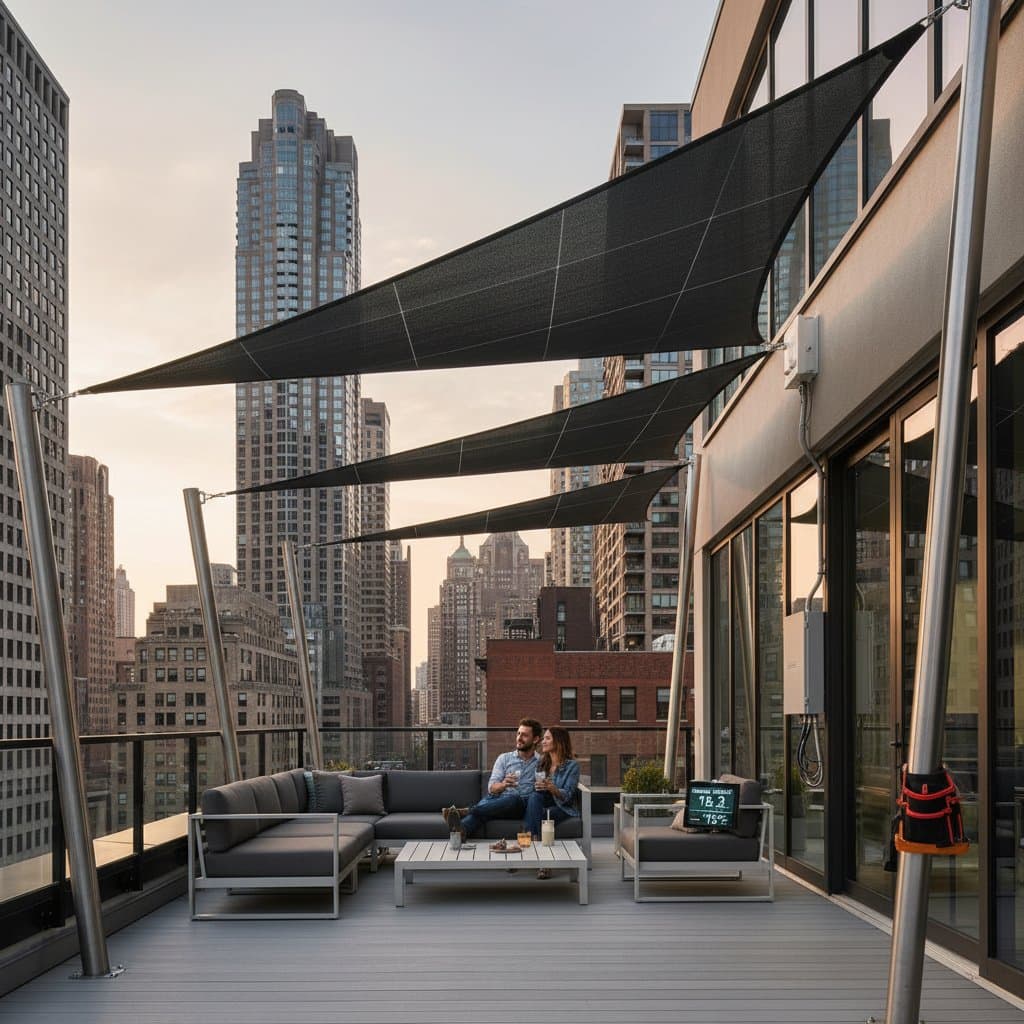
5. Test and Adjust
After completing the connections, verify that the inverter displays an active output signal. A multimeter provides precise confirmation of voltage levels. Fine-tune the sail's angle by one or two degrees to optimize solar exposure, targeting a tilt of 20 to 30 degrees based on your building's position relative to the sun's path.
Repositioning ensures consistent performance throughout the day. Monitor the system's initial output over several hours to identify any immediate issues. Document these adjustments for future reference during seasonal changes.
Troubleshooting
Solar shade sails occasionally encounter issues that affect performance. Addressing them promptly maintains reliability and extends durability.
Problem: The sail sags after rain.
Cause: Water accumulation due to uneven tension or a lowered attachment point.
Fix: Locate the lowest corner and tighten the corresponding turnbuckle by a quarter turn. This promotes natural drainage toward the edges, preventing pooling and fabric stress.
Problem: No power output on sunny days.
Cause: Disconnected wiring or partial shading on the photovoltaic surface.
Fix: Examine all connection points for signs of wear or moisture ingress. Gently clean the panel with a solution of mild soap and lukewarm water, then rinse thoroughly. Steer clear of harsh scrubbers that could scratch the protective coating.
Problem: Flickering lights connected to the sail output.
Cause: Overloaded inverter or fluctuating voltage from variable sunlight.
Fix: Disconnect non-essential devices to lighten the load. Consider adding a compact buffer battery, sized at 10 to 20 percent of daily output capacity, to stabilize the power supply.
Problem: Fabric fraying near mounts.
Cause: Repeated rubbing from wind-induced swaying.
Fix: Install flexible rubber grommets or washers at each attachment site. These components cushion movement and distribute pressure evenly across the fabric edges.
Regular checks reveal patterns in these problems, allowing preventive measures. Keep a log of incidents to track improvements over time.
Maintenance
Schedule comprehensive inspections for your solar shade sail every six months. These routines preserve energy efficiency and structural integrity.
Clean the panels:
Remove surface grime with a microfiber cloth dampened in a neutral detergent solution. Harsh chemicals or high-pressure sprays risk damaging the photovoltaic cells. Accumulated debris can diminish output by up to 20 percent, so address it before efficiency drops noticeably.
Check tension:
Examine all turnbuckles, cables, and ropes for signs of slack or wear. Retighten components incrementally to avoid over-stressing the fabric. Swap out any damaged lines with UV-resistant alternatives rated for outdoor exposure.
Inspect wiring:
Scan cables and junctions for insulation cracks or bare conductors. Apply a bead of weatherproof silicone sealant to minor breaches, ensuring full coverage without obstructing functionality.
Store during storms:
In anticipation of high winds exceeding 40 miles per hour, release two opposing corners from their anchors. Carefully fold the sail and secure it in a dry indoor space to shield it from debris and extreme forces.
Battery care:
House any storage battery in a cool, well-ventilated enclosure away from direct sunlight. Test charge status monthly using the built-in indicator, and top up as necessary to prevent deep discharge cycles.
Diligent upkeep can sustain your system's operation for a decade, matching the longevity of traditional rooftop solar arrays. Track maintenance dates in a calendar to stay consistent.
When to Call a Pro
Certain scenarios demand expertise beyond basic DIY skills. Engaging professionals safeguards safety and compliance.
-
Complex wiring: For integrations with your home's main electrical system or grid-tied setups that enable excess power sales, consult a certified electrician. They ensure proper fusing and metering to meet regulatory standards.
-
Structural mounting: When deck supports or building facades show instability, bring in a structural engineer or contractor. They assess load capacities and reinforce points with additional brackets or beams if required.
-
Permitting: In regulated urban environments, visible solar additions often need municipal approval. A qualified installer navigates applications, coordinates inspections, and verifies adherence to local codes.
Request a detailed proposal outlining expected power generation, structural tolerances, and emergency disconnect protocols. This documentation not only protects your warranty but also streamlines future expansions.
Key Takeaways
Solar shade sails deliver dual benefits of shade and renewable energy in compact urban settings. They lower deck temperatures by blocking direct rays, shield surfaces from UV damage, and enable comfortable extended use during peak heat hours. Simultaneously, embedded panels convert sunlight into electricity suitable for charging devices or powering low-wattage fixtures.
Installation requires standard tools and follows straightforward steps, making it accessible for most property owners. Returns come via reduced utility expenses and enhanced livability. Consistent care through cleaning and adjustments supports long-term reliability across multiple seasons.
Making It Happen
Begin by shading your primary relaxation zone, such as a lounge area, to maximize immediate impact. Select a model equipped with an easy-access inverter for plug-and-play testing. As you experience the temperature drop and energy gains, expand coverage with adjacent sails or incorporate storage for off-peak use.
This phased approach minimizes upfront costs while building confidence in the technology. Over time, your deck evolves into a resilient, self-sustaining extension of your living space.