
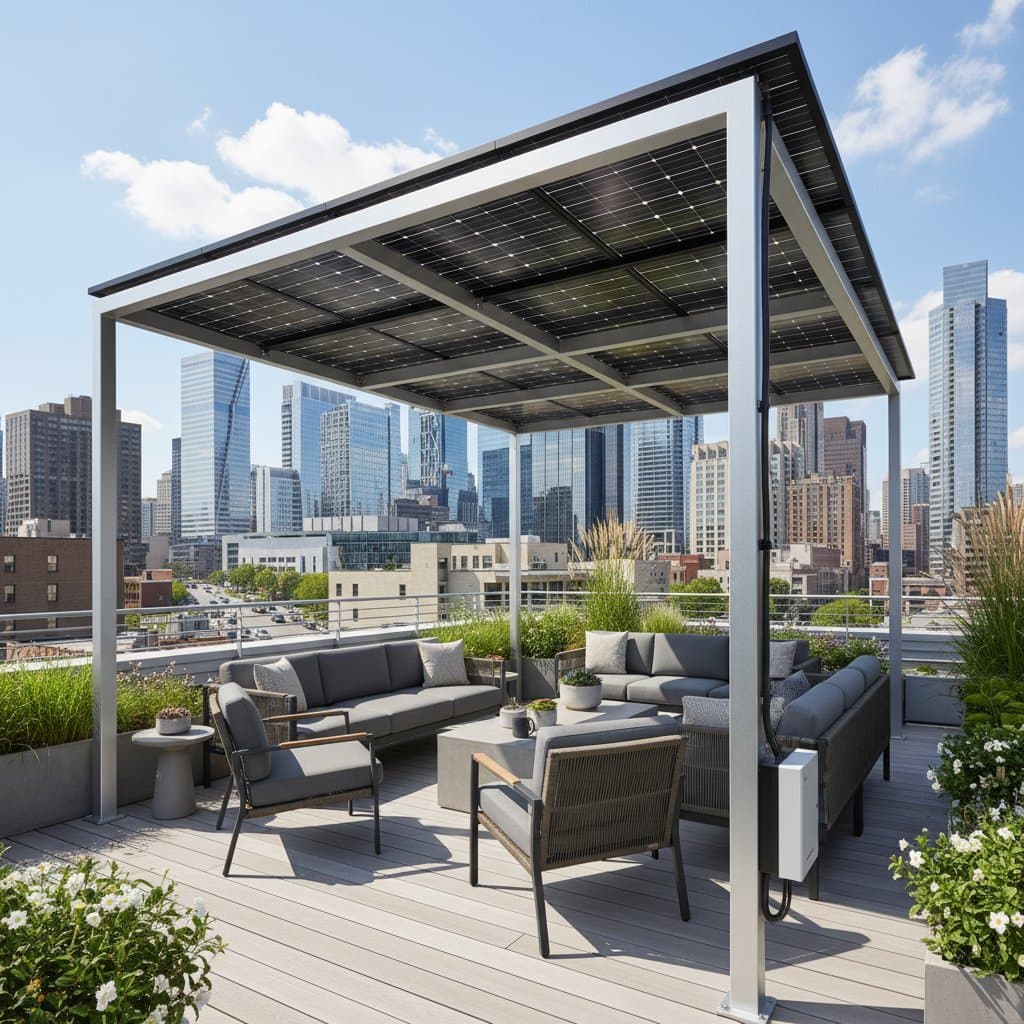
Harness Solar Power and Shade on Your Urban Rooftop with Pergolas
Overview
Urban dwellers often seek serene outdoor areas amid bustling surroundings. A solar pergola delivers shade, framework, and renewable energy through a unified design. It converts sunlight into usable electricity while transforming rooftops into inviting spaces for relaxation or gardening.
The objective remains straightforward: develop a rooftop haven that enhances aesthetics, performs efficiently, and lowers electricity expenses. This guide covers the definition of a solar pergola, required equipment, installation and maintenance procedures, and criteria for professional involvement.
Defining a Solar Pergola and Its Relevance
A solar pergola consists of a freestanding or attached framework topped with solar panels rather than traditional wooden or metallic coverings. These panels serve as a canopy that generates electricity, allows diffused sunlight, and shields against rain or intense solar exposure.
Rooftop areas in cities prove scarce and precious. A solar pergola maximizes such spaces for both leisure and energy production. It accommodates features like illumination, minor devices, or irrigation systems for elevated gardens.
Primary advantages include:
- Production of renewable electricity from solar rays.
- Diminished reliance on utility grids and reduced monthly expenditures.
- Provision of shading and partial protection from elements.
- Support for climbing vegetation, lights, or suspended greenery.
- Elevation of property worth and visual allure.
A solar pergola typically generates 1.5 to 4 kilowatts, varying by dimensions and panel quantity. In standard rooftop configurations, this output offsets significant portions of residential lighting or device consumption.
Essential Tools and Materials
Prior to commencement, outline the framework and assemble appropriate tools. Standard small to medium rooftop pergolas span 8 by 12 feet or 10 by 14 feet.
Required items encompass:
- Solar panels: Six to twelve units, each rated 250 to 400 watts.
- Pergola framework: Options such as pressure-treated lumber, aluminum, or steel.
- Inverter: Device to transform direct current from panels into alternating current for household application.
- Mounting components: Brackets, bolts, and corrosion-resistant fasteners.
- Cabling and conduit: Materials suitable for exterior solar setups.
- Anchors or mounts: Concrete bases or rooftop fixtures to ensure stability.
- Fundamental tools: Power drill, spirit level, adjustable wrench, measuring tape, and safety gloves.
Integration with the home electrical system demands adherence to building codes. Engage a certified electrician for terminal wiring and linkage.
Installation Procedures
Step 1: Evaluate the Rooftop Surface
Determine available dimensions, identifying barriers such as ventilation shafts or air conditioning units. Verify a minimum of five hours of unobstructed sunlight daily over the majority of the area. Remove accumulated refuse and examine the roof for potential leaks or structural vulnerabilities prior to imposing additional load.
Warning: Address any roof deterioration or weaknesses through repairs or reinforcements before pergola placement.
Step 2: Plan and Position the Framework
Draft the pergola's dimensions, elevation, and location. Heights of 7 to 9 feet suit most urban environments, providing adequate headroom and ventilation. Orient the canopy slope toward optimal solar exposure, often southward, with a tilt of 10 to 25 degrees to maximize light absorption and facilitate water runoff.
Step 3: Construct the Framework
Assemble the structure at ground level where feasible, then affix it firmly to the rooftop via anchors or upright supports. Employ a level to maintain alignment. Seal all roof entries with waterproof compounds.
Warning: Utilize fall-arrest gear or edge barriers during work near perimeters.
Step 4: Install the Solar Panels
Position panels along the upper beams, maintaining a 1-inch separation for thermal expansion. Secure with clamps and bolts recommended by the manufacturer. Channel wiring through protective conduit to guard against ultraviolet degradation or moisture ingress.
Step 5: Integrate the Electrical Components
Position the inverter adjacent to the pergola or in a safeguarded enclosure. Link panel outputs to the inverter, followed by connection to the residential system or optional battery array. Mark all circuit breakers and cables clearly.
Warning: A qualified electrician must finalize ties to the primary electrical panel.
Step 6: Verify and Track Performance
Post-connection, monitor output via the inverter interface or companion application. Assess performance across clear and overcast conditions to validate reliable energy yield.
Safety Protocols
- Deactivate electricity sources prior to manipulating cables.
- Don insulated gloves and protective eyewear.
- Refrain from panel installation amid precipitation or high winds.
- Ensure the roof withstands at least 6 pounds per square foot of supplementary weight.
- Organize tools methodically, keeping them distant from boundaries.
Common Issues and Resolutions
Reduced energy production: Inspect for accumulated grime or shading on panels. Clean using a gentle detergent and water solution at intervals of several weeks.
Unstable fixtures or vibrations: Secure fasteners and review brackets biannually.
Moisture infiltration at bases: Renew sealant applications surrounding roof attachments.
Complete system halt: If the inverter indicates zero yield, perform a reset per operational guidelines. Seek assistance from the installer or electrician if unresolved.
Upkeep Routines
Solar pergolas require minimal attention, focusing on cleansing and periodic reviews to sustain peak performance and avert deterioration.
Routine inspection list:
- Cleanse panels using a soft fabric and non-abrasive solution.
- Examine cabling and conduit for fractures or erosion.
- Verify anchor integrity against corrosion or shifts.
- Reapply ultraviolet-protective coatings to wooden elements biennially.
- Apply lubricant to metallic pivots or connectors as required.
In regions prone to dust or allergens, perform monthly panel washes. Following severe weather, clear residues and scrutinize securements.
Managing Accessories
For adjuncts like linear lighting, warming units, or circulation fans beneath the pergola, disconnect and house them in sealed containers during intense rainfall or off-seasons. Coil cables orderly. Store replacement lamps, protective fuses, and attachment hardware in designated receptacles.
Regarding containers for plants or seating pads, place them in watertight storage or compact outdoor cabinets. Such practices inhibit mold growth and prolong durability.
Cost Estimates and Timeline
A modest self-assembled solar pergola ranges from $3,000 to $7,000, influenced by scale, components, and panel specifications. Expert-led projects incur higher fees, incorporating planning, approvals, and electrical integration.
Completion spans three to seven days for fabrication and connections, contingent on conditions and expertise.
Cost-reduction strategies:
- Opt for limited panel arrays.
- Incorporate recycled timber or prefabricated aluminum assemblies.
- Pursue municipal or provider incentives for solar initiatives.
Indicators for Professional Assistance
Engage specialists when:
- Roof integrity remains questionable or exceeds a decade in age.
- System linkage to the central electrical framework proves necessary.
- Integration with storage batteries or automated residence controls is desired.
- Regulatory permits or evaluations support future property transactions.
Inquire with providers regarding:
- Panel performance metrics, targeting 18 percent efficiency or above.
- Duration and scope of guarantees for framework and photovoltaic elements.
- Structural load assessments and fixation techniques for elevated security.
Seasonal Maintenance Cues
Spring preparations: Purge panels and review wiring post-winter exposure.
Summer vigilance: Evaluate shading efficacy and reinforce connections.
Autumn clearing: Eliminate foliage and confirm runoff channels.
Winter care: Dislodge snow delicately using a pliable brush.
In frigid climates, adjust panel inclinations upward to expedite snow clearance.
Advancing Your Project
A solar pergola revitalizes idle rooftops into functional, inviting domains. It combines shading, design, and electricity generation seamlessly. Initiate modestly with a single section featuring two or three panels, scaling as needed.
Immediate actions:
- Gauge your rooftop expanse and draft a basic configuration.
- Review municipal regulations on elevated constructions and photovoltaic approvals.
- Determine between personal construction or collaboration with accredited professionals.
Upon realization, the rooftop evolves beyond mere seclusion. It emerges as a dynamic energy contributor, bolstering household demands and fostering tranquility. Consistent upkeep and periodic evaluations ensure enduring provision of solace and sustainable power, reshaping your personal vista.