
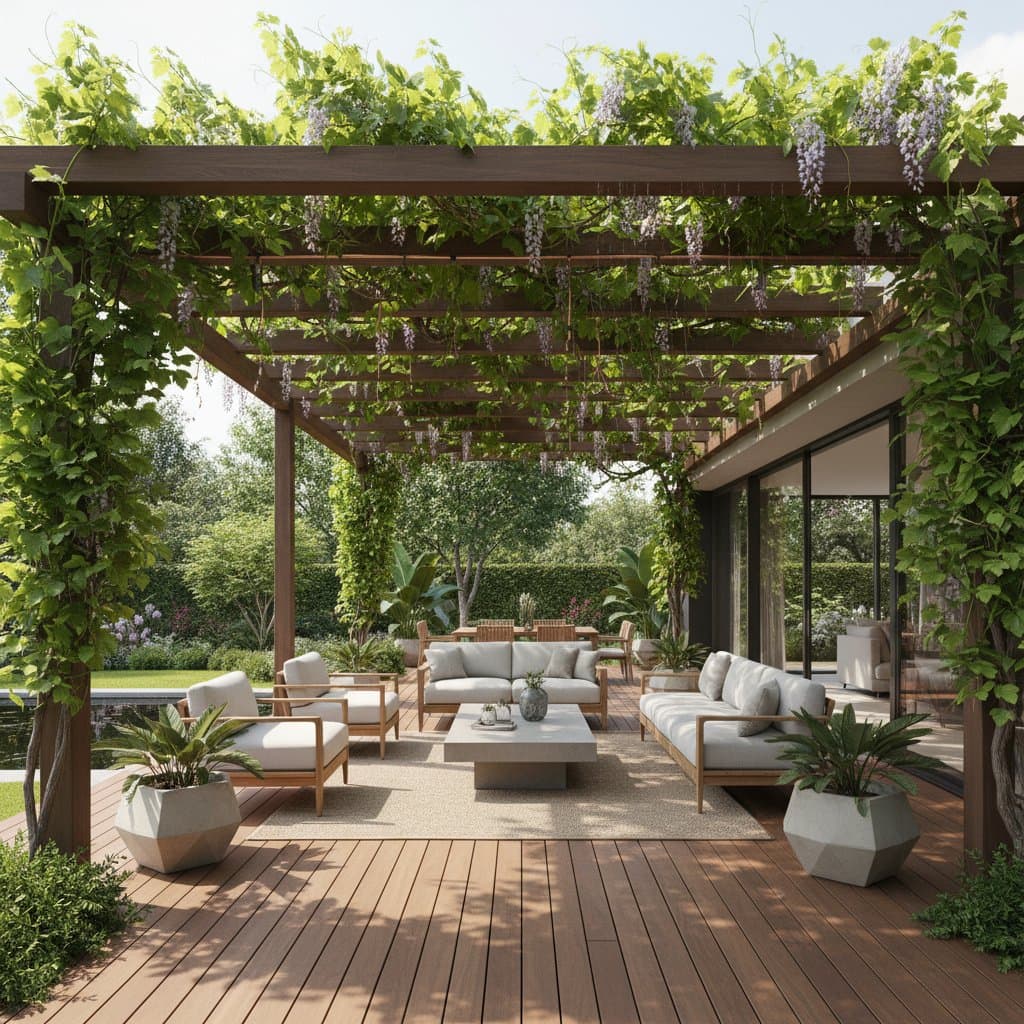
7. Test Shade Coverage
Once the installation concludes, monitor the pergola's light filtration throughout the day. Note areas where direct sunlight penetrates and consider adjustments such as repositioning plants or installing additional crossbeams to block intense rays.
Young plants benefit from temporary shade cloth during their establishment phase. This protective measure allows foliage to develop fully before relying solely on natural growth for coverage.
As vines mature, the shade density increases, creating a more consistent cooling effect on the deck surface below.
Troubleshooting
Living pergolas occasionally encounter issues that require prompt attention to maintain their health and functionality.
Plants not thriving: Examine drainage conditions and light exposure levels. Improve soil quality by incorporating a blend of compost and perlite to replace compacted earth, which promotes better root development.
Uneven growth: Ensure balanced light distribution by rotating planters periodically or guiding vine tendrils evenly across the structure. Prune overly vigorous sections to align with slower-growing areas, fostering uniform coverage.
Dry leaves or curling tips: Adjust irrigation schedules to deliver water more frequently if needed. Inspect emitters for clogs and clean them to restore proper flow.
Wood rot at base: Apply a high-quality outdoor wood sealant to posts immediately. Elevate planters slightly to enhance airflow and prevent moisture accumulation around the base.
Regular checks prevent minor problems from escalating, preserving the pergola's longevity and aesthetic appeal.
Maintenance
A living pergola demands seasonal care rather than constant daily intervention, allowing owners to enjoy its benefits with minimal effort.
Weekly tasks
- Assess soil moisture levels and verify timer functionality.
- Clear away dead leaves and scan for signs of pests or disease.
Monthly tasks
- Trim vines strategically to promote balanced and dense coverage.
- Clean beams with a mild solution to inhibit mildew formation.
- Examine drip lines for any leaks, clogs, or wear.
Annual tasks
- Reapply weather-resistant sealant to all wooden elements.
- Top-dress soil with fresh compost to replenish nutrients.
- Replace or recharge timer batteries as necessary.
Consistent maintenance ensures the structure endures for over a decade. As plants establish deeper roots, the pergola becomes more resilient and visually striking year after year.
To extend the system's efficiency, integrate a rain sensor with the irrigation timer. This feature pauses watering during wet periods, conserving resources and preventing over-saturation.
Smart Storage Solutions
Organize essential tools and supplies to streamline upkeep and maintain a tidy deck environment.
Keep pruning shears, irrigation components, and spare parts in a compact, weather-resistant storage box positioned conveniently near the deck. Label all items, including extra emitters and tubing segments, for quick access.
Store a short hose in a coiled state with a protective cap to avoid contamination. Install a slim shelf beneath a beam to hold smaller items such as plant ties, twine, and gloves.
These practical storage habits reduce clutter and save valuable time during routine tasks. A well-organized setup encourages adherence to maintenance schedules, enhancing the overall enjoyment of the space.
When to Consult Professionals
Certain situations warrant expert involvement to ensure safety and optimal performance.
Engage a licensed contractor if the deck exhibits signs of structural fatigue or if the pergola design involves attachment to the house exterior. Professionals assess load-bearing capacities and install proper flashing to avert water intrusion.
For complex irrigation systems spanning multiple areas or linking to household plumbing, seek a certified technician. They evaluate water pressure, flow rates, and install backflow preventers to comply with local regulations.
Professional input minimizes risks and extends the pergola's service life. Early consultation prevents costly repairs and ensures the project aligns with building codes.
Key Takeaways
- Living pergolas reduce deck temperatures by blocking sunlight and facilitating better air circulation.
- For compact decks, aim for dimensions of approximately 6 feet by 8 feet (1.8 meters by 2.4 meters), leaving ample walkways around the perimeter.
- Automated drip irrigation systems deliver precise watering, promoting plant health while minimizing water usage.
- Routine pruning and protective sealing safeguard both the vegetation and the wooden framework.
- DIY projects can complete under a budget of $750, covering materials and basic tools.
These elements combine to create a functional, eco-friendly addition that elevates outdoor living.
Building Your Shaded Retreat
Begin the project on a modest scale to build confidence and observe results. Install two support posts with a single crossbeam, introduce one resilient vine, and set up a basic drip line segment.
Observe the subtle shift in the deck's ambiance as initial shade emerges, inviting longer periods of relaxation.
For existing pergolas lacking greenery, upgrade with integrated planters and irrigation. Secure lightweight containers at post bases, fill them with nutrient-rich soil, and direct new vines along the established beams.
Each incremental addition amplifies the sense of tranquility. The gentle rustle of leaves in the breeze filters urban sounds, fostering a serene connection to nature right at home.