
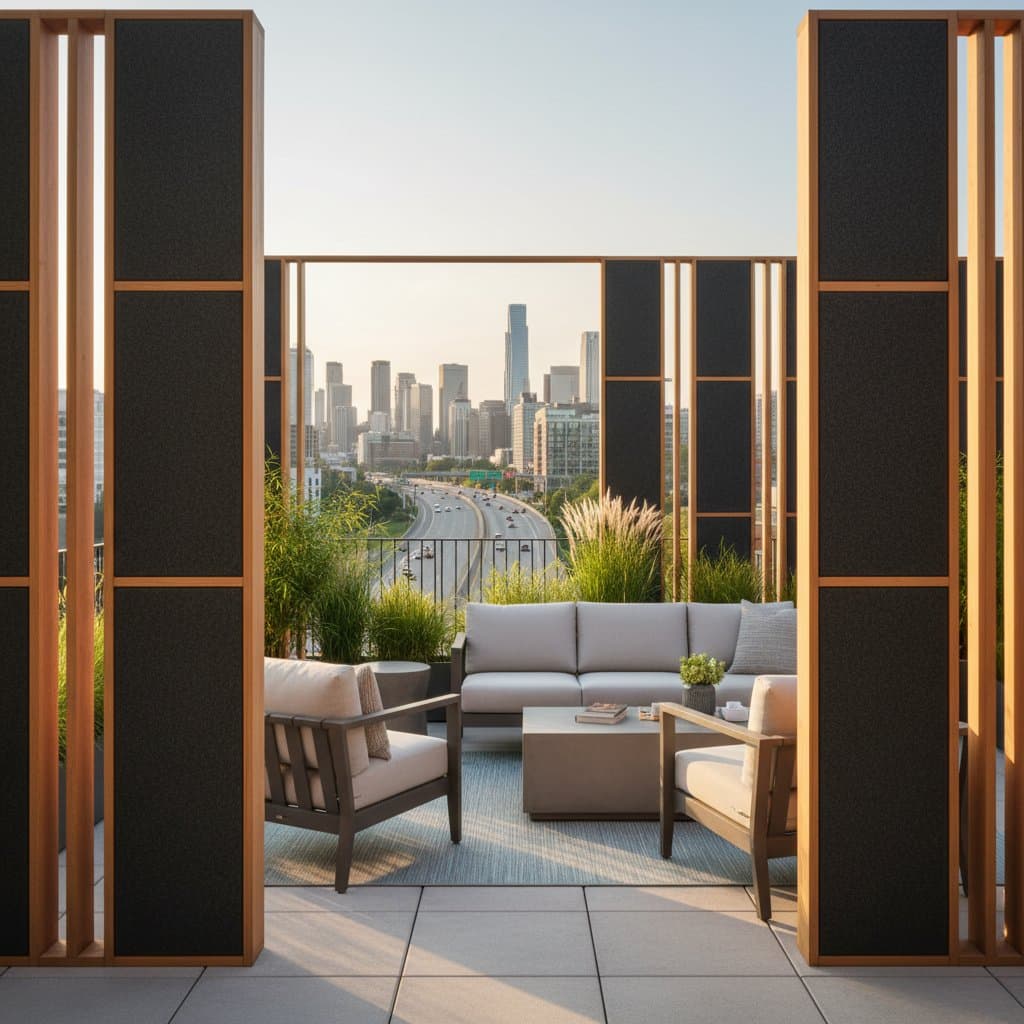
4. Install the Panels
Begin attaching the panels from one corner of the deck. Ensure each panel remains level as you secure it with screws or brackets. Overlap the edges of adjacent panels by at least one inch to prevent sound from leaking through. For fabric-based panels, wrap the edges securely and seal all seams using weatherproof tape designed for outdoor use.
When employing a frame-mounted system, first install the frame securely to the deck structure. Then, fit the panels into the frame. Position fabric panels with a one-inch air gap behind them to enhance sound absorption capabilities.
5. Seal Gaps and Finish
Examine all joints and connections where sound could penetrate. Apply acoustic caulk or an exterior-grade sealant to fill any small gaps effectively. Install trim pieces or decorative boards to conceal seams, which boosts both acoustic performance and visual appeal.
If the screens also serve as privacy barriers, evaluate their effectiveness from street level or adjacent balconies. Modify the height or angle as necessary to block both visual lines of sight and primary sound paths simultaneously.
Safety Considerations
Verify the weight-bearing capacity of deck railings before installation. Do not exceed load limits; reinforce support posts or attach screens directly to building walls if required. Select materials certified for outdoor exposure to ultraviolet light and moisture to avoid degradation over time.
Maintain adequate ventilation around the deck. Position screens to avoid obstructing air conditioners or vents, which could lead to equipment overheating. Prior to drilling or mounting, scan for electrical wiring or lighting cables to prevent accidental damage.
Common Issues and Solutions
Issue: Panels vibrate or rattle during windy conditions.
Solution: Secure additional fasteners or insert rubber washers to reduce vibrations. Inspect and tighten all anchors to ensure stability.
Issue: Persistent noise leakage through the screens.
Solution: Incorporate an extra layer of material or reposition the panels at a slight angle. Since sound waves frequently reflect upward, angle the top edge of the panels toward the primary noise source by several degrees for optimal deflection.
Issue: Accumulation of moisture behind the panels.
Solution: Drill small weep holes at the bottom edges or select panels with breathable backing. Promote consistent airflow to inhibit mildew growth.
Issue: Fading or staining on fabric surfaces.
Solution: Clean the fabric periodically with mild soap and water. Replace fabric covers every few seasons to preserve appearance and effectiveness.
Cost and Timeline Estimates
For a typical small deck, plan for coverage of 40 to 60 square feet. Mid-range materials cost between $7 and $15 per square foot when installed. Opting for a do-it-yourself approach eliminates labor expenses, though it requires thorough preparation.
Estimated timeline:
- Planning and precise measurements: 1 hour
- Preparation of mounting surfaces: 2 hours
- Installation of panels: 3 to 5 hours, based on deck size
- Sealing joints and final cleanup: 1 hour
When engaging a contractor, inquire about their familiarity with outdoor acoustic installations. General carpenters may handle basic mounting but often lack expertise in maximizing sound absorption.
Ongoing Maintenance Practices
Regular upkeep extends the lifespan of outdoor acoustic panels. Inspect for loose hardware and signs of water damage at the start of each season.
Key maintenance steps:
- Clean surfaces using a damp cloth or soft brush to remove debris.
- Tighten all screws and replace any corroded brackets promptly.
- Apply fresh sealant or protective wood oil annually to exposed areas.
- Trim nearby vegetation to ensure unobstructed airflow around the panels.
Remove any saturated or mold-affected panels for complete drying before reinstallation. Refrain from pressure washing, as it may force water into seams and cause further damage.
Professional Assistance Indicators
Seek expert help for decks exposed to intense noise from highways or when mounting screens to load-bearing walls. Acoustic specialists can assess decibel levels and suggest appropriate material density and positioning.
During consultations, request details on:
- Projected reduction in decibel levels
- Ratings for moisture and weather resistance
- Structural load assessments for railings or walls
Such guidance prevents errors in material selection or installation placement.
Efficient Storage Strategies
Store spare panels or fabric covers flat in a dry, protected location. Label each item by dimensions to facilitate easy retrieval for replacements. Keep sealant tubes upright in a cool storage cabinet; even modest reserves prove useful for post-storm repairs.
On space-constrained decks, install a slim storage compartment beneath the railing to hold tools and cleaning supplies. This setup streamlines routine maintenance tasks.
Advancing Your Deck Project
With these steps, urban dwellers can achieve substantial noise reduction and enhanced privacy. Measure your space, select durable materials, and proceed methodically to enjoy a quieter outdoor environment. Regular checks ensure long-term performance and satisfaction.