
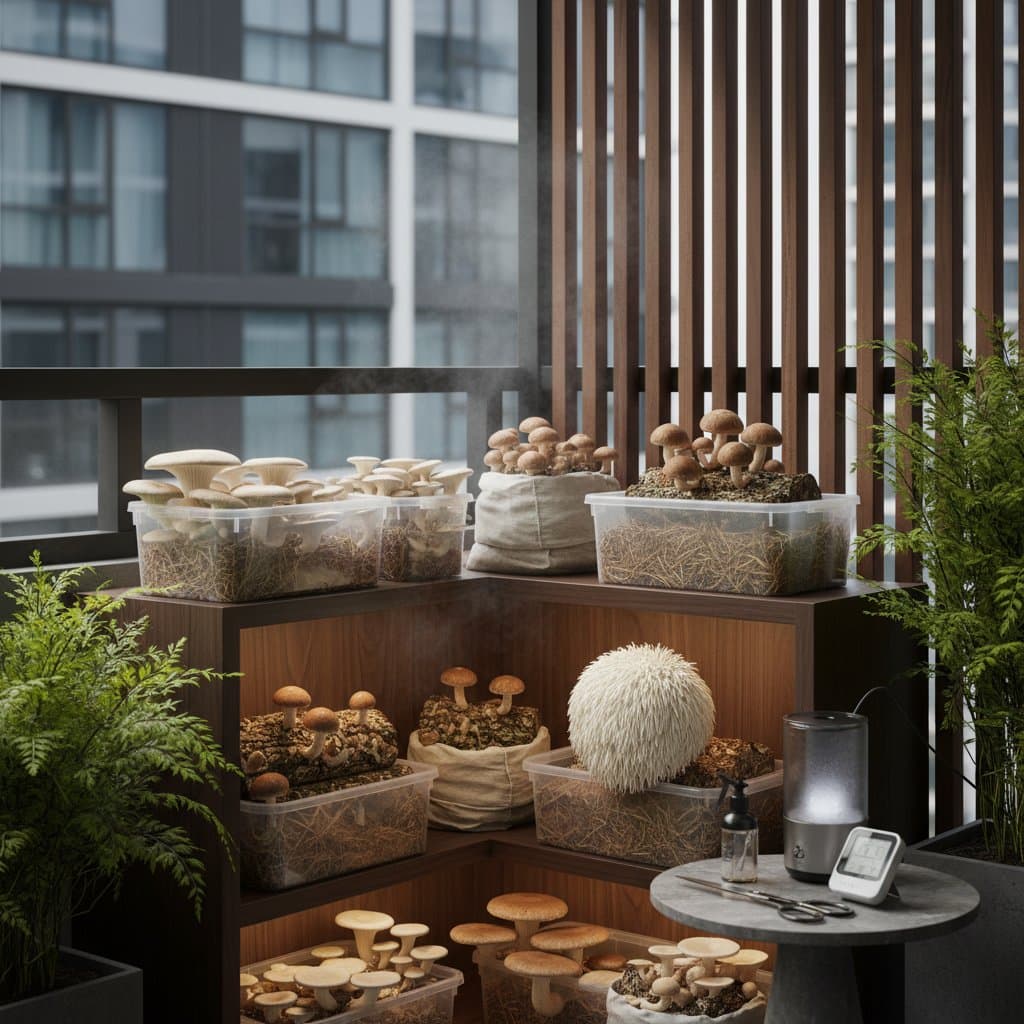
Why Balcony Corners Create Perfect Mushroom Microclimates
Balcony corners provide stable conditions that support consistent mushroom growth. These spaces stay shaded throughout the day, retain moisture effectively, and shield developing fungi from wind and temperature swings.
The Ideal Conditions in Corner Spaces
Mushrooms thrive when humidity levels remain between 80 and 90 percent and temperatures stay moderate. A corner location blocks direct sunlight that would otherwise dry out substrates too quickly. The surrounding walls also help trap the moisture released during colonization and fruiting.
These protected spots reduce the need for frequent misting. They create a buffer against sudden weather changes common in urban environments.
Suitable Mushroom Varieties for Balconies
Oyster mushrooms adapt well to fluctuating conditions and produce reliable yields. Shiitake varieties develop strong flavors when grown on supplemented sawdust blocks. Lion's mane mushrooms form dense clusters that require only moderate airflow.
Each of these species tolerates the lower light levels found in corner setups. Selection depends on available space and preferred harvest timing.
Materials Required for Setup
- Substrate such as pasteurized straw or hardwood sawdust
- Spawn of the chosen mushroom variety
- Plastic grow bags or containers with filter patches
- Spray bottle for maintaining surface moisture
- Hygrometer to monitor humidity
These items support a low-cost start that fits most small outdoor areas.
Preparation and Inoculation Steps
- Pasteurize the substrate by soaking it in hot water for one hour, then allow it to cool completely.
- Mix the cooled substrate with spawn inside a clean container.
- Fill grow bags loosely and seal them, leaving the filter patch exposed for gas exchange.
- Place the bags in the balcony corner where they receive indirect light only.
Colonization typically completes within two to four weeks at temperatures between 65 and 75 degrees Fahrenheit.
Ongoing Care and Monitoring
Check humidity daily and mist the exterior of the bags when levels drop below 80 percent. Avoid pooling water inside containers. Provide fresh air exchange by opening the corner area for a few minutes each morning.
Once white mycelium covers the substrate, initiate fruiting by increasing airflow and lowering ambient temperature slightly. Small pins appear within five to ten days under proper conditions.
Harvesting and Subsequent Flushes
Twist mature mushrooms at the base when caps reach full size but before edges curl upward. Clean the surface gently with a damp cloth. After the first harvest, continue misting to encourage additional flushes for up to three cycles.
Store fresh mushrooms in a paper bag in the refrigerator for up to one week.
Troubleshooting Common Issues
Green mold indicates contamination from insufficient pasteurization. Increase airflow if stems grow long and thin. Adjust misting frequency when caps appear dry or cracked.
Consistent observation prevents most problems before they affect the entire crop.
Benefits of Year-Round Balcony Cultivation
Fresh mushrooms harvested from a corner setup supply flavor and nutrition without reliance on grocery sources. The process requires minimal daily time once colonization begins. Urban growers gain satisfaction from producing food in limited outdoor space.