
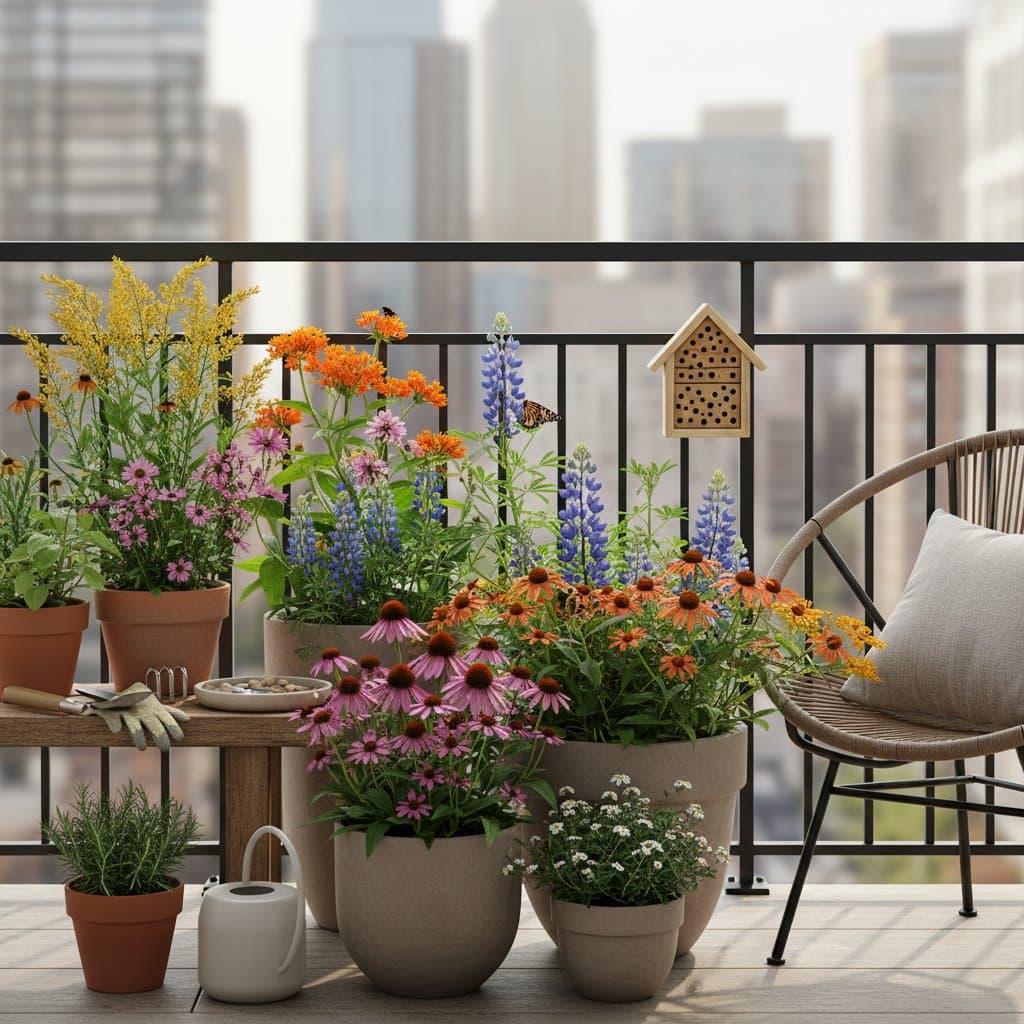
Urban Balconies Transformed into Pollinator Paradises
City dwellers often overlook the potential of a modest balcony. Yet, for bees and butterflies, this space represents a vital source of nourishment and shelter. The objective remains straightforward: cultivate a compact area that supports pollinator life while remaining neat, secure, and straightforward to manage. Begin with several planters, select native flowering plants, and develop a strategy aligned with available sunlight, personal schedule, and financial resources.
Overview
A pollinator paradise consists of an environment enriched with blooming vegetation that provides sustenance and protection for bees, butterflies, and similar pollen-transferring insects. Urban settings pose significant challenges for these species, including scarce access to unpolluted nectar and secure habitats. A solitary balcony contributes meaningfully by supplying consistent provisions of food and moisture throughout the blooming period. Expertise in gardening proves unnecessary; focus instead on selecting appropriate plant combinations, suitable containers, and basic upkeep practices.
Tools and Materials
Assemble a pollinator-friendly balcony using readily available items from local garden centers. Collect the following essentials prior to starting:
- Containers: Four to six planters, each measuring at least 10 inches (25 centimeters) in depth to accommodate root growth.
- Potting soil: Two to three bags of an organic blend, free from synthetic additives.
- Native flowering plants: At least six distinct varieties that flower across various months to ensure year-round appeal.
- Water tray or shallow dish: Positioned for safe access by visiting insects.
- Hand trowel and gloves: Essential for soil handling and maintenance tasks.
- Small watering can: Equipped with a narrow spout for precise application.
- Bee hotel or nesting block: Designed for solitary bee species.
- Compost or slow-release fertilizer: Applied during the mid-growing phase to sustain plant health.
Steps
-
Assess light and wind conditions. Dedicate a full day to observing sunlight patterns on the balcony. Most pollinator plants require a minimum of four hours of direct exposure daily. In areas prone to gusts, secure a trellis or fine mesh barrier to shield delicate flowers from damage.
-
Select native plant species. Opt for flora familiar to regional pollinators, such as purple coneflower (Echinacea purpurea), black-eyed Susan (Rudbeckia hirta), and common milkweed (Asclepias syriaca), which thrive in urban environments. Incorporate early-season bloomers like bee balm alongside mid- and late-season options such as aster to maintain a continuous food supply.
-
Prepare the containers. Fill each planter with potting soil to within two inches (5 centimeters) of the rim. Incorporate a layer of compost for nutrient enrichment. Verify that all containers feature drainage holes to avert waterlogging and root decay.
-
Arrange plants in clusters. Position three to five identical plants together in each container. This configuration enables pollinators to locate nectar sources more efficiently. Maintain spacing of approximately three inches (8 centimeters) between clusters to promote adequate circulation.
-
Incorporate a water feature. Set a shallow dish containing pebbles partially submerged in water adjacent to the plantings. This setup offers a stable platform for insects to drink without risk of drowning. Replenish the water every two days, especially during dry spells.
-
Install nesting accommodations. Mount a bee hotel on a wall receiving morning sunlight, ensuring it remains protected from direct downpours. Inspect the entry holes for smoothness to prevent injury to delicate wings.
-
Establish watering and monitoring routines. Apply water during early morning or late evening hours to minimize evaporation. Maintain soil at a consistently moist level without saturation. Observe visiting insects closely; native solitary bees often appear prior to more common honeybee populations.
-
Remove faded flowers regularly. Snip spent blossoms on a weekly basis. This practice encourages prolonged blooming and reduces the likelihood of fungal issues.
Safety Considerations
Prioritize stability by selecting rail-mounted planters or weighted pots resistant to tipping in breezy conditions. Eliminate all pesticides and chemical treatments, as these substances endanger pollinators and may infiltrate indoor areas. Don gloves during soil or compost manipulation to guard against irritation. Store watering implements and tools distant from any electrical sources. For households with children or pets, position bee hotels at an elevated height beyond easy access.
Troubleshooting Common Issues
Yellowing leaves or weakened plants: Investigate drainage adequacy and watering frequency. Elevate pots slightly using blocks to enhance airflow, and confirm the presence of drainage openings.
Absence of pollinator activity: Introduce greater color variety, emphasizing blues and purples that attract bees most effectively. Refrain from simultaneous removal of all flowers; permit some to mature into seed for extended appeal.
Presence of aphids or spider mites: Prepare a solution of one teaspoon of mild dish soap dissolved in one quart of water. Apply it in the early morning, followed by a rinse after one hour to avoid residue buildup.
Rapid soil drying: Apply a one-inch layer of mulch, such as coconut coir or finely shredded leaves, to retain moisture and regulate temperature.
Budget and Time Investment
Complete the initial setup over a single weekend. Anticipate expenditures ranging from fifty to one hundred dollars, influenced by container dimensions and plant selections. Primary expenses involve quality soil and regionally adapted plants. Reduce costs by repurposing existing pots or obtaining divisions from neighboring gardens. Invest in superior soil to promote resilience and decrease long-term watering needs.
Ongoing Maintenance
Following establishment, allocate approximately fifteen minutes daily to care tasks. Lightly water the plants, prune wilting flowers, and inspect for infestations. Monthly, apply a thin layer of compost or a diluted fish emulsion fertilizer to bolster growth. Drain any accumulated water weekly to deter mosquito breeding. As temperatures decline, trim stems selectively, preserving hollow portions for bee overwintering. Position planters near protective walls during colder periods to provide insulation.
Efficient Space Utilization
Maximize limited balcony real estate by organizing tools compactly. Store implements in a waterproof container beneath seating. Suspend the watering can from a wall hook for quick access. Nest unused pots within one another to save floor space. Affix labels to each planting, noting species and bloom periods, to inform future arrangements. For railings spanning only three feet, employ vertical hanging planters or multi-tiered shelving units to effectively double the cultivation area without introducing disorder.
Seasonal Care Guidelines
Early season preparations: Examine containers for fractures or wear. Replenish the top three inches of soil with fresh mix. Replace any damaged elements in the bee hotel. Initiate watering once the risk of overnight freezes has passed.
Midseason management: Perform frequent deadheading to sustain vigor. Introduce supplementary annual flowers to fill any bare spots. Clean the water dish regularly and gently wipe leaf surfaces to remove dust, ensuring pollinators can detect scents and colors.
Late season wrap-up: Allow select seed heads to remain for avian visitors. Relocate sensitive plants nearer to sheltered walls. Thoroughly clean and relocate empty containers to indoor storage. Document observations on plant performance to refine selections for the following year.
Professional Assistance Indicators
Consult a building maintenance specialist if the balcony exhibits signs of moisture seepage or corrosion, particularly before introducing additional load. Should substantial bee colonies develop beneath railings, reach out to a local pollinator conservation organization for safe relocation. Avoid personal intervention with established nests to prevent stings or disruption.
Sustaining Pollinator Support Year-Round
A compact ten-square-foot balcony sustains dozens of bees weekly through persistent flowering, accessible hydration, and protected habitats. Prioritize native species, nurture soil vitality, and eschew harmful chemicals for optimal results. This approach not only bolsters urban ecosystems but also infuses daily life with vibrant activity and natural beauty. Begin with a modest trio of staggered-bloom plants, a single bee hotel, and a basic water station; observable enhancements in biodiversity emerge within weeks, tailored to your unique urban setting.