
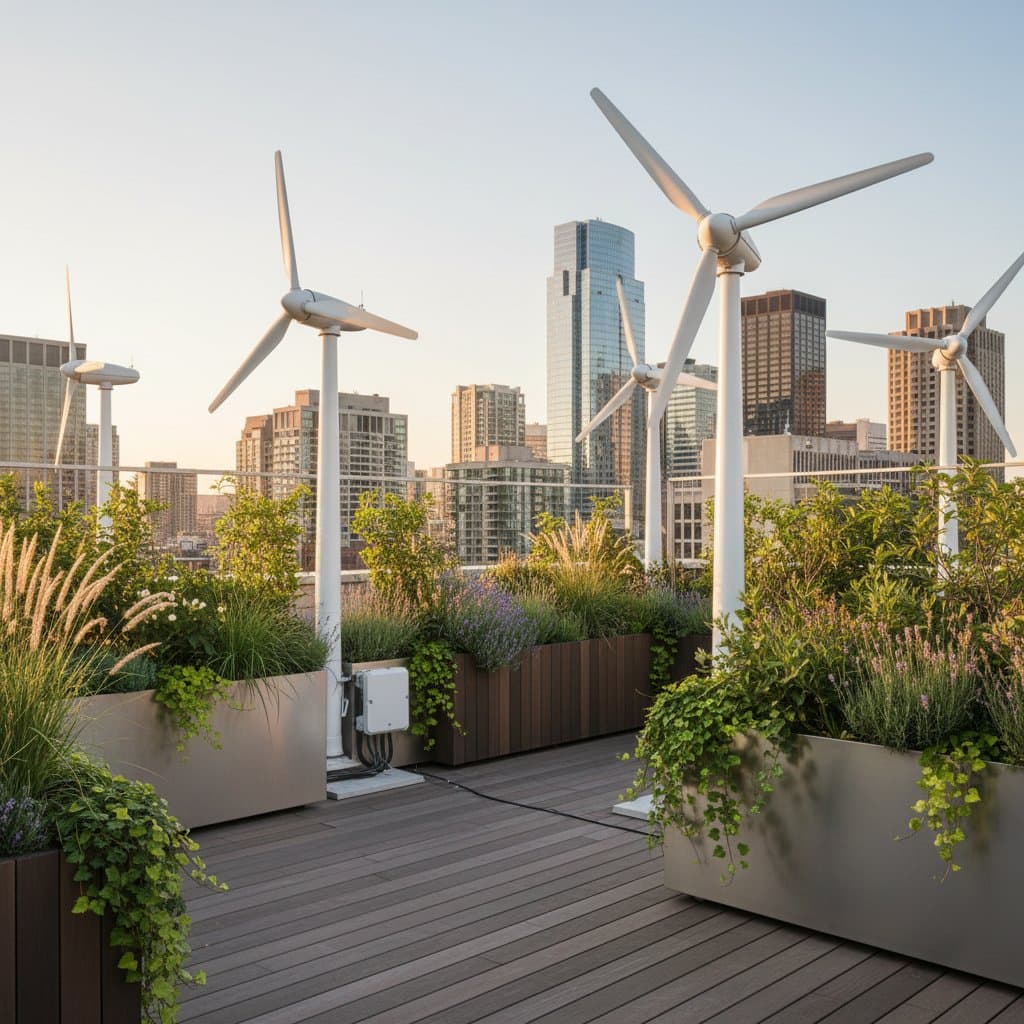
Rooftop Wind Gardens: Generate Power and Enhance Privacy
Urban environments present challenges such as constant noise, scarce green areas, and escalating energy expenses. These factors prompt city dwellers to optimize limited spaces effectively. A rooftop wind garden provides an innovative solution by integrating compact wind turbines with screening planters. This approach transforms underutilized roofs into productive, serene retreats that produce electricity while fostering privacy.
The following sections detail the mechanics of rooftop wind gardens, essential installation procedures, and strategies for long-term maintenance. Readers will discover practical steps to implement this system safely and efficiently.
Core Components and Advantages
Rooftop wind gardens utilize vertical axis wind turbines alongside modular garden elements. These turbines operate effectively in turbulent urban winds, converting kinetic energy into electricity suitable for household applications like outdoor lighting or device charging. Enclosing planters serve dual purposes: they shield the space from external views and dampen ambient sounds while promoting stable airflow for optimal turbine performance.
Key advantages include reliable energy production that reduces utility dependence, enhanced outdoor usability through natural barriers, and noise mitigation from surrounding urban activity. A compact installation featuring two turbines and several planters can yield noticeable improvements in both environmental impact and daily comfort. Such setups align with broader goals of urban sustainability.
Required Tools and Materials
Assembling a rooftop wind garden demands careful selection of tools and materials to ensure structural integrity and operational reliability. Weight distribution remains critical, as typical flat roofs support approximately 20 pounds per square foot. Prioritize durable, lightweight components to avoid overburdening the structure.
Tools
- Cordless drill equipped with a 3/8-inch bit for precise drilling
- Adjustable wrench for securing fittings
- Tape measure to verify dimensions accurately
- Level to confirm even placement
- Sturdy ladder suitable for roof access
- Safety harness paired with reliable roof anchors
Materials
- Two or more vertical axis wind turbines, each rated between 300 and 500 watts
- Six to ten lightweight planter boxes filled with a soil mix designed for elevated gardens
- Eight to twelve pavers or concrete blocks to serve as ballast
- Weather-resistant wiring suitable for exterior exposure
- Compact inverter for integrating turbine output with home electrical systems
- Stainless steel bolts and brackets for corrosion-resistant mounting
Installation Process
Proceed methodically through these steps to establish a functional rooftop wind garden. Each phase emphasizes safety and precision to prevent structural issues or operational failures.
Step 1: Evaluate Roof Integrity and Access
Inspect the roof deck and underlying beams for signs of wear or weakness. Consult a structural engineer for a professional assessment if doubts arise; this evaluation typically requires one hour. Verify that the load capacity accommodates the planned installation. Secure the ladder firmly and don the safety harness throughout the process.
Step 2: Designate Positions for Turbines and Planters
Maintain a minimum separation of three feet between each turbine and nearby vertical surfaces like walls or railings. This clearance promotes consistent wind flow. Position planters to form protective screens without obstructing blade movement. Outline the arrangement using chalk lines or masking tape for visualization.
Step 3: Prepare Ballast and Mounting Bases
Distribute pavers beneath turbine mounts to disperse weight evenly and protect the roof membrane. Arrange blocks in stable stacks, ensuring the surface deviates no more than 1/4 inch from level. Secure mounting brackets with appropriate torque, avoiding excessive force on the bolts.
Step 4: Mount the Turbines
Elevate each turbine onto its prepared base with assistance from a second person. Fasten bolts according to specifications, then route wiring per the manufacturer's guidelines. Secure cables along the roof's calmer edges, affixing them at intervals of 18 inches using protective clips.
Step 5: Integrate Planter Boxes
Arrange planters to create a windward barrier that enhances privacy. Fill boxes with lightweight potting soil and select resilient plants such as bamboo, ornamental grasses, or compact evergreens. These choices moderate wind intensity and contribute visual appeal. Saturate the soil immediately after planting to establish roots.
Step 6: Establish Electrical Connections
Direct turbine output to a dedicated battery storage unit or a small inverter linked to a isolated home circuit. Employ weatherproof junctions for all connections. Engage a certified electrician to review and approve any integration with the main electrical system prior to activation.
Step 7: Conduct Testing and Fine-Tuning
Observe turbine operation for fluid blade rotation. Address any wobbling by verifying levelness and spacing adjustments. Prune obstructing vegetation to eliminate turbulence. Monitor energy yield over several windy days to assess performance benchmarks.
Essential Safety Measures
Prioritize personal protection by wearing non-slip footwear and a harness during all roof activities. Refrain from work in adverse weather, including rain or frost. Position turbines at least 10 feet from overhead power lines to minimize risks. Ground metallic components thoroughly to avert electrical hazards. Select cables and connectors explicitly rated for outdoor conditions.
Common Issues and Resolutions
Excessive turbine vibration typically indicates an uneven base or loosened fasteners; inspect and correct alignment promptly. Diminished power generation may stem from overgrown plants impeding airflow; prune and relocate as necessary. Bearing noise requires application of manufacturer-recommended lubricant during routine servicing. Fluctuating output often traces to insecure wiring or condensation; dry components and reinforce connections.
Cost Estimates and Timeline
A foundational setup with two turbines and accompanying planters ranges from $1,200 to $1,800, influenced by component quality. Turbines represent the primary investment, with wiring and hardware following closely. Allocate 10 to 12 hours for completion, ideally distributed over two wind-free days.
Reduce expenses by constructing planters from recycled wood or durable composites. Maintain uncompromising standards for electrical and mounting elements to uphold safety protocols.
Ongoing Maintenance Practices
Brush turbine blades clean twice annually using mild detergent and a soft tool. Clear debris from bases regularly. Examine bolts and wiring quarterly for integrity. Replace damaged bearings or blades without delay.
For planters, irrigate based on weather patterns and replenish soil annually. Apply slow-release fertilizer at the start of each growth cycle. Prune plants to preserve airflow, particularly if solar installations coexist nearby.
Seasonal Care Guidelines
In spring, review mounts, wiring, and hydration levels; apply protective sealants to wooden elements. During summer, oversee vegetation expansion and ensure electrical enclosures remain cool. As fall arrives, clear debris, secure fittings, and organize energy storage. In winter, immobilize blades against severe weather and shield plant roots with permeable covers.
Efficient Storage Solutions
Store replacement bolts, lubricants, and clips in a sealed rooftop container. Keep surplus soil or seeds in indoor airtight bins. Label electrical circuits for swift diagnostics.
Position inverters for hybrid solar-wind systems centrally to streamline upkeep. Unified cabling enhances overall system reliability.
Professional Assistance Indicators
Seek expert intervention if roof inspections reveal structural concerns, electrical complexities exceed basic setups, or persistent malfunctions occur post-troubleshooting. Professionals ensure compliance with local codes and optimize performance.
Implement Your Rooftop Wind Garden
Begin with these immediate steps to launch your project:
-
Assess available roof space and draft a layout ensuring three feet of clearance around turbines.
-
Research vertical axis turbines under 500 watts, selecting models compatible with your roof's specifications.
-
Acquire lightweight planters and opt for plants reaching four to six feet in height for effective screening.
This investment yields a resilient, self-sustaining space that harmonizes urban living with renewable energy principles.