
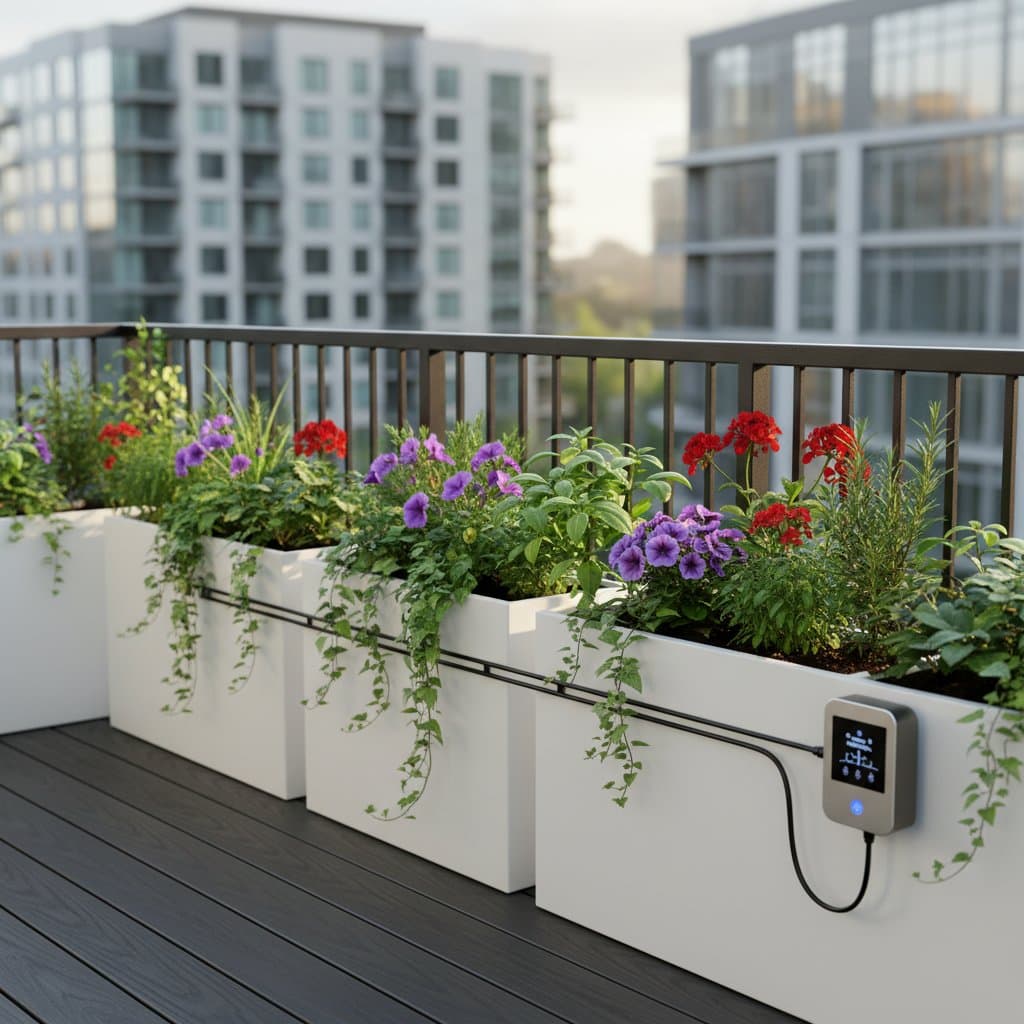
The Secret to Lush Balconies: Smart Drip Automation
City balconies offer bright, green retreats amid urban hustle, yet maintaining their vitality demands consistent effort. Busy schedules and fluctuating weather often lead to inconsistent hand watering, causing plants in small containers to dry out quickly. A few overlooked days can reverse months of nurturing. Enter smart drip automation: a reliable solution that maintains steady soil moisture with minimal intervention, adapting greenhouse techniques for compact home setups.
This approach promotes consistent plant growth while eliminating daily watering tasks. In the sections ahead, explore the fundamentals of smart drip systems, detailed installation guidance, and ongoing care strategies. With proper setup, these systems conserve water, safeguard roots, and allow more time to savor your outdoor space.
Understanding Smart Drip Systems
Smart drip automation involves a network of small tubes and emitters regulated by timers or sensors to deliver water precisely to plant roots. Unlike overhead sprinklers that cause rapid saturation and evaporation, this method provides a slow, controlled release, ensuring even soil moisture. Plants experience less stress, with reduced risk of waterlogging or drought.
Balcony environments amplify the need for such precision. Containers in direct sun heat up swiftly, accelerating evaporation, while shaded areas retain moisture longer. Smart systems address these variations by zoning water delivery, either through customizable schedules or soil sensors. Benefits include vibrant leaves, reliable flowering, and up to 50 percent less water usage compared to manual methods.
Essential Tools and Materials
Installation requires no advanced plumbing knowledge; most components attach to existing faucets or indoor lines. Assemble the following for a basic setup:
- A starter drip kit tailored to your balcony's size or planting zones
- 25 to 50 feet of flexible tubing, scaled to your layout
- Drip emitters, allocated one per plant or cluster
- T-connectors and elbow fittings for navigating railings and corners
- A pressure regulator to safeguard components from high faucet output
- A Wi-Fi or Bluetooth-enabled smart timer or moisture sensor
- Mounting clips and stakes for securing lines
- Pruning shears for precise tubing cuts
- A bucket and towel to test flow and manage drips
Expect to spend about one hour on a system serving ten planters. Basic kits range from $40 to $90, with smart timers adding $30 to $80.
Installation Steps
Step 1: Assess Water Source
Locate a faucet or indoor valve capable of steady, low-pressure flow. In apartments lacking outdoor access, employ a threaded adapter for kitchen or bathroom sinks. Test the connection for leaks before full activation to avoid water damage.
Step 2: Route the Tubing
Unroll the tubing along balcony edges or flooring, allowing extra length at bends to avoid crimps. Trim sections using pruning shears to fit your design. Link connectors to create a circuit encompassing all containers, positioning lines slightly raised for better drainage and safety.
Step 3: Install Emitters
Position one emitter at the base of each plant, inserting it firmly into the tubing. For bigger pots, add a second emitter midway across the soil surface. Direct outlets toward the root zone to minimize leaf wetting and fungal risks.
Step 4: Integrate the Timer
Secure the timer to your water source, then attach the tubing to its output. Use the companion app or manual to program cycles, beginning with 10-minute sessions twice daily. Monitor initial runs and tweak based on observed soil conditions.
Step 5: Conduct a Test Run
Activate the water manually for several minutes and observe emitter output. Address any sputtering or drips by reseating components. Collect excess water in the bucket to evaluate overall pressure and balance.
Step 6: Anchor the Setup
Fasten tubing with clips or stakes, routing away from high-traffic paths. Shield lines from intense sun exposure, as heat can warp materials; firm anchoring prevents shifts during wind or use.
Step 7: Optimize Schedules
After initial operation, probe soil moisture manually. Shorten intervals for overly wet conditions or lengthen for dryness. Advanced sensors will adapt autonomously over time, refining delivery to match your balcony's microclimate.
Key Safety Considerations
Secure all tubing to prevent tangles from children or pets. Shut off the water supply prior to adjusting any parts. Position electronic timers under protective covers to shield from rain. Perform monthly inspections for leaks, which could create slippery surfaces.
Common Issues and Solutions
Inconsistent Flow: Inspect emitters for blockages; soak in a vinegar solution for 10 minutes, then rinse thoroughly before reuse.
Insufficient Pressure: Ensure the regulator is in place; its absence may cause forceful bursts that loosen connections.
Persistent Dry Areas: Introduce an additional emitter or reposition existing ones nearer to roots.
Timer Failures: Verify power sources and network links; consult the app for reset procedures.
Cost and Efficiency Overview
A setup for ten planters generally totals $80 to $150, encompassing all essentials. It halves water consumption relative to traditional watering. Setup fits into one afternoon, with routine checks requiring just minutes monthly. Spare emitters, under $1 each, endure multiple seasons.
Ongoing Care Practices
Flush lines quarterly by removing the end cap and running water for two minutes to dissolve minerals. In advance of winter, drain the system completely to avert freeze damage. Clean the timer's display and swap batteries annually. Regularly scan for degraded tubing and trim affected segments promptly.
Practical Storage Advice
Organize surplus connectors, tubing segments, and emitters in a dedicated, labeled container alongside gardening supplies. A reserve coil of tubing proves invaluable for reconfigurations or expansions. Always dry components before storage to deter mold growth.
Building a Sustainable Balcony Garden
Implementing a smart drip system transforms balcony maintenance from a chore into a seamless routine. Healthier plants reward your initial investment with enduring beauty and reduced effort. Start small, observe results, and scale as your green space evolves, fostering a vibrant urban retreat year-round.