
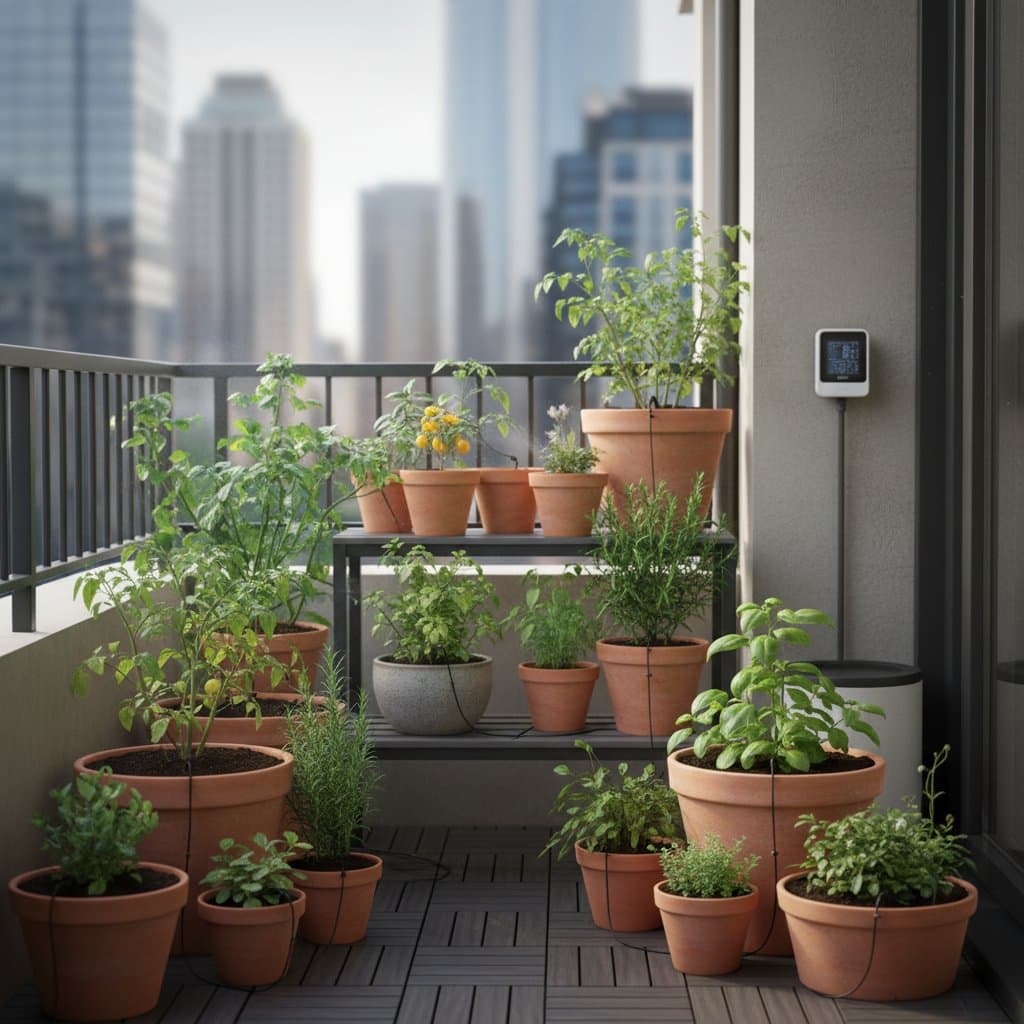
Introduction to Micro-Drip Irrigation for Balconies
Urban balconies offer limited space for gardening, yet they face intense sun exposure and variable weather that stress plants. Manual watering becomes a daily chore, often leading to overwatering or neglect. A micro-drip irrigation system addresses these challenges by providing precise, automated moisture delivery directly to plant roots.
This method uses thin tubing and emitters to release water slowly, mimicking natural rainfall. Studies from agricultural extensions show such systems reduce water usage by up to 70 percent compared to traditional methods, as evaporation and runoff decrease significantly. Balcony gardeners report healthier plants and more leisure time, transforming maintenance into a simple routine.
Understanding Micro-Drip Systems
Micro-drip irrigation consists of a network of narrow tubes connected to a water source, equipped with emitters that control flow rates. Water travels under low pressure, ensuring even distribution without soaking foliage, which helps prevent diseases like powdery mildew common in humid city environments.
Key components include a pressure regulator to maintain consistent flow, a filter to block sediments, and a timer for scheduling. Emitters vary from fixed drippers, which release a set amount, to adjustable ones that allow customization per plant. For balconies, systems scale down to fit 10 to 20 containers, making them ideal for herbs, flowers, or vegetables.
The 70 percent water savings arise from targeted application: only the root zone receives moisture, unlike sprinklers that lose water to wind or concrete surfaces. In tests by urban horticulture programs, users watered three times less frequently while plants grew 20 percent larger due to consistent hydration.
Essential Tools and Materials
Assemble your kit based on balcony dimensions and pot count. For a standard 8-by-10-foot space with 10 pots, plan for 30 feet of tubing to snake around planters without excess.
Core components:
- 25 to 50 feet of 1/4-inch distribution tubing, flexible and UV-resistant for outdoor use.
- One pressure regulator, rated for 10 to 30 PSI, to protect emitters from bursts.
- One inline filter, 150-mesh size, to capture rust or minerals from tap water.
- One battery-operated timer, programmable for intervals like every 12 hours.
- Eight to 12 micro-emitters, with 0.5 to 1 gallon-per-hour output for most balcony plants.
- Six to eight barbed T-connectors for branching lines to individual pots.
- Ten to 15 plastic stakes or twist ties to secure tubing along pot edges.
- One end cap and figure-8 punch tool for custom holes in tubing.
Advanced options:
- Soil moisture sensor that pauses watering when levels suffice, integrating via timer.
- Hose splitter for dual zones, separating sun-exposed and shaded areas.
- Color-coded quick-connect adapters for disassembly without tools.
Gather basic tools: sharp scissors for clean cuts, an adjustable wrench for fittings, and Teflon tape for leak-proof seals. Test all parts with a bucket to verify flow before installation.
Step-by-Step Installation Guide
Installation requires planning to optimize layout. Sketch your balcony, marking pot positions and water source, typically a faucet or hose bib.
- Attach the pressure regulator and filter to the faucet using the wrench; wrap threads with Teflon tape for a secure fit.
- Connect the main supply line, punching holes with the figure-8 tool every 6 to 12 inches for branches.
- Run 1/4-inch tubing along the balcony perimeter, using stakes to anchor it near pot bases.
- Insert T-connectors at each pot, attaching short emitter lines; position drippers 2 inches from stems for root access.
- Install the timer between the filter and main line, setting initial cycles to 5 minutes twice daily.
- Cap the end of the tubing and test the system, adjusting emitters to equalize output across pots.
This process takes 1.5 to 2.5 hours. Start with dry soil to observe coverage, then fine-tune based on plant response over a week.
Safety Considerations
Prioritize precautions to avoid accidents in confined balcony spaces. Turn off the water supply fully before cutting or modifying tubing to prevent sudden sprays.
Route lines along walls or railings, securing with clips every foot to eliminate tripping risks, especially in low-light evenings. For electric timers, position outlets away from moisture and use ground-fault circuit interrupters.
Select systems compatible with potable water to avoid chemical leaching into soil. Inspect for sharp edges on fittings during assembly, wearing gloves to protect hands.
Cost Breakdown and Time Investment
A basic setup for 10 pots ranges from $45 to $80, with the timer accounting for $25 to $40 of that cost. Emitters and tubing add $15 to $25, while connectors and stakes cost under $10.
Upgrades like sensors increase the total to $60 to $105. Source materials from local nurseries or online retailers specializing in hydroponics for quality assurance.
Allocate 2 hours for initial setup, including testing. Ongoing tasks involve 5 to 10 minutes monthly for checks, yielding a strong return on investment through water bill reductions and plant longevity.
Routine Maintenance Practices
Regular upkeep ensures longevity and efficiency. Every two weeks, walk the system to detect leaks, indicated by damp spots, or clogged emitters, shown by uneven dripping.
Monthly, remove the filter, disassemble it, and rinse under running water for 2 to 3 minutes to clear debris. Seasonally, flush the entire line by disconnecting the end cap and running water for 45 seconds to expel buildup.
Elevate emitters 1 inch above soil to minimize dirt entry. If pressure weakens, clean the regulator's screen with a soft brush. Replace worn tubing after 2 years, as sun exposure causes cracking.
Store extras in a divided organizer: fittings in one compartment, emitters in another, labeled for swift retrieval during repairs.
Seasonal Adjustments and Storage
Adapt the system to weather changes for optimal plant health. During summer heat, program two 7-minute sessions daily, spacing them morning and evening to reduce evaporation.
In fall and spring, shorten to 4-minute cycles every other day, monitoring soil dryness with a finger test. Winter preparation involves draining lines: disconnect from the source, blow out water with compressed air, and coil tubing indoors.
Reassemble in spring by inspecting joints for corrosion and testing flow gradually. These adjustments prevent overwatering in cool periods, further conserving resources.
Professional Assistance Options
For complex setups, such as integrating with building plumbing, consult a licensed irrigation specialist. They ensure compliance with codes, like installing backflow preventers to protect municipal water supplies.
Building management approval is essential for shared spigots to avoid violations. Professionals handle permanent installations through walls, costing $150 to $300 but offering seamless integration.
Benefits Realized in Your Balcony Garden
Implementing a micro-drip system shifts focus from labor to enjoyment. Plants receive consistent care, leading to lush growth and higher yields from edibles like tomatoes or basil.
Water savings translate to environmental benefits and lower utility costs, while automation frees weekends for relaxation. Over time, this setup fosters a resilient urban oasis, proving that small spaces yield big rewards with smart tools.