
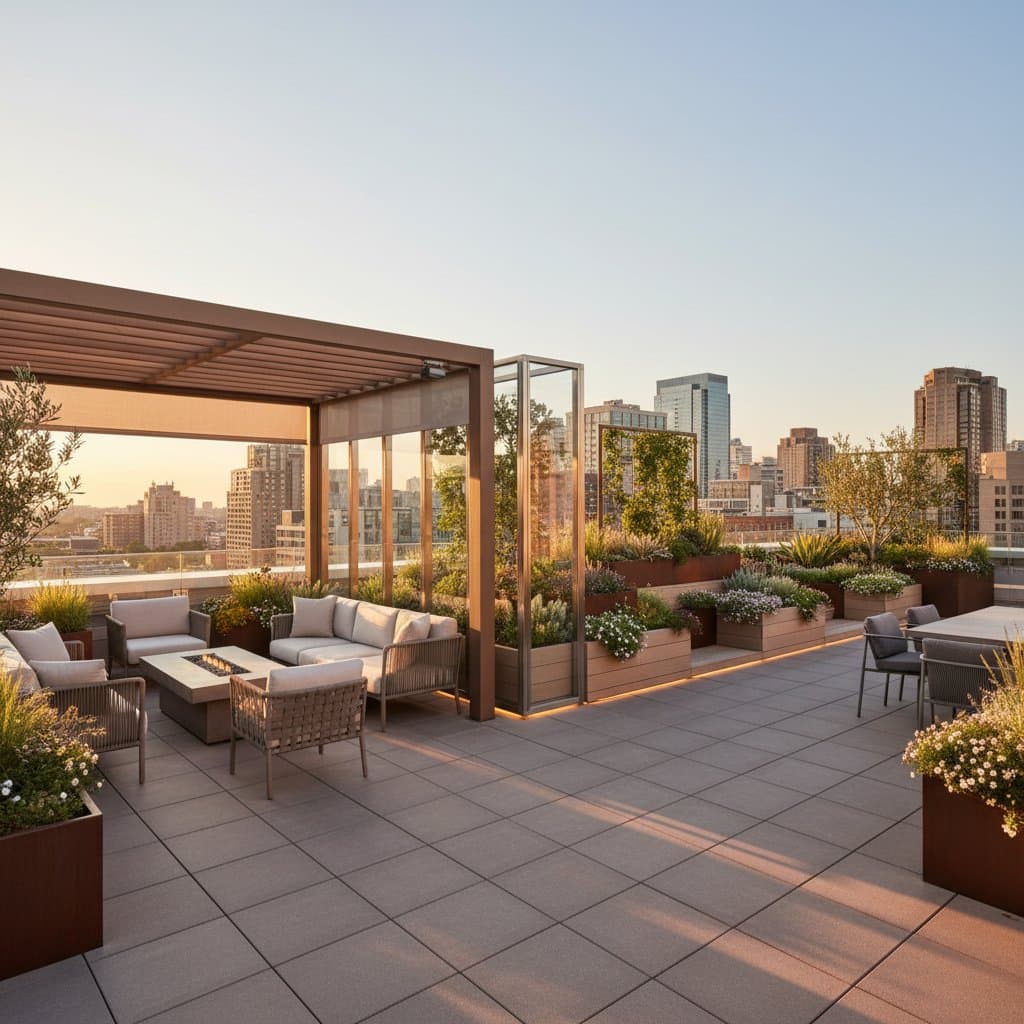
3-Season Rooftops: The Power of Microclimate Zones
Your rooftop can work harder for you. With a few smart design moves, you can make it comfortable for three seasons instead of one. The key is understanding microclimate zones, small areas where temperature, wind, and moisture differ from the rest of the roof. Learning to shape these zones means you can sit outside longer, grow more plants, and use the space more often.
Overview
A microclimate is a pocket of air with its own temperature or humidity pattern. On rooftops, these pockets form when sun, shade, walls, and wind barriers meet. One corner may stay warm late into the evening while another stays cool all day. By planning for these variations, you can design zones for cooking, lounging, and gardening that stay usable through spring, summer, and fall.
This approach saves energy, protects plants, and cuts down on wasted space. It also keeps you from constantly hauling furniture or planters inside when the weather shifts.
Tools and Materials
To start shaping your rooftop microclimates, you will need:
- Wind barriers such as trellises, screens, or glass panels
- Movable planters in at least three sizes for flexible placement
- Thermometer and moisture meter to track temperature and humidity
- Outdoor rugs and cushions for insulation and comfort
- Lightweight shade cloths or umbrellas to control sun exposure
- Anchor hardware to secure barriers safely in windy zones
Steps
-
Map the sunlight.
Spend one day noting which areas get full sun, partial shade, and full shade. Mark these with chalk or tape. Safe observation distance keeps you from leaning over edges. -
Feel the wind flow.
Stand in each corner for a few minutes. Notice where gusts hit hardest. Use a small flag on a stick to visualize direction. High wind speeds can dry soil in less than two hours, so plan barriers here first. -
Add wind barriers.
Place trellises or screens about 2 to 3 feet (0.6 to 0.9 meters) from seating areas. This spacing breaks airflow without trapping heat. Always anchor barriers securely to prevent tipping. -
Layer planters.
Use taller plants like bamboo or grasses on the windward side, medium shrubs in the middle, and low herbs near seating. These layers create natural insulation and reduce noise. -
Test temperature shifts.
Place thermometers in three different spots. Compare readings morning, midday, and evening. A difference of 5 to 10 degrees Fahrenheit shows your zones are forming. -
Adjust seating and shade.
Move chairs or umbrellas based on comfort. Keep at least 3 feet (0.9 meters) of clearance around heaters or grills for safety. -
Refine lighting.
Use low-voltage string lights or solar lamps. Avoid harsh floodlights that can add unwanted heat.
Safety Tips
- Check local building codes before adding barriers or heavy planters.
- Keep all electrical cords rated for outdoor use.
- Never block roof drains with containers or rugs.
- Use gloves when handling metal edging or glass panels.
Troubleshooting
If one area feels too hot, add a reflective surface like a light rug or pale planter. If wind still sneaks in through screens, angle them 10 to 15 degrees instead of keeping them straight. When plants dry too fast, line containers with water-retaining fabric or mulch to hold moisture.
Budget and Time
Expect to spend about $300 to $800 for a small rooftop zone, depending on materials. Wind barriers and planters are the main cost drivers. You can complete the setup in two weekends if materials are ready. Many people start small with one seating zone, then expand after the first season of testing.
Maintenance
Check anchors and screens monthly, especially after storms. Replace cracked pots or loose ties right away. Refresh soil in planters once per season. Clean outdoor fabrics with mild soap and air dry to prevent mildew.
Seasonal Reminders
- Early spring: Inspect for winter damage and restock soil.
- Mid-summer: Rotate planters to balance sun exposure.
- Late fall: Remove cushions and store fragile items indoors.
Staying consistent keeps your microclimates stable year to year.
Your Next Steps
Start by identifying one sunny, windy, or shaded corner of your roof. Test a simple barrier there and note the difference in comfort after one week. Add planters to shape airflow and color. Track temperature changes with a small thermometer.
By shaping your rooftop microclimates, you turn unpredictable weather into an ally. You gain three seasons of comfort, stronger plants, and a space that feels alive long after others pack up their patios.