
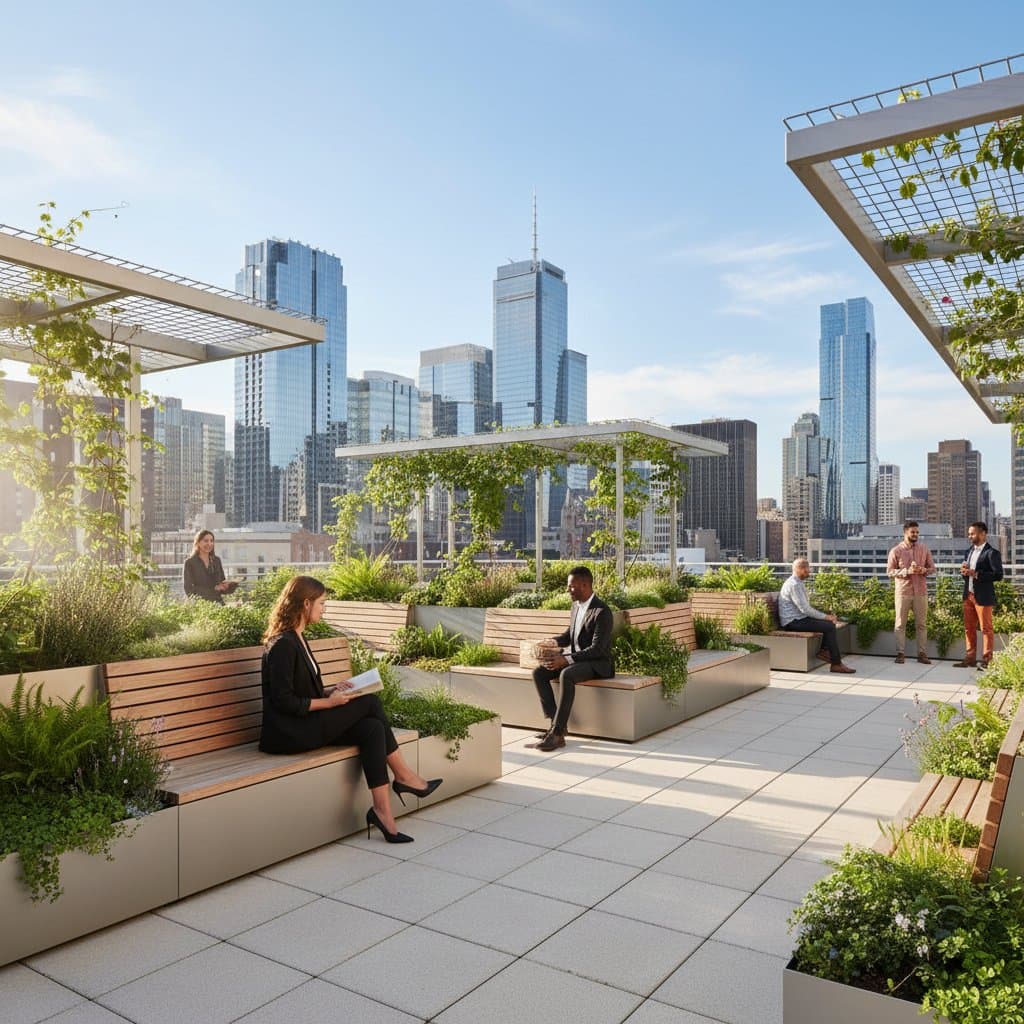
Seats That Bloom: Green Benches for Rooftop Living
A simple garden bench transforms a barren rooftop into an inviting haven. When integrated with thriving plants, it purifies air, moderates temperatures, and softens the urban skyline. Such designs create functional landscapes that encourage relaxation amid city bustle.
This guide details the mechanics of green benches, their role in enhancing rooftop environments, and practical methods for construction or selection. Readers gain insights into suitable materials, plant selection, and strategies to withstand weather challenges and structural demands.
Overview
Green benches feature built-in planters or vegetation-supporting surfaces for outdoor seating. Traditional models use wooden frames with end-mounted boxes for soil. Advanced versions incorporate metal structures clad in moss or sedum mats, ensuring durability in exposed conditions.
These benches deliver targeted advantages for rooftop settings.
- Air purification and thermal regulation. Vegetation absorbs pollutants and releases moisture, reducing surface heat by up to 10 degrees Fahrenheit on sunny days.
- Aesthetic enhancement. Lush growth provides visual contrast, drawing the eye to serene focal points.
- Space optimization. Dual-purpose elements minimize footprint, allowing more room for pathways or additional features.
Design for resilience against intense sunlight, gusts, and precipitation while supporting occupant loads up to 500 pounds.
Tools and Materials
Assemble essential items for fabrication or modification of a green bench. These include:
- Weather-resistant wood or composite panels, 1 inch thick by 4 inches wide
- Galvanized or stainless steel screws, paired with a cordless drill
- Heavy-duty waterproof liners, such as EPDM rubber sheeting
- Coarse gravel or geotextile fabric for base layers, 1 to 2 inches deep
- Specialized rooftop potting soil, low in density to reduce weight
- Hardy perennials like sedum varieties, creeping thyme, or fescue grasses
- UV-protective wood oils or polyurethane sealants
- Nitrile gloves and polycarbonate safety eyewear
For prefabricated units, seek models certified for outdoor exposure with pre-drilled drainage and modular plant inserts.
Steps
1. Measure and Plan
Evaluate rooftop dimensions precisely, allocating 24 inches of clearance on all sides for safe circulation. Draft a scaled diagram indicating planter positions relative to seating. Calculate total weight, noting that saturated soil adds 20 to 40 pounds per cubic foot; verify structural capacity through building records or professional assessment.
2. Build the Frame
Saw lumber to specifications: 48 inches for seat length, 18 inches for depth, and 16 inches for backrest height. Assemble into a rigid rectangle using screws every 6 inches along joints, reinforced with diagonal braces spaced 18 inches apart. For integrated planters, install dividing partitions sealed at seams to contain soil.
3. Line and Seal
Insert liners into planter compartments, creasing corners for a snug fit and securing with rust-resistant staples. Pierce 1/4-inch drainage holes at 4-inch intervals in the base. Apply two coats of sealant to all exposed wood surfaces, allowing 24 hours of curing time prior to soil introduction.
4. Add Drainage and Soil
Position gravel or fabric at the planter base to facilitate water flow and prevent clogging. Introduce potting mix gradually, filling to 2 inches below the edge to accommodate expansion. Steer clear of native soils, which retain excess moisture and increase overall burden.
5. Plant and Water
Select species adapted to arid, windy exposures, such as Sedum spurium or Thymus serpyllum. Position roots firmly in prepared soil, spacing plants 4 to 6 inches apart for coverage. Irrigate deeply until water drains freely, targeting soil moisture levels that support establishment without saturation.
6. Anchor Safely
In high-wind zones, affix the bench using galvanized L-brackets bolted to the decking. Alternatively, employ concrete-filled bases weighing 50 pounds or more. Position to avoid obstructing roof vents, drains, or emergency egress routes.
7. Maintain Regularly
Monitor hydration weekly, adjusting for seasonal variations. Prune foliage extending over seating areas to preserve accessibility. Refresh protective finishes annually, and cleanse wooden elements with a diluted vinegar solution to remove buildup.
Safety Tips
- Load verification: Review architectural plans or engage an engineer to confirm deck tolerances exceed 50 pounds per square foot.
- Leak prevention: Test liners under simulated rain; repair pinholes immediately with sealant patches.
- Traction enhancement: Affix rubberized pads to leg bases on glossy surfaces to mitigate sliding risks.
- Handling precautions: Don protective gear during power tool operations to guard against debris and sharp edges.
Troubleshooting
Plants yellowing or wilting. Excessive solar exposure or inadequate drainage often contributes. Relocate to partial shade or enlarge exit holes for better percolation.
Wood warping or cracking. Moisture infiltration from incomplete sealing causes this issue. Abrade affected areas, reapply barriers, and allow full drying cycles.
Water accumulation beneath structure. Obstructions in roof systems lead to pooling. Elevate on 1-inch risers to promote natural shedding.
Soil erosion during storms. Insufficient headspace allows overflow. Maintain a 2-inch buffer at planter tops to buffer heavy downpours.
Budget and Time
A fundamental wooden assembly ranges from $150 to $350, influenced by lumber quality and specimen maturity. Opt for composites to cut long-term upkeep, though initial outlay reaches $400. Dedicate a full weekend to assembly and initial planting.
Modular systems suit transient setups, priced from $100, with detachable trays for easy reconfiguration and reduced mass.
Invest in quality barriers from the outset; subpar choices invite roof damage costing thousands in remediation.
Ongoing Care
Sustain vitality through consistent routines.
- Deliver water every 4 to 7 days during dry periods, using drip methods for efficiency.
- Apply balanced, slow-release fertilizers in spring and fall to bolster growth.
- Refresh underperformers annually, introducing varied cultivars for dynamic appeal.
- Examine fasteners quarterly, retightening as needed to uphold integrity.
- Remove accumulated debris promptly to avert mold and discoloration.
In gust-prone areas, limit growth to 6 inches maximum; shield tender shoots with frost cloth in winter.
Efficient Organization
Store implements in sealed bins adjacent to the installation for prompt access. Label compartments for amendments and spares to streamline routines. Keep sealants in climate-controlled interiors to preserve efficacy.
Proximity of resources facilitates proactive interventions, extending the lifespan of both bench and plantings.
Professional Assistance
Engage specialists when:
- Structural limits remain unclear.
- Dampness appears in underlying spaces.
- Advanced features like automated watering or integrated illumination are desired.
Inquire about load simulations, membrane-compatible fixings, and compliance with local codes. Early expertise averts costly interventions.
Implementing Your Design
Begin by auditing your rooftop's conditions and sketching initial concepts. Procure materials suited to your climate, then follow the outlined sequence for assembly. With regular attention, your green bench will deliver enduring benefits, fostering a refreshed urban oasis.