
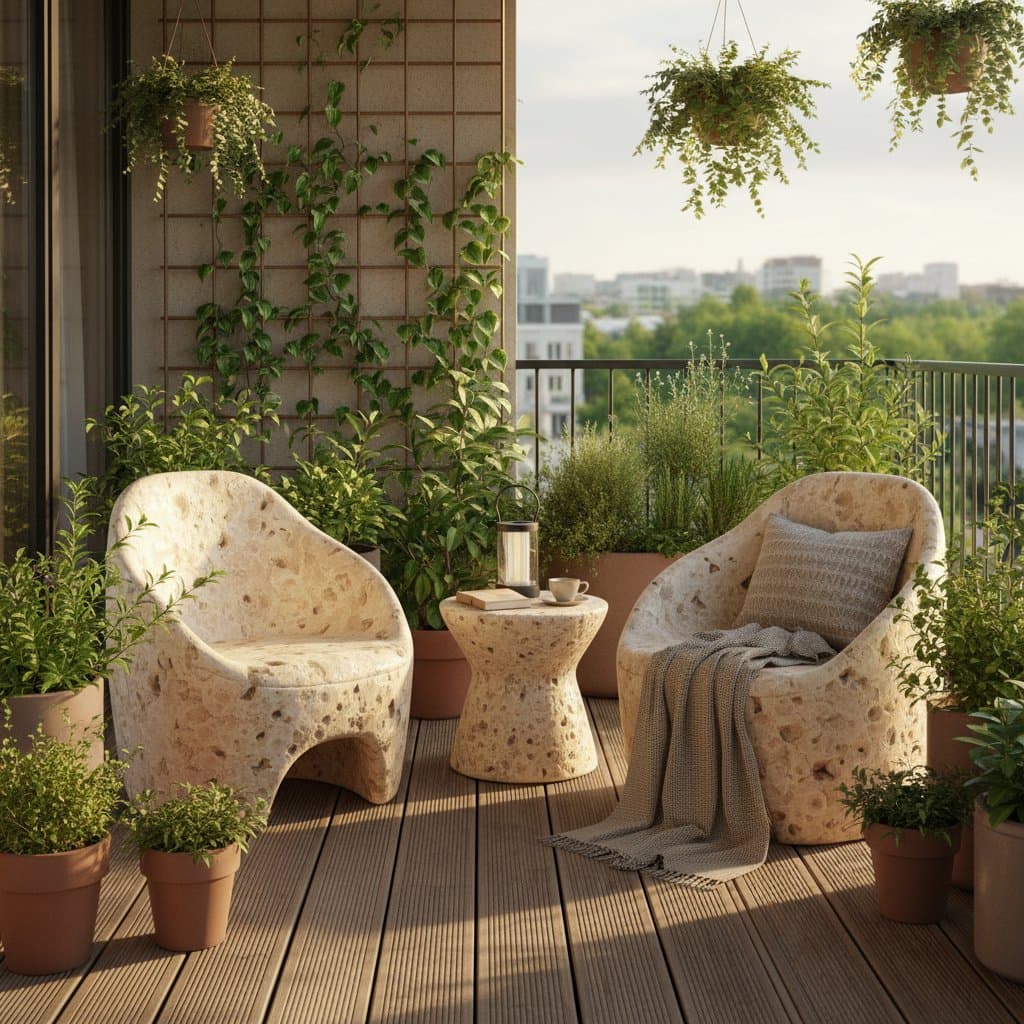
Sustainable Balcony Seating: The Rise of Mushroom-Grown Furniture
Balconies in urban settings often serve as overlooked spaces, limited to basic chairs and potted plants. Mushroom-grown seats change that dynamic by introducing sustainable, innovative furniture that enhances comfort and aesthetics. Crafted from mycelium, the root structure of mushrooms, these pieces provide lightweight durability and full biodegradability, ideal for compact outdoor areas.
This approach aligns environmental responsibility with practical design. Readers gain insights into the composition of mycelium furniture, its suitability for outdoor use, and essential maintenance practices to ensure longevity.
Understanding Mycelium Furniture
Mycelium consists of the thread-like roots of fungi, which, when cultivated in controlled forms, create a resilient, foam-like material. Artisans combine it with substrates like hemp hurds or sawdust to shape items such as stools or benches. After growth and drying, the result mimics the strength of traditional materials but with far less environmental impact.
Production requires minimal energy, avoiding chemical pollutants common in plastic manufacturing. At the end of its life, the furniture breaks down in compost, supporting a circular economy. For balcony dwellers, this translates to versatile seating that adds organic texture without contributing to landfill waste.
Essential Tools and Materials
To cultivate a basic mushroom seat, gather these items for a hands-on project:
- One pound of mycelium spawn from a reputable supplier, ensuring viability for growth.
- Three pounds of sterilized substrate, such as a blend of sawdust and agricultural waste.
- A rigid mold, preferably plastic or silicone, sized to your desired seat dimensions.
- Breathable lining material like parchment paper to prevent sticking.
- Protective gear, including gloves and a mask, to handle materials safely.
- A drying area with consistent ventilation and moderate temperature control.
For those opting for purchased options, select products from verified mycelium producers that specify outdoor durability and resistance to elements. Verify certifications for substrate sourcing and non-toxic processing.
Step-by-Step Creation Process
Follow these precise steps to grow your mycelium seat, allowing for a structured and successful outcome.
-
Prepare the substrate mixture. Combine the sterilized substrate with mycelium spawn in a sterile container. Wear gloves throughout to minimize contamination risks.
-
Fill the mold carefully. Line the interior with parchment paper, then pack the mixture firmly, ensuring even distribution and a uniform thickness of approximately two inches for optimal structural integrity.
-
Initiate growth phase. Enclose the mold loosely and position it in a dark environment maintained at 70 to 80 degrees Fahrenheit for five to seven days. White mycelium coverage indicates successful binding.
-
Dehydrate the form. Extract the piece from the mold and allow initial air drying for 48 hours in a well-ventilated space. Follow with low-heat baking at 180 degrees Fahrenheit for two hours to halt fungal activity.
-
Apply protective sealing. Coat the surface with a natural, eco-friendly sealant such as beeswax or a water-based outdoor formula. Multiple thin layers enhance moisture resistance.
-
Incorporate padding. Attach a removable cushion made from natural fibers or recycled materials. Select options that breathe to avoid trapping humidity.
After completion, position the seat in shaded balcony areas, avoiding direct exposure to prolonged wetness.
Key Safety Considerations
Handle all fungal materials with caution to protect health and ensure project success. Don sterile gloves and a mask during mixing and packing to prevent spore inhalation or skin irritation.
Maintain separation between growing setups and edible spaces to avoid cross-contamination. When testing sealants, apply to an inconspicuous area first and observe for 24 hours to detect any adverse reactions on the mycelium surface.
Store unused spawn in a cool, dry place, and dispose of any contaminated batches by burying or composting away from living areas.
Common Issues and Solutions
Projects may encounter challenges, but targeted fixes restore quality.
-
Mold development: Excess moisture often causes this; clean affected areas with a vinegar-water solution and improve circulation during the drying stage.
-
Surface cracks: Rapid drying leads to fractures; introduce light misting and extend air exposure by 12 to 24 hours.
-
Weak margins: Insufficient density results in softness; increase substrate volume by 20 percent in future attempts or prolong the baking duration by 30 minutes.
Monitor environmental factors like humidity levels, aiming for 50 to 60 percent during growth for best results.
Cost Breakdown and Timeline
Materials for a single stool project total 40 to 60 dollars, with mycelium spawn and substrate accounting for the bulk. Pre-made mycelium seats range from 120 to 180 dollars, depending on size and finish quality.
The active growth period spans one week, followed by two additional days for drying and sealing. Factor in sealant choices, as premium water-repellent options justify the investment by extending usability up to two years.
Budget for reusable tools like molds, which reduce costs on subsequent projects and promote sustainable practices.
Ongoing Care Practices
Preserve the integrity of mycelium furniture through routine attention. After each use, wipe surfaces with a slightly damp cloth and mild, biodegradable soap, then dry thoroughly.
Reapply sealant every three months for rain-exposed pieces, focusing on high-wear areas. During winter, relocate indoors to shield from freeze-thaw cycles that could induce brittleness.
For aesthetic renewal, gently sand with 220-grit paper and rub in linseed oil. This method restores the material's inherent luster while avoiding harsh chemicals.
Optimizing Storage in Tight Spaces
Balconies demand multifunctional solutions to maximize utility.
-
Stack seats vertically to double as temporary shelving for lightweight items.
-
Tuck under railing edges or beside planters when idle, freeing floor space.
-
Affix non-slip pads, such as cork or rubber, to undersides for floor protection and stability.
-
Designate a sealed storage bin for accessories like cushions, preventing dampness accumulation.
These strategies not only organize the area but also safeguard the furniture from environmental stressors.
Professional Assistance Options
Persistent problems signal the need for expert intervention. Deep fissures, spongy decay, or unusual smells warrant consultation with the original craftsman or a specialized eco-restoration service.
Professionals evaluate repair feasibility, potentially resealing or patching with fresh mycelium. In severe cases, they guide composting and regrowth using the existing mold, minimizing material loss.
Seek providers experienced in bio-based materials to ensure compatible treatments.
Implementing Your Balcony Upgrade
Start the transformation with targeted actions.
-
Assess balcony dimensions and select a dedicated placement for the seat, considering sunlight and drainage.
-
Source materials from trusted suppliers or connect with local bio-fabricators for custom pieces.
-
Establish a maintenance schedule emphasizing dryness and periodic inspections.
These steps yield a balcony that balances style, sustainability, and ease, fostering outdoor enjoyment year-round.