
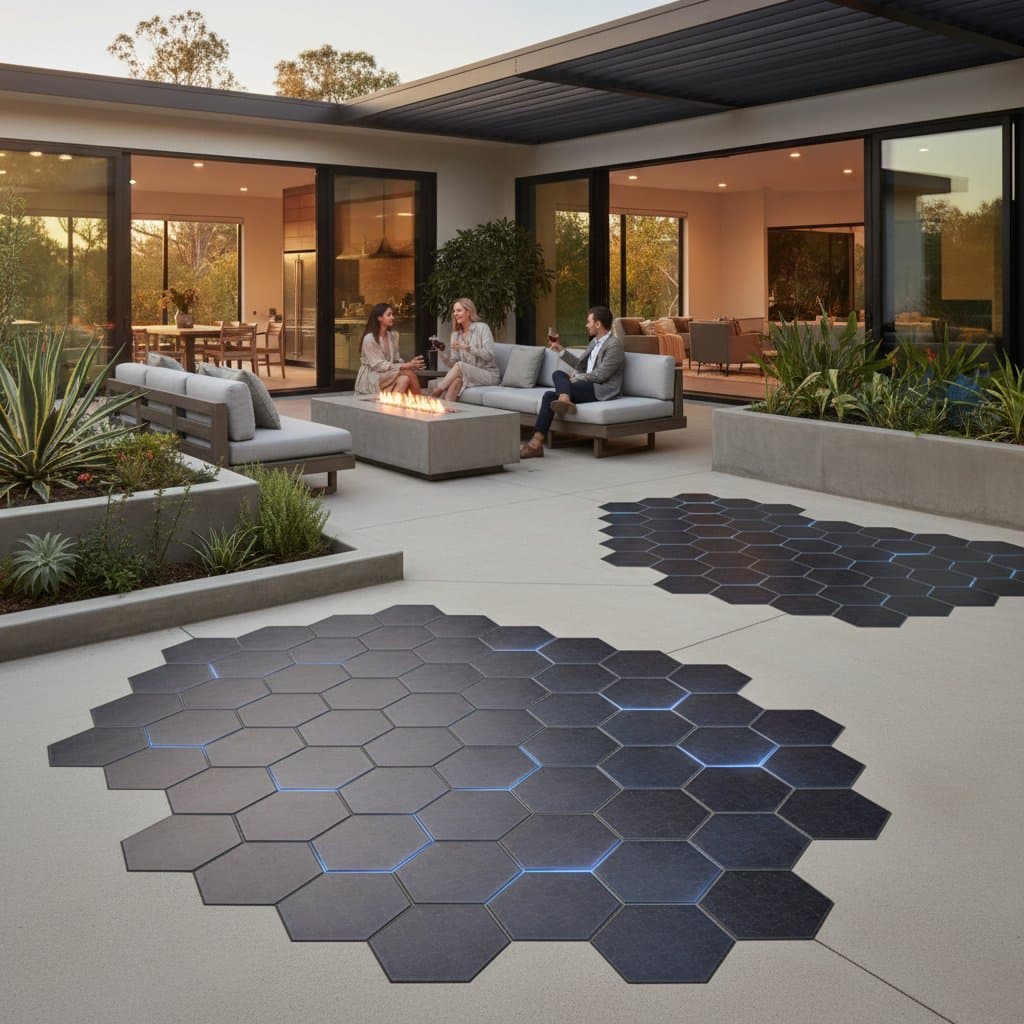
Solar Deck Pavers: Walkable Panels That Energize Patios
Outdoor spaces serve multiple purposes beyond relaxation and gatherings. They hold potential to capture solar energy throughout daylight hours. Solar deck pavers function as sturdy surface panels resembling natural stone tiles, yet they generate electricity through embedded technology. These elements combine aesthetics with utility, transforming patios or rooftop decks into efficient energy producers.
The primary objective remains straightforward: produce renewable power while preserving safety, visual appeal, and functionality in outdoor environments. This article examines the mechanics of these walkable solar panels, outlines installation expectations, and provides strategies for ongoing maintenance to ensure reliable output.
Understanding Solar Deck Pavers
Solar deck pavers consist of robust tiles incorporating photovoltaic cells protected beneath tempered glass layers. Each tile interlocks with adjacent units similar to conventional pavers and links via low-voltage cables to an inverter or storage battery. Individuals traverse, place furniture, or host events on these surfaces without concern for damage. The design withstands precipitation, frost, and loads up to 250 pounds per square foot, making them suitable for high-traffic areas.
Property owners select these pavers to power outdoor features such as pathway illumination, device charging stations, or small appliances. Alternatively, they integrate into home electrical systems for grid contribution. An arrangement of 20 to 30 tiles typically yields sufficient electricity to operate garden lights, a fountain pump, or an outdoor cooler unit. In optimal conditions, such setups produce 1 to 2 kilowatt-hours daily, depending on sunlight exposure and panel efficiency ratings that often reach 15 to 20 percent.
Various materials enhance durability and style. Options include porcelain composites mimicking slate or concrete finishes that replicate wood grains. These choices allow customization to match existing landscapes, ensuring the energy system complements rather than disrupts outdoor aesthetics.
Essential Tools and Materials
Preparation involves gathering specific supplies to facilitate a smooth process. Consider the following list:
- Solar paver tiles complete with wiring harnesses; acquire 10 percent more to account for adjustments and spares
- Gravel base and fine leveling sand for foundational stability
- Weatherproof conduit piping and electrical connectors
- Compact inverter unit or battery storage system, particularly for off-grid applications
- Installation tools including a rubber mallet, pointing trowel, and heavy-duty gloves
Opt for footwear with strong grip during work, and verify all electrical components remain dry prior to manipulation. These items ensure compliance with basic construction standards and promote efficient assembly.
Installation Process
Step 1: Evaluate and Plan the Area
Begin by delineating the installation zone, such as a 10-by-10-foot section scaled to your patio dimensions. Prioritize south-facing orientations to maximize solar intake, ideally with minimal shading from trees or structures. Measure sunlight hours in the chosen spot over several days to predict energy yield accurately.
Step 2: Build the Foundation
Clear away existing decking or paving materials. Distribute a 2-inch layer of compacted gravel, followed by 1 inch of coarse sand for even support. Use a plate compactor to solidify the base, preventing future shifts that could misalign tiles or wiring.
Step 3: Install Wiring Pathways
Position conduit channels under the planned layout before tile placement. Direct low-voltage lines away from perimeter edges by at least 3 inches to avoid compression during use. Secure conduits with stakes or clips to maintain alignment throughout the project.
Step 4: Position the Tiles
Arrange pavers tightly together, employing the mallet to seat each one firmly. Maintain uniform alignment of surface patterns for a cohesive appearance. Test stability by applying moderate pressure to ensure secure interlocking.
Step 5: Wire the System
Adhere to the producer's wiring diagram precisely. Deactivate all power sources before attaching any connectors to minimize electrical hazards. Route excess cabling neatly to the inverter or battery location, often housed in a weatherproof enclosure nearby.
Step 6: Finish the Surface
Fill joints with polymeric sand using a broom, then activate with a gentle water spray to set the material. This step seals gaps against moisture infiltration and weeds. Allow 24 hours for curing before full use.
Two individuals complete a modest deck area in 4 to 6 hours, though larger projects extend to a full day. Professional assistance proves beneficial for complex electrical integrations.
Safety Considerations
Deactivate electrical circuits throughout setup and final checks to prevent shocks. Avoid sliding heavy items over the panels; instead, lift them or attach protective pads to bases. For cleaning, employ lukewarm water mixed with mild detergent and a non-abrasive brush to preserve the glass coating. Regular inspections identify potential issues early, safeguarding both users and system integrity.
Common Issues and Solutions
Power generation halts in isolated sections warrant immediate attention. Examine connections beneath the surface for corrosion or dislodgement, common after heavy rains. Relocate shading elements like awnings or potted plants, as even brief obstructions diminish efficiency by up to 15 percent.
Cracked tiles demand swift replacement to block water penetration, which accelerates internal degradation. Monitor output via integrated apps or meters; dips below expected levels signal cleaning needs or panel realignment. Professional diagnostics assist with persistent problems beyond basic checks.
Cost Estimates and Timeline
Material costs range from $20 to $35 per square foot, encompassing tiles, wiring, and preparatory substrates. Professional labor incurs additional fees of $10 to $20 per square foot, though DIY approaches suit smaller scales. Budget for permits if connecting to home systems, and factor in inverter expenses starting at $200.
Most installations fit within a weekend schedule, covering planning, execution, and testing. Larger patios require phased work to manage time effectively.
Upkeep Routines
Monthly sweeping clears debris that blocks sunlight absorption. Seasonal rinsing with a hose removes accumulated grime without harsh chemicals. Annual reviews of wiring involve tightening fittings and resealing any faded joints to repel moisture.
These practices extend panel lifespan to 20 years or more, with output warranties often covering 80 percent efficiency over a decade. Track energy production against utility savings to quantify return on investment.
Advancing Your Outdoor Energy Setup
Solar deck pavers deliver subtle yet impactful enhancements to daily routines. Initiate with a targeted cluster around high-use zones like lounging areas, then scale based on observed reductions in energy bills. Maintain clear surfaces and track metrics to optimize returns. This approach fosters a patio that not only beautifies but actively contributes to household power needs.