
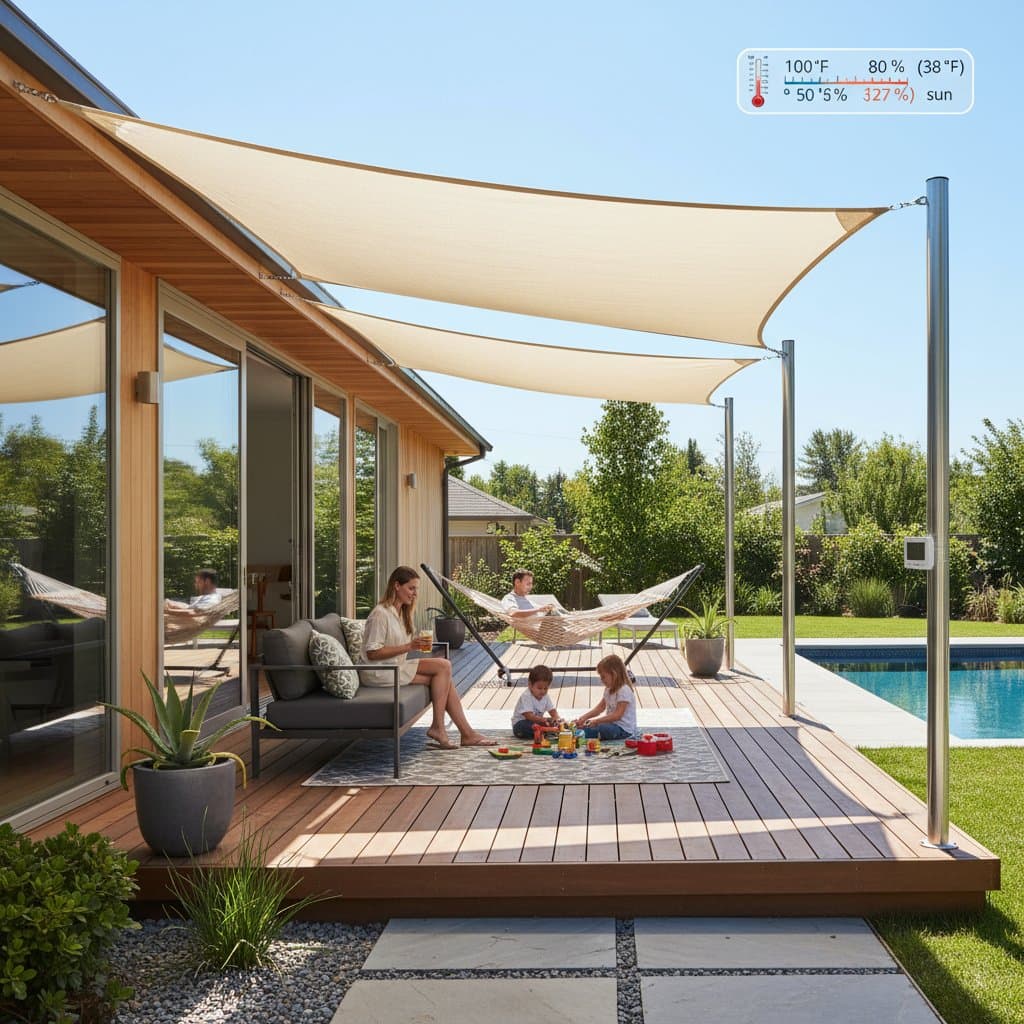
5. Test and Adjust
After completing the installation, position yourself beneath the sail during peak midday sun. Verify that the shade fully encompasses the target area, such as seating or lounging spaces. Should direct sunlight penetrate the intended zone, fine-tune the tension on the ropes or shift one corner attachment point by a small increment to optimize coverage.
To assess drainage, direct a garden hose toward the sail and observe water flow. Ensure that moisture channels away without accumulation. Incorporate a gentle incline of 5 to 10 degrees in the design; this slope facilitates rain runoff and prevents pooling at the center, preserving the fabric's integrity over time.
Troubleshooting Common Issues
Shade sails occasionally encounter minor challenges that affect performance. Addressing these promptly maintains functionality and extends service life. The following outlines frequent problems, their origins, and targeted solutions.
Problem: The sail develops sags within days of installation.
Cause: Initial stretching occurs in the fabric or attachment ropes due to settling under load.
**Fix: Adjust the turnbuckles incrementally, applying one or two complete rotations at each corner. Restore tautness gradually to avoid over-stressing the material. Monitor the adjustment over 24 hours to confirm stability.
Problem: Water collects in the sail's center during rain.
Cause: Insufficient pitch results in a level orientation that traps moisture.
**Fix: Reposition one corner lower than the others to establish a noticeable slope. Aim for at least a 5-degree angle, measurable with a level tool. This modification ensures efficient drainage and reduces strain from standing water.
Problem: Anchor screws become loose or detach from the surface.
Cause: Installation into soft substrates or exposure to wind forces exceeds the hardware's capacity.
**Fix: Relocate anchors to more robust sections, such as structural beams or reinforced concrete. Upgrade to extended stainless-steel bolts that penetrate deeply into studs or solid bases. Apply thread-locking compound for added security against vibration.
Problem: Tears appear in the fabric near attachment points.
Cause: Excessive tension pulls at seams, or abrasive edges on metal hardware cause abrasion.
**Fix: Smooth any rough spots on fittings with a metal file to eliminate sharp protrusions. Replace the affected fabric section with a compatible patch kit. Reinforce corner areas using heavy-duty webbing sewn or adhered in place prior to reattachment, enhancing resistance to future stress.
Additional troubleshooting considerations include monitoring for unusual noises, such as flapping in light winds, which may indicate loose fittings. Regular visual checks after weather events help identify issues early. If problems persist despite these fixes, consult the manufacturer's guidelines for model-specific advice.
Ongoing Maintenance Practices
Preserve the sail's appearance and functionality through seasonal care routines. Perform thorough cleaning twice per year to eliminate mold, pollen, and debris that compromise UV protection. Begin by rinsing the surface with a standard garden hose to remove loose particles. Follow with a soft-bristled brush and a solution of mild, non-abrasive detergent diluted in water. Scrub gently in circular motions, avoiding harsh chemicals that could degrade the HDPE weave. Conclude by rinsing completely and allowing the fabric to air-dry fully before reapplying tension.
Conduct monthly inspections of all components to detect wear. Examine hardware for signs of rust or corrosion, particularly in coastal or humid climates. Tighten any loose fasteners and replace frayed ropes or cables immediately. In regions prone to severe weather, such as high winds or hail, consider detaching the sail during storms. Store it in a dry, indoor location until conditions improve, folding it loosely to prevent creases.
For decks adjacent to vegetation, maintain clearance by pruning overhanging branches that might chafe the fabric. Regularly sweep away fallen leaves or debris to ensure unobstructed drainage paths. These proactive steps minimize environmental damage and support consistent performance.
High-density polyethylene (HDPE) sails, when selected for quality, endure five to ten years under diligent maintenance. Consistent attention to tension levels and cleanliness not only prolongs lifespan but also sustains the vibrant color and taut profile that enhances your deck's aesthetic.
Engaging Professional Assistance
Certain installations demand expertise beyond DIY capabilities. Seek a certified installer if anchoring opportunities prove scarce or if the project involves elevated masonry structures exceeding one story in height. Professionals bring specialized tools and knowledge to fabricate custom brackets or auxiliary posts capable of withstanding substantial wind loads.
In wind-vulnerable areas, specify hardware rated for a minimum of 400 pounds of tension per attachment point. This reinforcement safeguards against detachment during sudden gusts, ensuring safety for your property and occupants. Verify the installer's credentials, including experience with shade structures and adherence to local building codes.
For expansive or uniquely shaped decks, a contractor versed in canopy systems proves invaluable. They perform precise calculations for sail overlap, tension distribution, and airflow dynamics. Such planning yields a cohesive design that maximizes shade while promoting ventilation to deter heat buildup.
Professionals also offer warranties on labor and can integrate sails with complementary features, like integrated lighting or retractable elements. Budget for this service if your setup involves complex engineering; the investment yields peace of mind and superior results.
Implementing Your Shade Solution
Installing a UV-blocking shade sail elevates a sweltering deck into a versatile outdoor haven. The process demands straightforward tools and methodical steps, delivering swift improvements in comfort and usability.
Follow this sequence for success:
- Evaluate the deck thoroughly for viable anchor locations and identify sun exposure patterns using a sun chart or observation over several days.
- Select premium HDPE fabric certified to block at least 90% of UV rays, prioritizing warranties against fading and warranties.
- Secure hardware with precision, confirming each point embeds into load-bearing materials like wood studs or concrete footings.
- Uphold tension and hygiene routines to optimize longevity, performance, and visual appeal.
With these practices, your shade sail not only mitigates heat by up to 20°F but also shields against harmful rays, fostering extended enjoyment of your space throughout the seasons.