
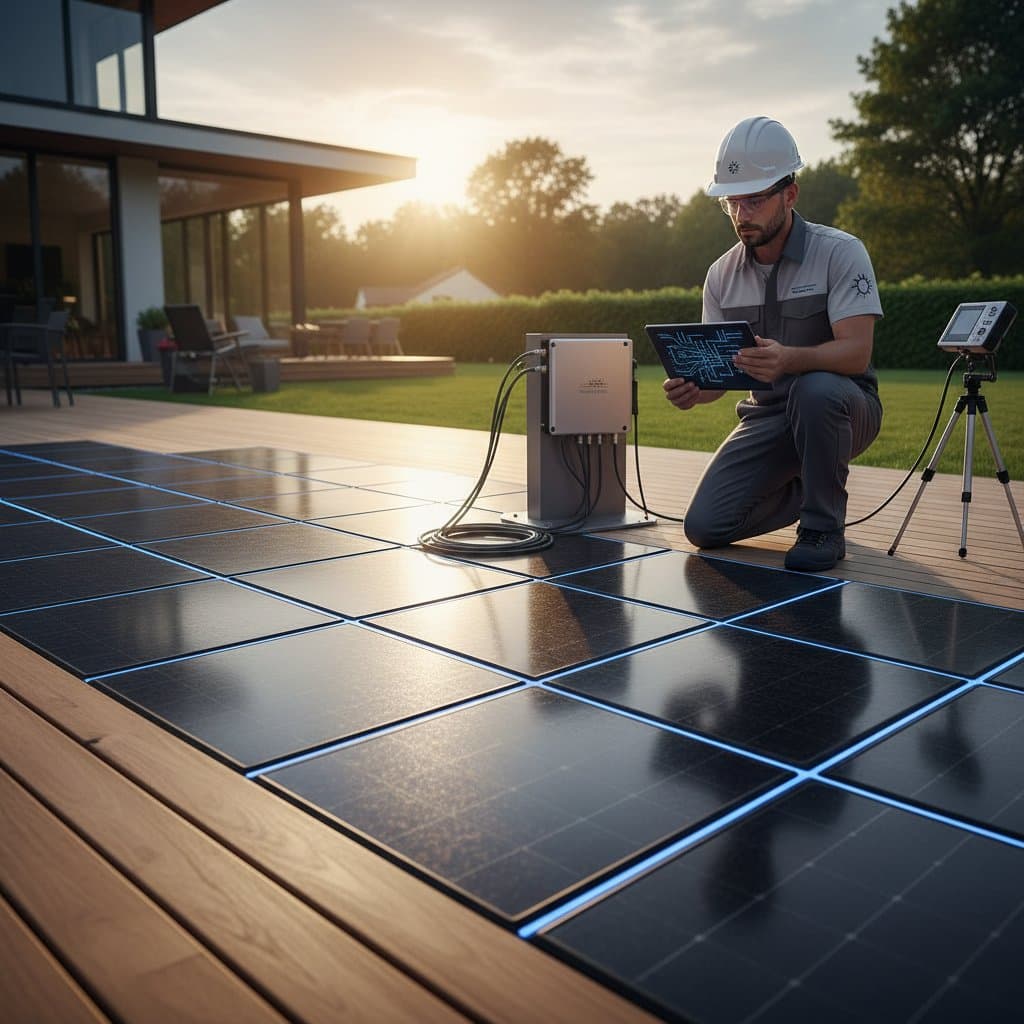
Transform Your Deck into a Solar Power Hub
You step onto your deck on a bright afternoon and sense the sun's potential going unused. The surface warms underfoot, yet it produces no practical benefit. Envision that same deck silently converting sunlight into electricity to power lights, charge devices, or contribute to your home's energy supply. A solar power hub achieves exactly that by transforming your deck into a functional energy-generating platform.
The objective remains straightforward: leverage existing outdoor space to produce renewable energy. This guide explains solar deck systems, their mechanics, and the process for planning, installing, and maintaining one securely. It also covers costs, scenarios requiring professional assistance, and strategies for sustained performance over time.
Overview
A solar power deck integrates photovoltaic panels or solar pavers directly into the flooring to harness sunlight and generate electricity. This approach merges recreational outdoor areas with sustainable energy production. Rather than installing oversized panels on a roof, you create power where daily activities occur.
These setups employ photovoltaic cells, identical to those in traditional rooftop solar installations, embedded within robust outdoor tiles or decking materials. The captured energy travels via concealed wiring to an inverter, which transforms direct current into usable alternating current. The resulting power supports battery charging, outdoor illumination, or integration with your home's electrical grid.
Why It Matters
- Energy Independence: Generate a portion of your electricity needs, reducing reliance on utility providers and monthly bills.
- Space Efficiency: Decks and patios frequently receive optimal sunlight without competing for limited rooftop area.
- Sustainable Integration: Solar pavers offer an alternative to roof installations, particularly in shaded or space-constrained properties.
- Visual Appeal: Sleek, contemporary surfaces eliminate the clutter of visible panels and exposed wiring.
A power-generating deck provides autonomy and satisfaction while enhancing property value through compliant, secure design.
Tools and Materials
Assemble essential tools and components before beginning. Smaller systems suit DIY installation, but larger configurations demand involvement from a licensed electrician.
Tools
- Tape measure, minimum 25 feet long.
- Cordless drill with appropriate driver bits.
- Level and straightedge for alignment.
- Wire strippers and crimping tools.
- Safety gloves and non-slip footwear.
Materials
- Solar Pavers or Tiles: Typically 12 to 24 inches square, featuring tempered glass surfaces with anti-slip treatments.
- Mounting Frames or Joist Supports: Constructed from aluminum or stainless steel to withstand corrosion.
- Inverter: Device to convert direct current to alternating current.
- Battery Storage or Grid-Tie Kit: Optional based on local regulations and preferences.
- Conduit and Wiring: Suitable for outdoor exposure and moisture.
- Sealant and Flashing Tape: To block water penetration.
Verify that all items hold UL or IEC certifications and align with your deck's structural capacity. Individual solar pavers weigh 10 to 20 pounds, so evaluate the overall load on your framework.
Installation Steps
Step 1: Evaluate Sunlight and Layout
Observe your deck throughout a complete day to record direct sunlight duration. Areas overshadowed by trees or structures may yield insufficient energy. Aim for a minimum of four hours of unobstructed sun to justify the investment.
Outline optimal zones with chalk or painter's tape. Position solar pavers centrally or on south-facing sections. Maintain a two-inch clearance from edges, walls, or railings to accommodate airflow and wiring.
Step 2: Design the Circuit and Determine Load
Identify intended applications. A 200-watt array suffices for string lights or a water feature pump. Scale up to 1,000 watts for broader home integration. List target devices, their power ratings, and daily usage to establish required capacity.
Grid connections necessitate permits and professional oversight per local codes. Off-grid options allow simpler battery-based kits.
Step 3: Prepare the Deck Surface
Thoroughly clean the deck by sweeping debris and securing loose elements. For wooden surfaces, apply a protective sealant against moisture. Address cracks in composite or concrete bases prior to proceeding.
Install a moisture barrier if specified in your plan to safeguard underlying wiring from condensation.
Step 4: Secure Mounting Supports
Fasten frames to joists using corrosion-resistant screws. Ensure level placement within one-eighth inch tolerance for uniform support. Verify alignment periodically with a level tool.
Safety Note: Don protective gloves and eyewear during drilling to prevent injury from debris.
Step 5: Position Solar Pavers or Tiles
Place each tile onto the frame with controlled pressure. Units typically connect via interlocking mechanisms like clicks or tongue-and-groove edges. Adhere to the manufacturer's wiring guidelines, linking positive and negative terminals with waterproof fittings.
Test voltage after completing a segment using a multimeter; expect 18 to 22 volts under clear sunlight. Apply sealant to all connections, avoiding air entrapment that could lead to moisture issues.
Step 6: Integrate Inverter and Storage
Position the inverter in a shaded, ventilated location shielded from precipitation. Route conduit from deck wiring to the inverter enclosure, incorporating watertight cable entries.
Connect batteries following polarity indicators, inserting fuses or breakers for protection. Consult the provided wiring schematic throughout.
Step 7: Verify System Operation
Activate the inverter and monitor output at connection points. Successful operation powers connected devices without interruption. Use the inverter display or companion app to log energy production.
Essential Safety Practices
- Disconnect all power sources prior to handling wiring.
- Ensure dry footing during testing procedures.
- Employ exclusively outdoor-rated cables, as indoor varieties deteriorate under ultraviolet light.
- Review and comply with local electrical regulations; inspections may apply even to modest setups.
Locate hidden utilities with a stud finder before any penetration. Avoid assumptions about joist or wire positions.
Common Issues and Solutions
Reduced Power Generation
Inspect for obstructions like shade, accumulated grime, or loose connections. Minor contaminants can diminish efficiency by up to 10 percent. Clean surfaces with mild soap, water, and a soft cloth.
Inverter Failure to Activate
Validate polarity and connection integrity. Examine and reset fuses or breakers. Persistent problems may indicate a faulty unit; isolate power before disassembly.
Surface Irregularities
If tiles shift or appear misaligned, adjust frame fasteners incrementally. Refrain from excessive force to prevent surface damage.
Inconsistent Power Delivery
Mismatched inverter capacity to load often causes fluctuations. Select a unit rated 20 percent above your maximum demand.
Ongoing Maintenance
Wipe solar surfaces quarterly, particularly following seasonal buildup like pollen or storms. Opt for non-abrasive tools such as soft brushes or microfiber applicators. Annually examine wiring for degradation and reinforce seals as needed.
Clear inverter vents of dust and maintain battery terminals in a dry state. Promptly replace any compromised components.
During winter, steer clear of abrasive de-icers that might etch protective coatings. Remove snow manually with plastic tools.
Storage Guidelines
When disassembling paver sections, store them flat in a protected, dry environment with padding between layers. Maintain batteries in moderate temperatures between 50 and 80 degrees Fahrenheit, disconnecting during extended downtime.
Retain all manuals and diagrams in an accessible file for future reference.
Cost Estimates and Timeline
Basic DIY kits range from 15 to 20 dollars per square foot. Comprehensive installations with grid integration and labor climb to 40 to 60 dollars per square foot.
Project durations include:
- 100-square-foot area: 1 to 2 days.
- 250-square-foot deck: 3 to 4 days.
- Complete grid-tied overhaul: Approximately one week.
Account for permitting fees where applicable. Annual output of 500 to 1,000 kilowatt-hours offsets costs over time, varying by site conditions.
Seasonal Care Protocols
- Spring: Realign components and cleanse after winter expansion.
- Summer: Prevent overheating by removing vent blockages.
- Fall: Clear foliage and reinforce weatherproofing.
- Winter: Monitor battery levels and gently clear accumulations.
Consistent attention ensures reliability and longevity.
Scenarios Requiring Professional Expertise
Engage a licensed electrician for:
- Main panel integrations.
- Complex inverter or grounding configurations.
- Frequent circuit interruptions.
- Structural concerns like deck deflection.
Professionals perform load assessments, ensure regulatory adherence, and identify rebate opportunities.
Essential Insights
- Solar decks unite leisure spaces with renewable output.
- Modular designs permit gradual scaling.
- Prioritize solar access, secure wiring, and compliance.
- Routine upkeep averts complications.
- Expert input optimizes grid-connected projects.
Initial efforts yield rewards as sunlight fuels your surroundings.
Practical Actions to Begin
- Track daily sunlight patterns and identify prime areas.
- Evaluate paver options by output, dimensions, and expense.
- Define energy objectives, from auxiliary to comprehensive.
Initiate with a pilot area to gauge results, then scale confidently. Convert idle rays into tangible benefits for your outdoor haven.