
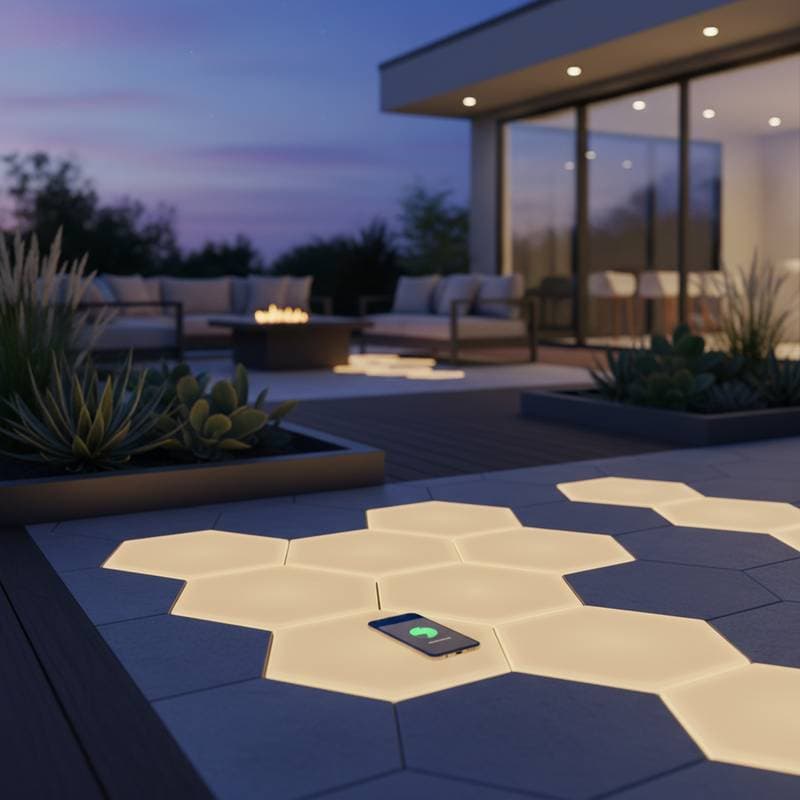
5. Charge and Test
Position the pavers in direct sunlight for a complete day to allow full charging before any testing. As evening approaches, verify that each paver emits a uniform glow. Examine the phone charging ports for proper operation. Should a paver fail to illuminate, wipe the solar surface clean and review the connections for any issues.
6. Seal and Finish
Sweep fine sand into the spaces between the pavers. Lightly spray with water to help the sand settle into place. On deck surfaces, use a soft cloth to remove any residue. Steer clear of thick sealants that could obstruct the solar cells.
Troubleshooting
Dim or uneven glow
Wipe the surface using mild soap and water. Accumulated dirt can prevent sunlight from reaching the cells. If the glow remains faint, confirm the solar cells receive at least four hours of direct sunlight each day.
Paver not charging a phone
Examine the USB or wireless charging component closely. Certain models require the internal battery to reach a minimum charge level before activation. Attempt charging during peak daylight hours. If the issue persists, consider replacing the charging module.
Water inside the lens
Carefully remove the affected paver and dry it thoroughly using a fan. Apply clear outdoor silicone to reseal the edges. Replace the paver if moisture reaccumulates, as it may damage the internal wiring.
Loose pavers
Lift the unstable paver, add additional leveling sand beneath it, and tamp it down firmly. Secure joints help minimize movement and prolong the pavers' durability.
Cracked top layer
Apply epoxy resin to repair minor cracks. For significant damage, install a new paver. Refrain from placing heavy furniture directly on the surface to avoid further cracks.
Maintenance
Perform a thorough cleaning of the solar surfaces each month. Employ a mild detergent paired with a soft sponge. Refrain from using abrasive materials that might scratch the protective lens. Inspect the joints regularly for debris that could cast shadows on the cells.
In regions with cold weather, clear snow using a plastic shovel rather than a metal one. Sealed panels withstand ice without damage. In hotter areas, rinse away dust frequently to maintain clear visibility and optimal performance.
Conduct a detailed inspection every six months for signs of corrosion near the connectors. Promptly replace any components showing green or white discoloration. Protect charging modules by covering them when idle.
Seasonal Reminders
Adapt your care routine to the changing seasons for consistent performance.
Spring
- Rinse off pollen and accumulated dust to restore efficiency.
- Examine tiles for displacement caused by winter freeze-thaw cycles.
- Replenish sand in joints as necessary to ensure stability.
Summer
- Trim surrounding vegetation to prevent shading of the solar cells.
- Clean the panels on a weekly basis to maximize energy capture.
- Verify the functionality of all charging ports in preparation for social events.
Fall
- Remove fallen leaves that could retain moisture and promote mold.
- Check seals for wear and apply fresh sealant where gaps form.
- Ensure full charging before the onset of reduced daylight hours.
Winter
- Keep salt and de-icing chemicals away from the panels to prevent corrosion.
- Sweep snow gently with a soft broom.
- Bring portable charging modules inside for storage during harsh weather.
Consistent, minor upkeep safeguards your investment and sustains reliable illumination year-round.
Key Takeaways
- Solar pavers integrate photovoltaic cells to absorb sunlight, fueling embedded LEDs and charging stations.
- Covering 50 square feet can sufficiently illuminate a deck while providing overnight charging for multiple devices.
- Complete installation typically requires one to two days using standard tools.
- Upkeep remains straightforward, involving monthly cleanings and periodic seasonal evaluations.
- Expect costs between 10 and 30 dollars per square foot, offset by long-term energy efficiencies.
Start with a modest project, such as lining the entrance to your deck with a handful of pavers. The transformation occurs immediately, enhancing visibility, security, and a subtle contribution to sustainable energy use in your surroundings.
Making It Happen
Start by measuring the specific area for your pathway or deck lighting project. Purchase a few additional pavers for initial trials. Place them in an unshaded spot for a full day of charging, then observe their illumination at twilight. With confidence in their performance, proceed to cover larger sections.
Assemble a basic maintenance kit including mild soap, a sponge, and a soft towel. Schedule monthly cleanings to keep surfaces optimal. Involve family members, such as children or teenagers, in the process to demonstrate the conversion of sunlight into usable energy.
For those who host evening gatherings, strategically position charging pavers adjacent to seating areas. This setup allows guests to recharge devices conveniently amid the ambient, reliable lighting.