
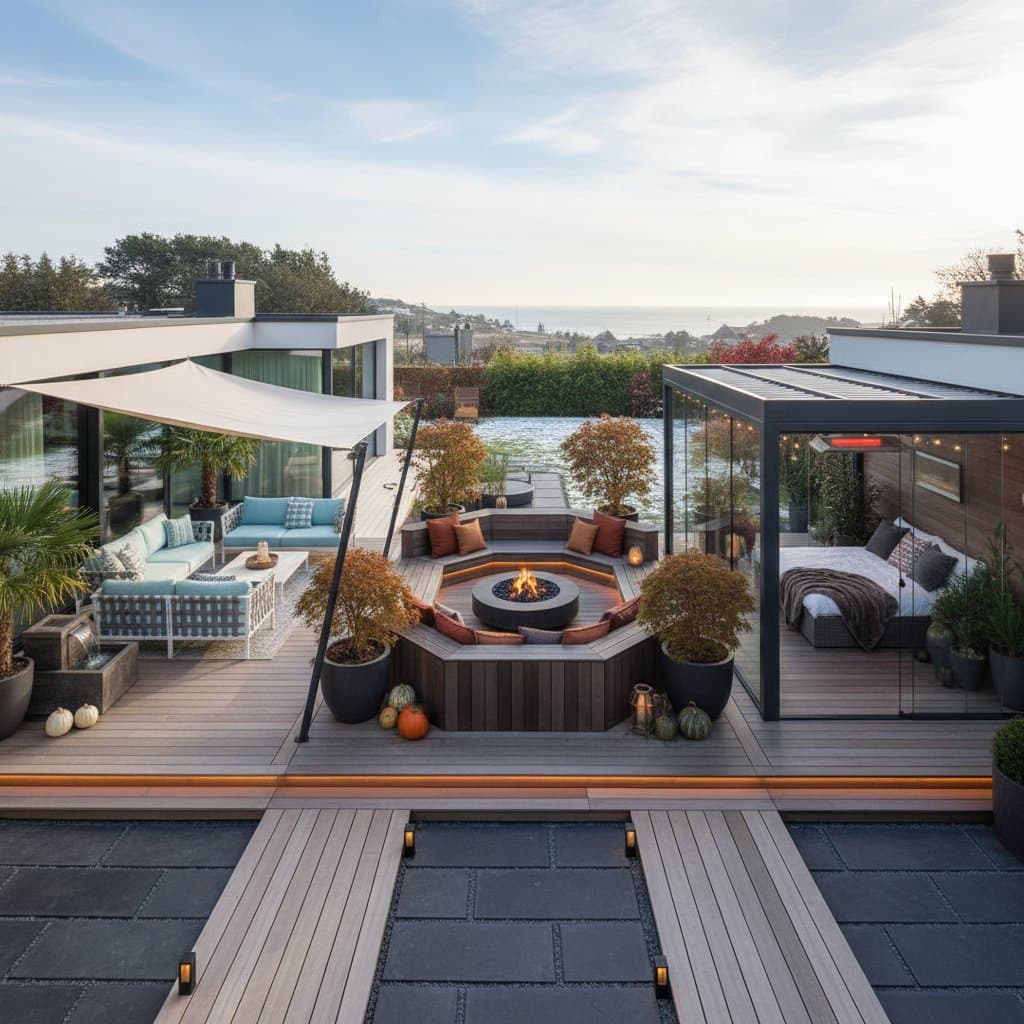
5. Introduce Heat for Cooler Months
Select a single heat source for every 80 square feet, or 7.4 square meters, of deck space to ensure even warmth without excess energy use. Reliable choices encompass propane or electric heaters, compact tabletop fire bowls, and infrared panels installed beneath eaves for discreet operation. These options allow you to extend usability into fall and winter evenings.
Position propane tanks on a firm, non-combustible base in a well-ventilated spot to prevent hazards. For electric heaters, route cords along protected paths and encase all connections in weatherproof covers to avoid moisture damage. Always verify local codes before installation to maintain compliance and safety.
6. Use Plants to Shape Comfort
Plants regulate temperature by providing shade and releasing moisture into the air, creating cooler microclimates during warm weather. Incorporate tall ornamental grasses, potted citrus trees, or climbing vines along edges to deflect wind and reduce glare effectively. Arrange three to five containers in clusters to build a subtle natural barrier that enhances privacy without overwhelming the space.
Opt for evergreens or neatly trimmed boxwoods reaching approximately 4 feet, or 1.2 meters, in height for year-round screening. Maintain plant health by watering deeply once or twice weekly, depending on rainfall, and rotate pots monthly to promote balanced growth and prevent root binding. This approach integrates greenery seamlessly into your deck design.
7. Light Each Zone for Use and Safety
Implement layered lighting to illuminate zones according to their purpose, balancing ambiance with functionality. Install string lights or slim LED strips along railings for a soft, inviting glow that sets the evening mood. Position task lights, such as adjustable spotlights, near grilling stations or seating for reading to support specific activities.
Incorporate solar-powered path lights along stairs and perimeter edges to guide movement and prevent accidents after dark. Connect all fixtures to timers or smart plugs for remote control, enabling brightness adjustments per zone based on time or weather. This setup ensures safe navigation while highlighting architectural features.
8. Manage Materials by Temperature
Select decking and furniture that withstand temperature fluctuations to preserve comfort and longevity. Composite materials remain cooler under summer sun compared to dark-toned woods, which absorb heat rapidly. Similarly, choose wicker or resin chairs over metal ones, as the latter retain cold intensely during winter.
Store removable cushions in sealed, waterproof bins during inclement weather to shield them from dampness and UV exposure. Inspect and clean surfaces seasonally to remove debris that could trap moisture. These choices minimize discomfort and extend the lifespan of your outdoor furnishings.
9. Store by Zone
Assign dedicated storage to each zone, such as a compact container or built-in bench, to maintain organization and accessibility. Affix weatherproof labels to bins for quick identification of contents like seasonal pillows or accessories. Position storage near points of use, such as grill tools by the cooking area, to streamline setup and reduce clutter.
This zoned approach simplifies daily maintenance and cleanup routines. Regularly audit contents to discard worn items, ensuring the deck remains tidy and functional year-round.
Troubleshooting Common Issues
Problem: A zone becomes uncomfortably hot in the midafternoon sun.
Fix: Install a retractable awning or reposition seating 3 feet, or 0.9 meters, toward a naturally shaded area. Avoid reflective surfaces like glass tabletops, which amplify heat; replace them with wood or matte-finish metal alternatives for better thermal control.
Problem: Wind reduces heater efficiency and comfort.
Fix: Erect a low-profile wind screen or arrange staggered planters to disrupt airflow patterns. Ensure any gaps in barriers measure less than 6 inches, or 15 centimeters, to block drafts effectively without restricting ventilation.
Problem: Zoning efforts result in a cluttered appearance.
Fix: Coordinate color schemes across rugs, cushions, and furniture for cohesive visuals. Limit vertical elements to rail height to preserve open sightlines and prevent the deck from feeling enclosed.
Problem: Moisture accumulates beneath rugs, fostering mold.
Fix: Roll back rugs weekly to air out the underlying deck boards and promote drying. Select breathable mats featuring rubber undersides to allow airflow while gripping surfaces securely against slips.
Essential Maintenance Practices
Inspect all fasteners, anchors, and screens on a monthly basis to detect wear and secure components promptly. Gently clean shade sails and curtains using mild soap and a soft-bristled brush, then rinse thoroughly to remove residues. For heaters, wipe exteriors with a dry cloth and examine for signs of corrosion or damage before each use.
On wooden decks, apply a fresh layer of water-repellent sealant each season to safeguard against moisture buildup from rugs or planters. Elevate plant containers on risers to facilitate air circulation beneath and prevent rot. Annually replace light bulbs with outdoor-rated LEDs to optimize energy use and illumination quality.
Store cushions in protective bins during off periods to shield them from elements. These routines preserve the deck's condition and safety over time.
Smart Storage Strategies
Organized storage enhances safety and usability on a multi-zone deck. Utilize vertical space with wall-mounted hooks or railing shelves for tools, cords, and small items. Place a compact cabinet adjacent to the cooking zone to house utensils and supplies within arm's reach.
Consider a bench featuring a 40-gallon, or 151-liter, internal compartment for stowing cushions and blankets efficiently. Rotate items seasonally by keeping current needs accessible and archiving others in clearly labeled bins. Limit stacking heights to avoid obstructing airflow, which could lead to mildew growth.
These methods keep the space inviting and prepared for spontaneous gatherings.
When to Consult a Professional
Engage a licensed contractor for projects involving permanent electrical wiring or new outlets to ensure code compliance. Seek expert assistance with gas line installations for propane heaters to handle safety protocols correctly. Call in structural specialists for adding supports or roofing elements that alter the deck's framework.
Professionals mitigate risks and guarantee durable results for complex modifications.
Implementing Your Deck Transformation
Start by sketching your deck layout to identify ideal zone placements based on sun patterns and traffic flow. Gather materials suited to your climate, then proceed with installations in phases: shading first, followed by heating and lighting. Test each zone during varied weather to refine adjustments.
This methodical process yields a versatile outdoor space that enriches daily life. With thoughtful design, your deck becomes a reliable extension of home comfort across all seasons.