
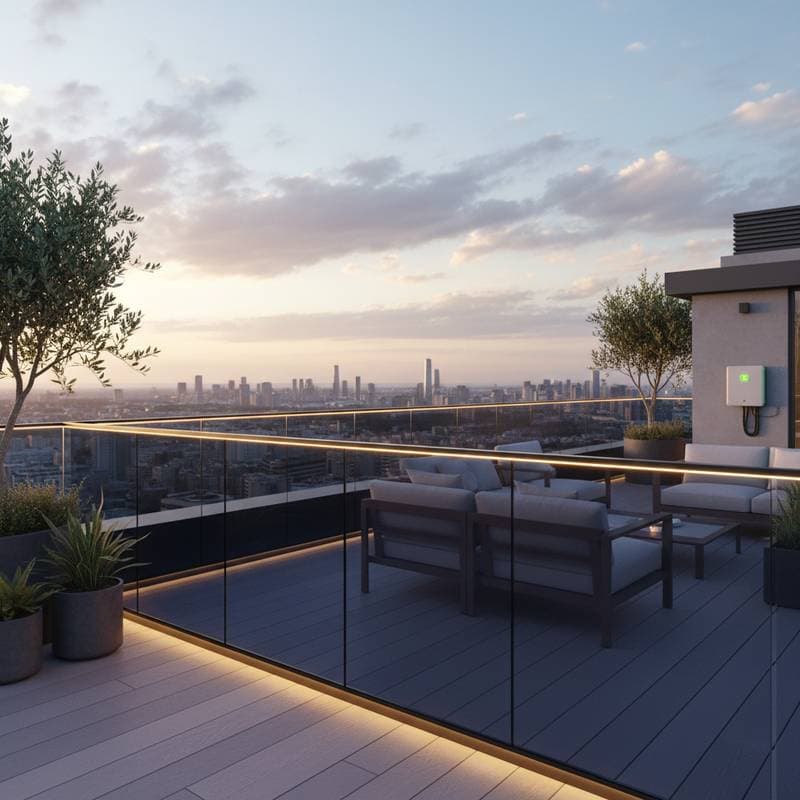
Step 5: Wire the Panels
Photovoltaic glass panels typically feature junction leads positioned discreetly at the base. Route low-voltage wiring through flexible conduit that follows the inner frame of the railing. Link the panels in series configuration until the total output aligns with the input specifications of the chosen inverter or microinverter. Fasten all cables using UV-resistant clips to minimize movement caused by wind exposure.
Step 6: Connect to the Inverter
Position the inverter close to an accessible rooftop outlet or the main service panel for convenience. Engage a licensed electrician to handle the final electrical integration. The professional will incorporate a disconnect switch and verify that the entire circuit adheres to local building codes. After completion, conduct a voltage test during peak sunlight hours to confirm stable DC output within the panels' specified parameters.
Step 7: Seal and Finish
Apply a high-quality sealant around the bases of the posts and any penetrations through walls to ensure weatherproofing. Verify that all drainage holes remain unobstructed to prevent water accumulation. Clean the glass surfaces using mild soap diluted in water, along with a soft brush or microfiber cloth to avoid scratches.
At this point, the railing serves dual purposes: providing safety for the deck while generating electricity daily through solar exposure.
Essential Safety Guidelines
- Avoid drilling into load-bearing structural elements unless load paths have been verified by a structural engineer.
- Protect all electrical connections from moisture by keeping them enclosed and sheltered.
- Ensure the system's voltage never surpasses the inverter's maximum rating to prevent damage or hazards.
- Select tempered or laminated safety glass that carries certification for use in railing applications.
If questions arise regarding wiring or compliance with regulations, halt work immediately and consult a licensed professional installer.
Common Troubleshooting Scenarios
Well-designed systems occasionally encounter minor problems in the initial months of operation. Addressing these promptly maintains optimal performance.
Reduced Power Generation
Inspect panels for accumulations of dirt, bird droppings, or environmental films that block sunlight. Perform cleaning with soft water and a neutral, non-abrasive detergent. Potential shading from newly constructed elements or overgrown vegetation can also diminish output; consider trimming obstructing foliage or making minor adjustments to panel orientation for better light capture.
Intermittent Lighting or Circuit Interruptions
Such symptoms frequently indicate loose connections or ground faults within the system. Deactivate the setup via the disconnect switch before any inspection. Reach out to a qualified electrician for diagnosis and repair; avoid handling energized wiring.
Condensation Within Panels
Laminated glass may exhibit slight internal fogging due to fluctuations in humidity. Persistent droplets warrant a call to the manufacturer for evaluation. The panels must retain their factory seals; extended exposure to moisture can gradually impair efficiency.
Routine Maintenance Practices
Solar railings demand minimal attention compared to conventional glass installations, as the panels generate slight self-heating under sunlight to deter dust adhesion. Nonetheless, schedule thorough cleaning and inspections at least biannually to sustain longevity.
- Clean panels every few weeks using a dedicated glass cleaner applied with a soft cloth.
- Examine mounting bolts regularly for signs of corrosion or loosening.
- Confirm the integrity of wiring insulation against wear.
- Scrutinize sealant applications for developing cracks or gaps.
Maintain clear access to the posts by keeping the underlying deck free of debris. Employ a compact handheld sprayer paired with a soft brush for effective cleaning that avoids directing water toward adjacent roof areas.
Preparing for Storage and Winter Conditions
Solar railings remain fixed in place and cannot be stored seasonally. However, safeguard accessories such as spare gaskets, connectors, and sealant tubes by storing them in a dry, indoor cabinet. In regions prone to freezing temperatures, gently sweep snow from surfaces using a soft-bristled broom. Refrain from scraping ice directly from the glass to prevent thermal stress or damage. Following heavy snowfall, assess the posts for any shifting once the accumulation thaws.
Cost Estimates and Timeline
Expenses for solar railing installations fluctuate based on glass transparency levels and prevailing local labor costs. For budgeting purposes, consider the following ranges:
- $120 to $180 per linear foot for DIY framing kits and core materials.
- $200 to $300 per linear foot when opting for full professional installation.
- Two to four days of labor for a skilled team to complete a 30-foot section.
The electrician's final connection typically incurs an additional $500 to $1,000, influenced by site accessibility. Investigate available renewable energy rebates through municipal or utility programs to offset initial outlays.
Payback timelines vary with local electricity tariffs and solar exposure, yet most installations recoup investments within six to eight years via reduced energy expenditures.
Seasonal Maintenance Checklist
Each season requires targeted inspections to ensure reliable operation.
Spring Preparations
- Evaluate seals for degradation following repeated freeze-thaw cycles.
- Thoroughly wash panels to eliminate accumulated winter residues.
- Test the inverter's output during a clear morning to benchmark performance.
Summer Monitoring
- Monitor conduit pathways for excessive heat buildup during prolonged sun exposure.
- Ensure ventilation around the inverter remains unobstructed to aid cooling.
- Renew UV-protective coatings on any exposed metal components if paint shows fading.
Fall Inspections
- Remove fallen leaves from drainage openings to maintain flow.
- Secure all bolts in anticipation of approaching winter winds.
- Log monthly production metrics for comparison against prior seasons.
Winter Protocols
- Clear snow lightly to preserve sunlight access without risking surface damage.
- Allow panels to warm gradually in sunlight prior to any cleaning to mitigate cracking from sudden temperature shifts.
Indicators for Professional Assistance
Seek expert help in these situations:
- When the rooftop deck forms part of a multi-unit residential structure.
- If existing posts exhibit rust, instability, or structural concerns.
- For integrations involving shared building electrical grids.
- To incorporate advanced features like battery storage or intelligent monitoring systems.
Request verification of the contractor's credentials in roofing and electrical work. Insist on the use of photovoltaic glass products certified under UL or IEC standards.
Immediate Action Plan
Three practical steps to initiate your project:
- Assess sunlight availability. Dedicate ten minutes to observe and document periods when your rooftop receives unobstructed sunlight.
- Solicit estimates. Contact at least two qualified installers to obtain preliminary quotes on costs per linear foot and expected energy yield.
- Design your layout. Sketch the deck perimeter, highlight sun-exposed sections, and identify optimal locations for integrating solar railings.
Solar energy integration extends beyond expansive roof arrays; it integrates seamlessly into everyday elements like railings, converting protective glass into a subtle source of power. Each unit of electricity generated eases grid reliance and enhances property value over time.