
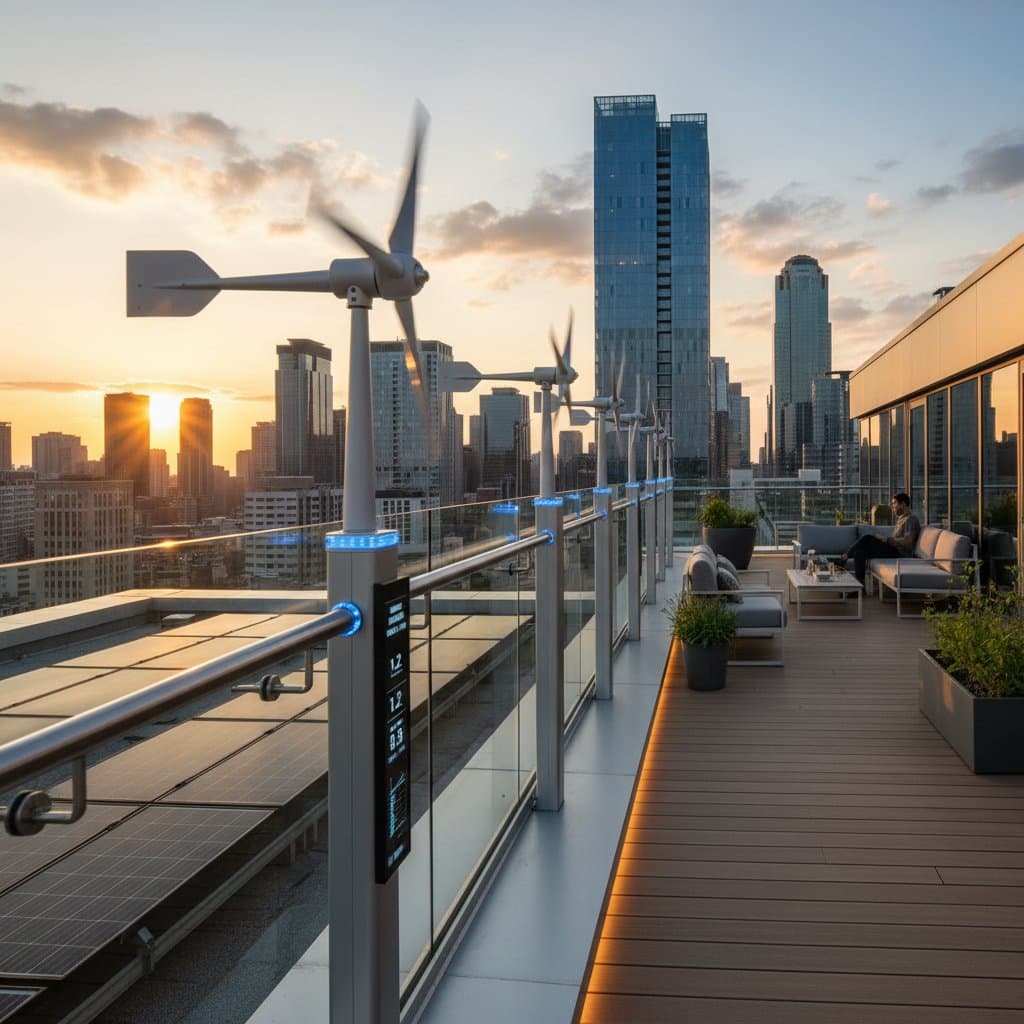
Harness Urban Winds: Power Your Deck with Innovative Railings
City decks offer serene retreats amid the urban hustle, yet they hold untapped potential beyond relaxation or gardening. Wind railings elevate this space by converting boundary barriers into efficient energy generators. These installations incorporate compact turbines that capture breezes, producing electricity to illuminate evenings, charge electronics, or support broader home systems.
The concept leverages a ubiquitous urban resource: consistent airflow channeled between buildings. This guide explores the mechanics of wind railings, their installation process, expected performance, financial considerations, and upkeep requirements. Readers gain practical insights to integrate this technology seamlessly into sustainable living practices.
Understanding Wind Railings
Wind railings function as dual-purpose safety features equipped with micro wind turbines. Each turbine transforms kinetic energy from air movement into usable electricity, suitable for direct application or storage in batteries. Vertical-axis designs predominate, as they efficiently gather wind from multiple directions, ideal for the variable gusts common on elevated urban structures.
Urban environments create natural wind corridors, amplifying airflow around decks and balconies. A standard 20-foot railing outfitted with these turbines generates 50 to 200 watts under typical conditions of 10 to 15 miles per hour. This output suffices for powering low-energy devices, such as string lights or USB chargers, thereby reducing reliance on grid electricity during peak evening hours.
Integration with solar panels enhances overall efficiency, providing complementary energy capture across day and night cycles. Homeowners report noticeable savings on utility bills, particularly in windy locales like coastal cities or high-rise districts.
Essential Tools and Materials
Preparation ensures a smooth installation. Commercial kits simplify the process, though bespoke assemblies suit unique deck configurations. Assemble the following components prior to commencement:
- Wind railing kit featuring vertical-axis turbines, collectively rated at a minimum of 100 watts
- Mounting brackets paired with corrosion-resistant stainless steel fasteners, typically 12 to 16 units for spans up to 20 feet
- Outdoor-rated low-voltage wiring, approximately 30 feet in length
- Compact battery pack or inverter, selected based on intended power applications
- Sealed weatherproof junction box for electrical connections
- Power drill equipped with masonry bits for concrete or brick attachments
- Personal protective equipment, including gloves, safety goggles, and a stable ladder
Verify the deck's structural integrity to accommodate the system's weight. Each linear foot introduces 20 to 25 pounds, necessitating reinforcements if the original framework shows signs of wear.
Installation Process
Evaluate Wind Patterns
Observe airflow dynamics from the deck over several days. Turbines thrive in unobstructed zones where wind prevails from predominant directions. Identify and mitigate barriers, such as adjacent walls or oversized planters, that could impede circulation.
Prepare the Mounting Surface
Dismantle existing railings carefully to avoid surface damage. Inspect and cleanse the area, addressing any deteriorated wood, rusted metal, or insecure fixtures. Secure or substitute components to establish a firm foundation that minimizes operational vibrations.
Install the Railing Sections
Align the initial railing segment precisely. Fasten it using provided brackets and bolts, adhering to manufacturer specifications for torque settings. Collaborate with a partner for handling extended pieces, and employ a level to maintain vertical alignment across all posts.
Route and Secure Wiring
Extend low-voltage cables along the railing's lower edge, securing them with clips at intervals of 12 inches. Direct leads into the junction box, applying silicone sealant to every entry point for waterproofing. This configuration safeguards against moisture infiltration during rain or humidity spikes.
Integrate Power Management
Link the turbine outputs to a designated battery or inverter. A 12-volt unit proves versatile for deck-specific uses like pathway illumination or receptacle powering. Adhere strictly to positive and negative indicators during connections, then validate functionality by monitoring voltage from individual turbines.
Test for Stability
Activate the assembly and monitor auditory cues. A subtle operational whir indicates proper function, while excessive noise signals potential issues like misaligned components. Adjust fasteners accordingly and conduct a secondary performance check.
Finalize Enclosures
Latch all access panels and the junction box securely. Confirm that wiring remains insulated from environmental elements and potential animal interference, ensuring long-term reliability.
Key Safety Considerations
Installation demands caution to prevent accidents. Postpone work until winds subside below 10 miles per hour, avoiding unpredictable shifts in component positioning. Wear protective gloves when manipulating turbine blades, which may feature keen edges.
Disconnect all electrical sources before inspecting or adjusting wires. Position ladders on firm, level surfaces, and refrain from overreaching beyond the deck's perimeter. Conduct annual examinations of anchors to detect loosening or corrosion, preserving structural soundness.
Common Issues and Resolutions
Reduced Energy Generation: Inspect for airflow restrictions, including subtle obstructions like privacy screens. Gently brush turbine surfaces to remove accumulated debris, restoring optimal spin.
Complete Power Failure: Verify wire orientations and inspect fuses for integrity. Isolate and test turbines sequentially using a multimeter to pinpoint faults.
Excessive Noise: Incorporate rubber gaskets beneath bolts to dampen resonances. This modification often eliminates disturbances without compromising efficiency.
Inconsistent Performance: Examine the junction box for displaced connections or abrasions. Reinstate contacts with insulated nuts and reapply protective seals.
Financial and Timeline Overview
A comprehensive setup ranges from $1,200 to $3,500, influenced by dimensions and turbine specifications. DIY installation for a 10-foot segment approximates $1,000, with professional services adding $400 to $800 for expertise in electrical integration.
Allocate a full weekend, primarily for meticulous wiring and weatherproofing tasks. Ongoing expenses remain low, limited to biannual cleanings. Synergize with preexisting solar installations or communal storage to optimize investments, prioritizing quality in core elements like cabling and supports.
Ongoing Care Practices
Perform semiannual inspections to sustain peak operation. Clean blades with a moistened cloth to eliminate dust and residues, then torque bolts to manufacturer standards. Ensure rotational freedom; apply lubricant sparingly if resistance appears.
In regions prone to frost, manually rotate turbines pre-winter to avert seizing. Deploy removable covers during icy periods to shield against accumulation, facilitating swift reactivation in spring.
Professional Assistance Indicators
Engage a certified electrician for integrations involving household circuits or batteries exceeding 12 volts. Seek specialists in small-scale wind technologies to validate grounding protocols, voltage regulations, and adherence to local building codes.
Integrating Wind Railings into Daily Life
Actionable Implementation Plan
- Quantify railing perimeter and assess prevailing wind access.
- Evaluate multiple kits, prioritizing wattage ratings and warranty durations.
- Schedule a dedicated weekend for assembly, testing, and initial monitoring.
This addition not only powers practical features but also embodies proactive environmental stewardship. Urban dwellers discover enhanced self-sufficiency, blending aesthetics with innovation for enduring satisfaction.