
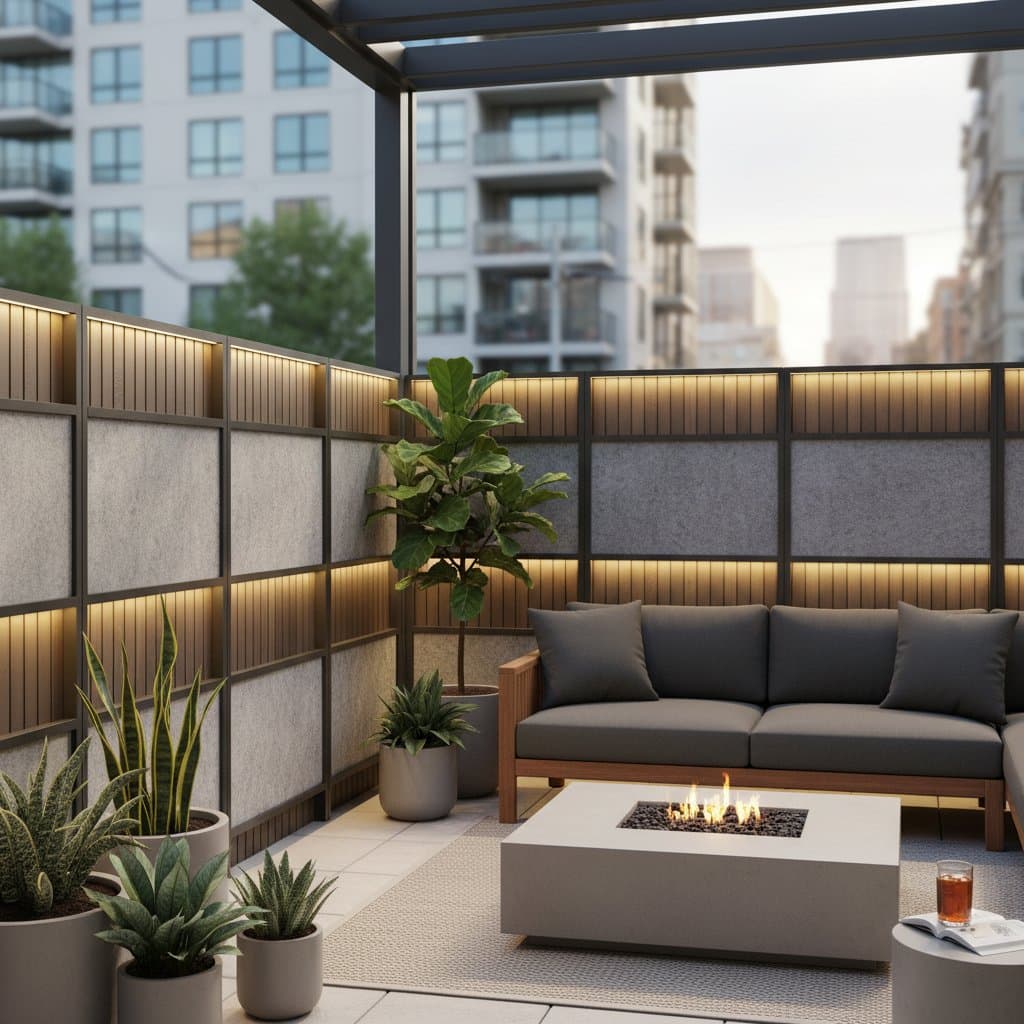
5. Seal Gaps
After securing the panels, apply a continuous bead of acoustic sealant along all seams and joints. Small gaps allow sound to penetrate easily. Pay particular attention to the bottom edges, where noise often reflects from concrete or stone patios.
6. Test and Adjust
Position yourself in your primary seating area and evaluate the sound levels. If noise persists from a specific direction, extend the barrier with an additional panel or incorporate a corner return. A return wall measuring 3 feet (0.9 meter) can enhance effectiveness by more than 10 percent.
Safety Considerations
Verify compliance with local building regulations prior to installing elevated structures. Enlist a second person to handle large panels, which may exceed 40 pounds (18 kilograms) in weight. Maintain clearance from electrical outlets, gas lines, and other utilities.
In regions prone to high winds, secure installations with ground anchors or weighted bases to prevent tipping. Ensure panels do not obstruct air vents or emergency access points. Stable barriers minimize risks of injury or damage from falling components.
Common Issues and Solutions
Issue: Panels vibrate during gusty conditions.
Solution: Secure all fasteners firmly and insert rubber washers between metal connections to dampen movement.
Issue: Sound leaks through visible openings.
Solution: Apply acoustic caulk or durable weatherstripping to seal seams completely.
Issue: Barriers appear cumbersome or overly somber.
Solution: Apply a coat of light-colored exterior paint, or integrate climbing vegetation such as ivy or jasmine, which softens aesthetics while adding natural sound absorption.
Issue: Mold or mildew develops on surfaces.
Solution: Clean affected areas with a solution of mild detergent and water, rinse well, and allow full drying before reapplying sealant to exposed edges.
Cost and Timeline Estimates
For a standard urban patio, plan for 6 to 8 panels to achieve comprehensive coverage. Consider these typical expenses:
- Pre-fabricated panels: 150 to 300 dollars each
- Custom DIY panels: 80 to 120 dollars in materials per unit
- Mounting hardware: 50 to 100 dollars overall
- Sealant and paint supplies: 25 to 50 dollars
An 8-panel setup generally totals 700 to 2,400 dollars, based on material choices. Skilled individuals may complete assembly in one full day and installation in half a day. Factor in drying periods for adhesives and finishes before weather exposure.
Ongoing Care
Conduct inspections biannually to check for warping, flaking paint, or loosened fixtures. Tighten hardware as necessary and refresh sealant or paint on worn areas.
To address sagging, install vertical supports at midpoints, spaced every 4 feet (1.2 meters), to maintain structural integrity. Use a soft brush or low-pressure water spray for cleaning, steering clear of abrasive chemicals that might harm vinyl coverings or insulation.
Quality installations, maintained diligently, endure for over a decade. Effective sealing repels moisture, preserving both acoustic function and visual appeal.
Seasonal Storage Strategies
For removable panels, store them vertically in a sheltered shed or garage during inactive periods. Insert spacers between units to promote air circulation and prevent sticking.
Opt for breathable tarps over plastic sheeting to avoid moisture buildup. Mark the top edge of each panel for consistent reassembly, aligning with existing drill holes.
On compact balconies, select hinged, foldable models that stow flat against walls when idle.
Professional Installation Indicators
Engage a specialist when:
- Screens must affix to communal walls or load-bearing features.
- The terrain demands post-setting or concrete foundations.
- Designs incorporate elements like embedded lighting or planters.
Seek contractors experienced in woodworking and soundproofing materials, and confirm that all components suit exterior conditions. Professional services often range from 10 to 15 dollars per square foot, delivering reliable durability and adherence to safety standards.
Measuring Success and Enhancements
Following installation, use a smartphone decibel meter to compare pre- and post-setup noise levels. A reduction of 8 to 10 decibels equates to approximately 40 percent less perceived noise.
To optimize results:
- Incorporate absorbent furnishings such as outdoor rugs or padded seating to minimize echoes.
- Position dense foliage like shrubs or bamboo adjacent to the screens for supplementary buffering.
- Reexamine and reseal joints semiannually to address any emerging fissures.
Cultivating quiet enhances concentration and well-being. These barriers enable serene outdoor living without relocation, transforming urban patios into restorative sanctuaries through precise construction and routine maintenance.