
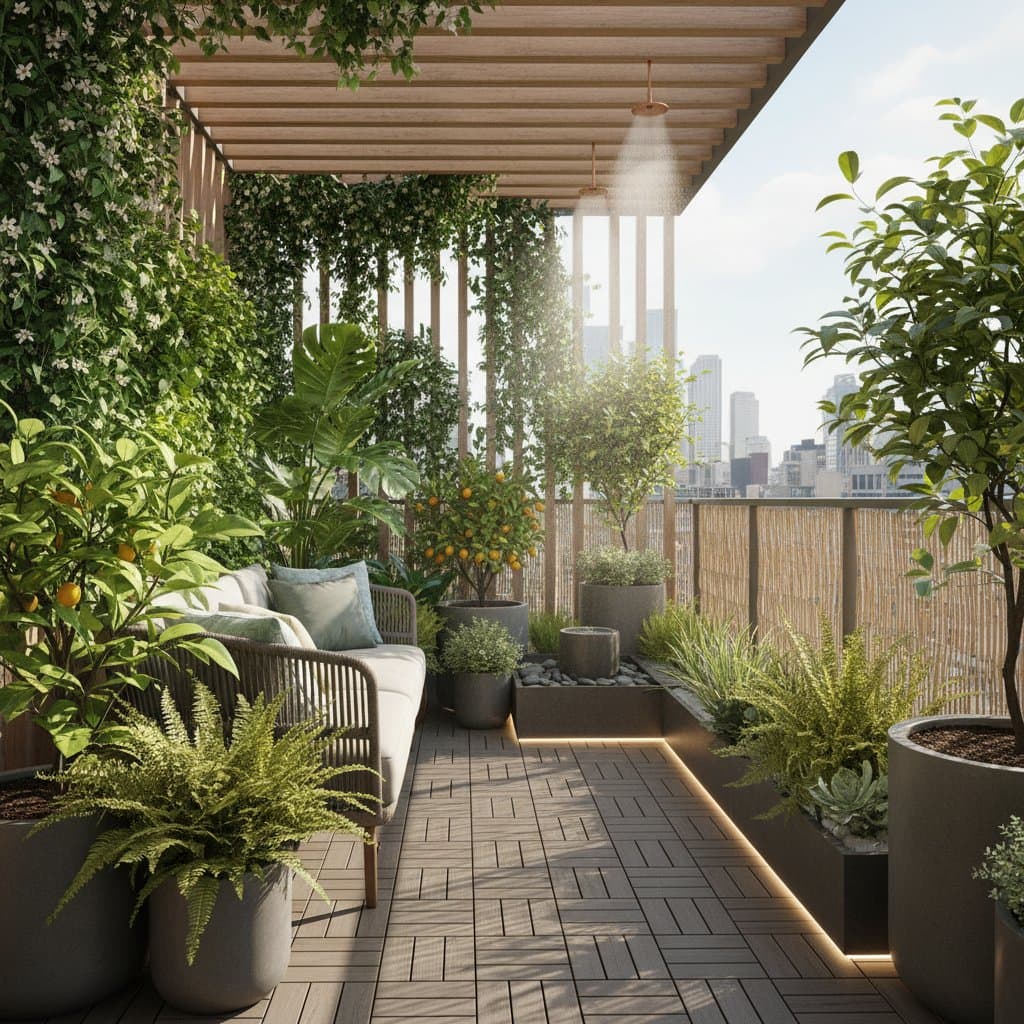
Create a Balcony Microclimate for Year-Round Comfort
Balconies in urban settings often endure harsh conditions, from intense summer heat to biting winter winds. Yet these compact spaces hold potential as inviting retreats. By designing a microclimate, you can moderate temperature, humidity, and airflow to enhance comfort throughout the year.
This approach requires observation and targeted adjustments rather than extensive renovations. Focus on elements like sunlight patterns, wind directions, and moisture levels. Through plants, shading, and strategic materials, transform your balcony into a resilient outdoor haven.
Understanding Microclimates on Balconies
A microclimate refers to a defined area where environmental conditions vary from the surrounding region. On a balcony, this involves manipulating sun exposure, air circulation, and water retention to maintain usability across seasons.
Urban environments amplify challenges. Concrete absorbs and radiates heat, while tall buildings funnel winds into narrow corridors. Rapid shifts in light and temperature can render the space uncomfortable. A well-designed microclimate mitigates these issues, safeguarding plants, protecting furnishings, and fostering a more temperate atmosphere.
Essential Tools and Materials
Begin with items that allow precise monitoring and modification. Assemble the following:
- Thermometer and hygrometer for measuring temperature and humidity levels
- Wind meter or lightweight ribbon to detect air currents
- Shade cloth or fabric panels, sized approximately 6 by 8 feet
- Planters in varied sizes to accommodate layered planting
- Heat-reflective film suitable for glass surfaces
- Soil mix formulated for moisture retention in containers
- Spray bottle for targeted misting
- Outdoor rug or insulating mat to temper surface warmth
- Secure hooks and cable ties for stable installations
Secure all elements properly. Employ balcony-specific brackets and refrain from suspending heavy loads on fragile railings.
Step-by-Step Implementation
1. Assess Current Conditions
Dedicate a full day to evaluation. Note the path of sunlight from dawn to dusk. Detect wind patterns using a ribbon held at different heights. Record temperatures in the morning, afternoon, and evening. Use the hygrometer to log humidity variations. These observations establish a foundational profile.
2. Manage Solar Exposure
Position shade cloth or panels on the sunniest exposures. Maintain a 12-inch gap between the material and any walls to facilitate ventilation and avoid trapped heat. Select pale hues that bounce back sunlight. For glass barriers, apply reflective film, which can reduce incoming heat and glare by up to 30 percent.
3. Incorporate Plant Layers
Vegetation serves as a dynamic regulator of climate. Integrate these categories:
- Tall species, such as bamboo or ornamental grasses, to deflect wind and diffuse intense rays
- Medium-height options like ferns to stabilize humidity
- Vining or trailing varieties to lower surface temperatures and mellow illumination
Organize plants according to their hydration requirements. Position shallow trays beneath containers to collect excess water, but drain them promptly to prevent stagnant conditions.
4. Direct Air Movement
Excessive gusts accelerate evaporation and induce rapid cooling. Install lattice panels or vertical gardens to moderate flow. Incorporate gaps of 1 to 2 inches between slats for controlled passage. Avoid total enclosure, which might elevate moisture levels undesirably.
5. Optimize Hydration Levels
Arid conditions stress foliage and diminish evening appeal. Apply mist from a spray bottle one or two times each day. For sustained effects, situate a broad basin of water adjacent to greenery, permitting gradual vapor release. In moist regions, introduce a compact fan to promote even distribution.
6. Mitigate Thermal Retention
Hard surfaces like concrete retain daytime warmth well into the night. Place a rug or mat over these areas to decrease temperatures by roughly 10 degrees Fahrenheit. Opt for light-colored materials that repel heat effectively. Relocate seating at least 2 feet from unshaded zones when feasible.
7. Enhance Illumination and Warmth
Suspend low-wattage string lights to provide gentle evening glow and residual heat. If permitted by building regulations, incorporate a compact outdoor-rated electric heater. Route cords away from damp areas and connect to grounded receptacles. Supervise heating devices at all times.
8. Define Functional Areas
Segment the balcony into distinct regions for varied uses. Consider:
- A relaxation area under cover, equipped with padded chairs and ambient lighting
- A planting sector where foliage concentrates to boost moisture and purify air
Such divisions enable swift adaptations to daily fluctuations. Adjust furniture or pots as conditions evolve.
Key Safety Considerations
Anchor suspended fabrics and containers with durable, weather-resistant hardware. Position electrical wiring clear of moisture and traffic paths. Limit loads on railings and edges to prevent instability. Verify that fans and heaters carry outdoor certifications. Use protective gloves during soil work or tool handling.
Common Issues and Solutions
Rapid plant dehydration: Apply a mulch layer or bark topping to curb water loss by approximately 25 percent.
Excessive dampness against structures: Shift containers 3 inches from walls to encourage circulation.
Unstable shade coverings in breezes: Reinforce with additional ties or tension lines for firmness.
Persistent coolness at dusk: Install flanking drapes or retractable barriers to retain generated warmth.
Cost and Timeline Estimates
Implement changes affordably with basic supplies. Anticipate expenditures as follows:
- Shade materials and fasteners: $40 to $70
- Containers and growing medium: $50 to $120, scaled to dimensions
- Adhesive films: $25 to $40
- Compact circulation or heating units: $30 to $80
Initial assembly typically spans 4 to 6 hours. Prioritize shading and vegetation placement, followed by ventilation and lighting enhancements.
Ongoing Care Practices
Inspect coverings monthly for deterioration. Adjust fastenings and substitute damaged lines. Clean films with a gentle solution. Replenish reservoirs, misting supplies, and soil hydration regularly. Prune overgrowth to preserve ventilation. Renew potting medium annually for optimal percolation and fertility.
Adjustments by Season
Spring: Replenish substrate and examine runoff systems. Renew discolored shading if necessary.
Summer: Escalate irrigation, applying mist at dawn and twilight. Monitor for fungal growth during wet spells.
Autumn: Relocate sensitive specimens inside ahead of frosts. Clear debris and safeguard padding.
Winter: Retract floor coverings, empty basins, and fasten movable elements.
Proactive preparations sustain equilibrium amid environmental transitions.
Efficient Space Utilization
Balconies demand clever organization. Stow implements in a sealed bin beneath seating. Suspend misting tools and accessories from wall mounts. Employ stacked or multilevel holders for pots to maximize floor area. Bundle and secure wiring during idle periods.
Professional Assistance Indicators
Seek expert input for fixed electrical setups, substantial barriers, or load-bearing alterations. Inquire about weight tolerances and compliance with local standards. Engage a licensed electrician for receptacle or fixture installations. For expansive wall gardens, consult a specialist on runoff management to safeguard underlying units.
Build Your Retreat Gradually
Initiate with a single adjustment this week, such as erecting a shade element or repositioning a prominent plant against gusts. Monitor sensations over three days. Introduce subsequent refinements, like vapor application or heat-blocking layers. Document adjustments that yield the greatest enhancements in usability.