
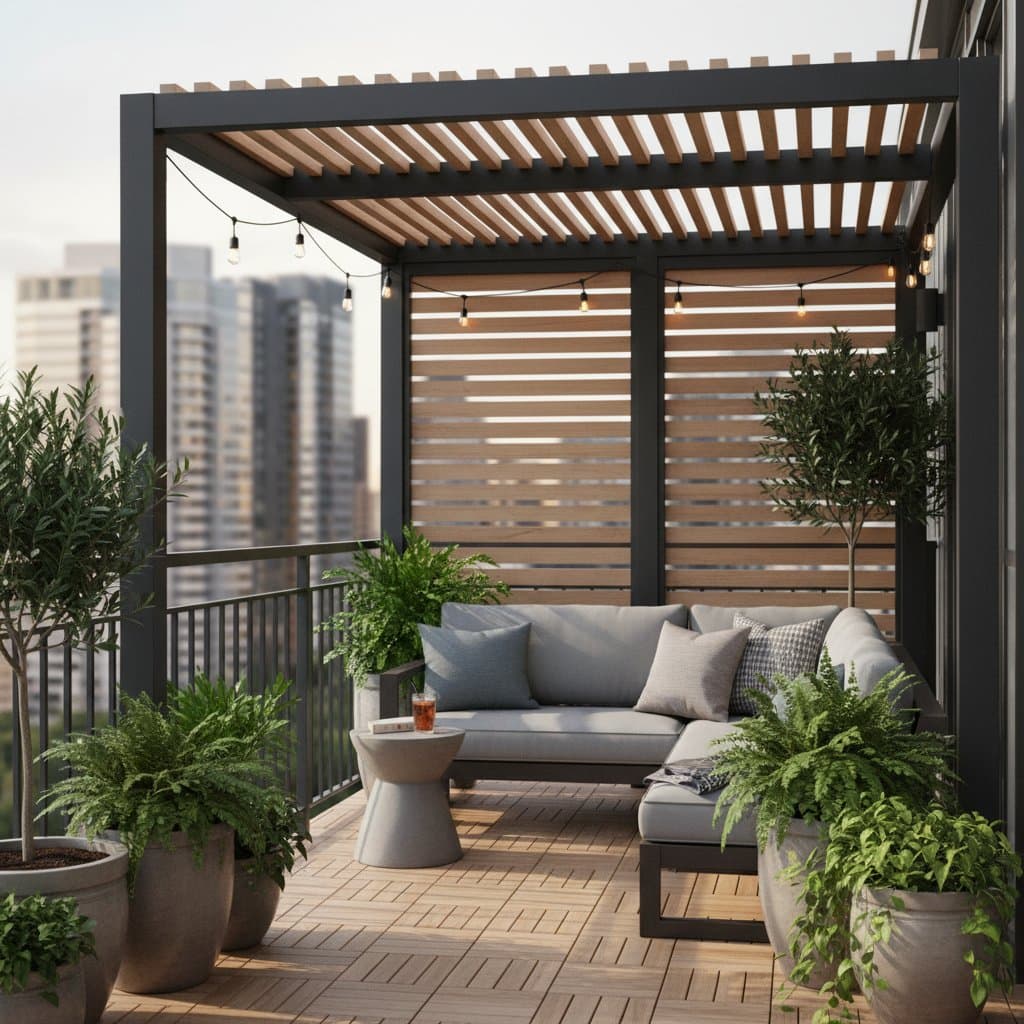
Micro-Pergolas That Maximize Shade on Tiny Balconies
Urban dwellers often view a small balcony as a valuable asset. Intense sunlight, however, transforms this area from inviting to uncomfortable. A micro-pergola addresses these challenges by providing shade, ventilation, and privacy while preserving every inch of available space. This compact framework supports slats, fabric, or climbing plants to filter direct rays and maintain an airy feel.
The objective remains straightforward: establish shaded tranquility without overwhelming the balcony. Subsequent sections detail the nature of a micro-pergola, sizing and secure installation techniques, and seasonal maintenance practices.
Overview
A micro-pergola represents a miniaturized adaptation of the classic pergola, tailored for confined outdoor environments like city balconies, patios, or rooftop nooks. These units typically measure 4 to 6 feet in height and span 3 to 5 feet in width. Rather than employing substantial posts embedded in concrete, designs favor lightweight aluminum, cedar, or powder-coated steel components that secure to railings or utilize weighted bases.
Primary advantages center on shade regulation. Adjustable panels or fabric drapes intercept overhead sunlight while permitting lateral breezes. Proper positioning lowers balcony surface temperatures by 10 to 15 degrees Fahrenheit, extends outdoor enjoyment by minimizing glare, and offers shelter from brief showers.
In addition to utility, a micro-pergola contributes architectural definition and ambiance. It delineates a seating zone, establishes a miniature outdoor enclosure, and accommodates lighting fixtures or container gardens. Executed effectively, it serves as both practical element and aesthetic highlight.
Tools and Materials
Assemble necessary items prior to commencement. The modest scale requires only select, purposeful components.
Frame selections (choose one):
- Four lightweight aluminum posts, each 1.5 inches in diameter and 6 feet in length.
- Four cedar posts, 2 inches in diameter, treated for humidity resistance.
- Two side rails, spanning 2 to 3 feet, suitable for wall attachment.
Shade elements:
- UV-protected outdoor fabric measuring 6 by 8 feet for a flexible awning.
- Adjustable slats or louvered panels, 1 inch thick, for precise shadowing.
- Climbing trellis sections, 3 by 3 feet, to support vegetative screening.
Essential tools:
- Tape measure and spirit level.
- Power drill equipped with bits for metal and wood.
- Stainless steel screws, 2 inches in length.
- Anchors or clamps designed for railing fixation.
- Protective gloves and eyewear.
Select stainless or galvanized hardware to resist corrosion, particularly in humid or seaside locations.
Steps
Adhere to these procedures for safe and effective construction or assembly of a micro-pergola.
Step 1: Measure and Plan the Layout
Assess balcony dimensions in width and depth. Maintain a minimum 2-foot buffer near doors and railings to ensure unobstructed passage. Identify target areas for shade application. A 3 by 4 foot configuration typically provides adequate protection without obstructing vistas.
For west- or south-facing exposures, orient slats or fabric to track solar movement. A 45-degree slant on slats optimizes afternoon shading while sustaining ventilation.
Step 2: Select the Mounting Method
Two principal approaches exist: freestanding or wall-mounted.
Freestanding variants employ weighted foundations or planters for stability. Such options suit renters or those preferring non-permanent alterations.
Wall-mounted versions affix one side to the structure via brackets. These conserve floor area but demand accurate drilling and sealing.
Consult building management or a qualified professional if uncertain about penetrating shared or external walls.
Step 3: Assemble the Frame
Position posts and crossbars on a level surface. Pre-drill connection points to avoid material fracture and expedite joining.
Fasten posts and bars with stainless screws or bolts. Verify alignment using a bubble level at each joint. Upon erecting the frame, inspect for instability. Incorporate diagonal supports or corner reinforcements as required.
Step 4: Install the Shade Material
For fabric installations:
- Extend the fabric over the upper frame.
- Secure via grommets, cords, or hook-and-loop fasteners.
- Allow 1 inch of looseness to facilitate air circulation and avert wind damage.
For slatted configurations:
- Position slats with 1 to 2 inch gaps for even light diffusion.
- Attach each to crossbars with screws.
- Incline toward prevailing sunlight for enhanced thermal reduction.
For trellis applications:
- Secure panels to the top or side framework.
- Guide vines like ivy or jasmine to gradually envelop the structure.
Step 5: Anchor the Pergola
Fix the base to the balcony surface or railing. Freestanding setups benefit from planters loaded with gravel or sand for ballast. Two 12-inch-deep containers suffice to stabilize a 4-foot unit against mild gusts.
Wall attachments require expansion anchors and silicone sealant around penetrations to block water ingress and bolster longevity.
Step 6: Incorporate Comfort Enhancements
With the framework secured, integrate lightweight amenities:
- Solar-powered clip lights or garland strands.
- Suspended planters or herb containers.
- A compact exterior rug to demarcate the shaded region.
Ensure additions impose minimal load. Reserve heavier items for frames engineered to support such weight.
Safety Considerations
Wear gloves and protective eyewear during drilling or sawing operations. Avoid positioning ladders against balcony railings; opt for sturdy step stools instead.
In regions prone to high winds, select designs rated for at least 40 pounds of sideways pressure or retract canopies during severe weather.
Review municipal regulations prior to any exterior wall modifications.
Common Issues and Solutions
Instability or shaking:
Secure all connections and install cross-bracing. Bases must bear at least 25 pounds per corner for petite frameworks.
Sagging fabric:
Readjust tension with additional fasteners or introduce a midline strut. Heat causes slight expansion in outdoor textiles.
Rain accumulation:
Angle the covering 5 degrees for runoff.
Corrosion or fading:
Clean metallic surfaces with soapy water and a gentle brush. Rinse thoroughly and dry before refitting.
Upkeep Practices
Seasonal inspections require minimal effort to sustain a micro-pergola.
- Fabric: Wash with gentle soap, rinse, and air-dry flat prior to storage.
- Wood: Apply clear exterior sealant annually to cedar or similar woods.
- Metal: Inspect fasteners and touch up abrasions with anti-rust enamel.
- Vegetation: Prune overgrowth that impedes breeze or increases burden.
Apply silicone lubricant to adjustable components for fluid operation.
Storage Guidelines
In areas with harsh winter gales, detach fabric or slats and relocate indoors. Lean flat panels against walls or beneath furniture. Encase metal elements in fabric to limit dampness exposure.
For freestanding models, disassemble the roof assembly for indoor housing. Bag and label hardware for straightforward reconstruction.
Cost and Timeline Estimates
Micro-pergolas accommodate varied financial plans.
Custom DIY construction:
- Aluminum components and fittings: $120 to $200.
- Canopy fabric or slats: $40 to $90.
- Assembly duration: 4 to 6 hours.
Assembled kits:
- Adjustable compact units: $250 to $600.
- Setup time: 2 to 3 hours with assistance.
Annual upkeep expenses:
Approximately $30 for sealants, cleaners, and minor parts.
Allocate an additional $20 to $40 for planting containers and medium if incorporating greenery. Solar lighting strands cost about $25.
Seasonal Maintenance Schedule
- Spring: Examine joints and refresh paints or sealants.
- Summer: Reposition slats for peak solar intensity. Remove debris biweekly.
- Fall: Withdraw fabric ahead of storms. Stow pads and extras.
- Winter: Dismantle upper portions or apply protective sheeting.
Consistent attention preserves appearance and integrity year-round.
Professional Assistance Indicators
Engage a certified specialist when:
- Drilling into masonry, concrete, or structural walls becomes necessary.
- Balcony railings form integral supports with unknown capacity.
- Permanent electrical installations are planned.
Request evaluation of anchoring, weight tolerance, and moisture barriers. An initial assessment prevents future expenses.
Essential Insights
Micro-pergolas deliver shade and ease on balconies measuring 3 by 4 feet or smaller. Materials such as aluminum or cedar facilitate simple setup and disassembly. Strategic canopies achieve 10 to 15 degree Fahrenheit surface cooling. Routine care ensures longevity across multiple seasons.
Small balconies gain multifunctionality through thoughtful additions. A pergola integrates form, seclusion, and allure seamlessly.
Implementation Guide
- Assess space: Delineate a 3 by 4 foot area and evaluate usability.
- Select materials: Prioritize aluminum for ease or cedar for natural appeal.
- Begin modestly: Install a basic fabric cover, expanding to slats or flora as desired.
A micro-pergola converts sun-baked balconies into serene escapes. Post-installation, the enhanced comfort becomes evident with each use. Thoughtful design and secure execution optimize limited areas for cooler, more inviting, and aesthetically pleasing outdoor experiences throughout the year.