
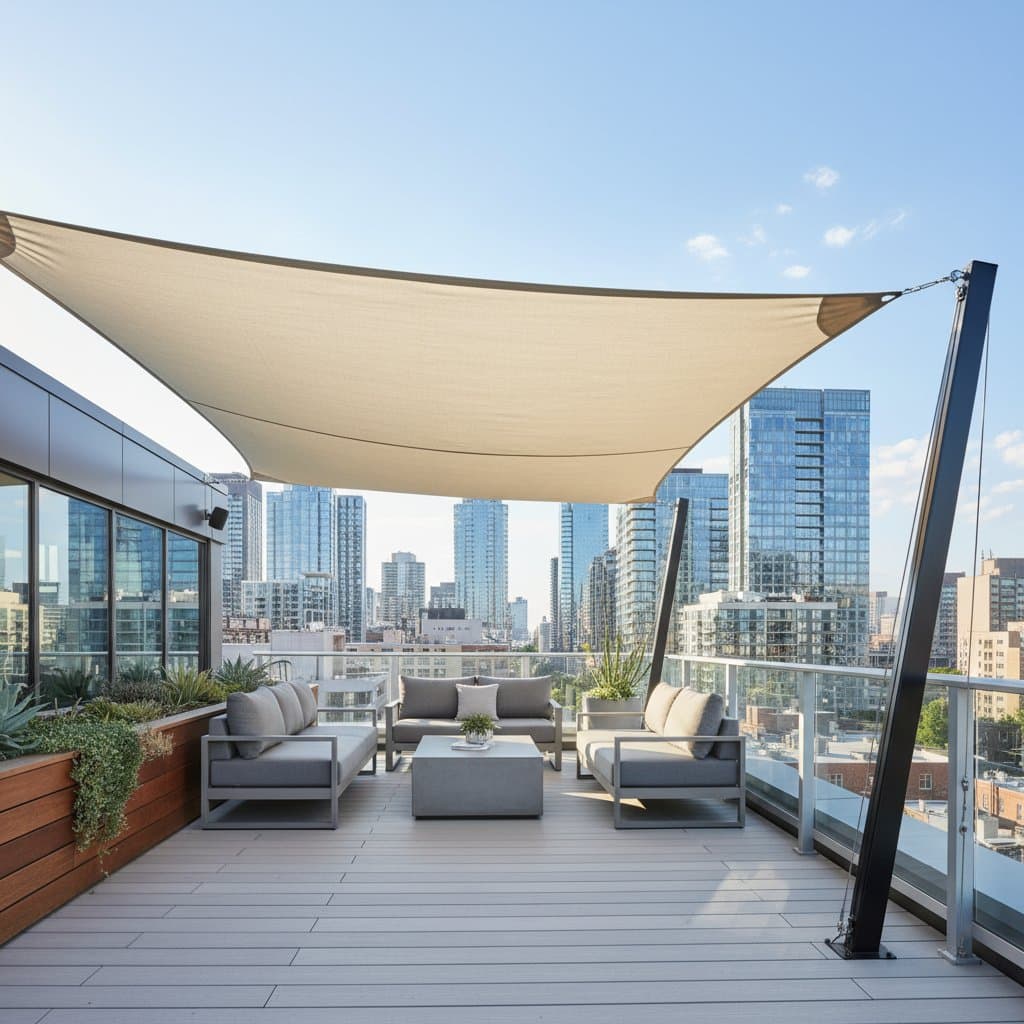
4. Tension the Sail
Apply even pressure to each corner of the sail until the fabric achieves a firm tautness without excessive stretching. Verify that the sail maintains a gentle slope to facilitate water drainage and remains stable against moderate winds without flapping. Fine-tune the turnbuckles incrementally to balance the tension across all points.
For retractable designs, incorporate a sturdy cord system or hand crank mechanism. Operate the retraction and extension functions multiple times to ensure smooth performance prior to securing the final adjustments. This step confirms the sail deploys and retracts reliably under varying conditions.
5. Test Water Flow and Shade Coverage
Use a garden hose to simulate rainfall and observe the direction of water runoff along the sail's slope. Position yourself beneath the sail during different times of the day to evaluate shade effectiveness. Modify the height or angle of attachment points if direct sunlight penetrates seating zones, ensuring optimal protection.
Consider the sun's path specific to your urban location, such as taller buildings casting shadows. Test on both sunny and overcast days to assess versatility. These evaluations help refine the setup for consistent comfort across seasons.
6. Secure Lines and Trim Excess
After confirming satisfaction with the configuration, fasten or knot any surplus cord material in a tidy manner. Apply protective caps or heat-shrink tubing to the cut ends of cables to prevent unraveling or exposure to elements. This finishing touch enhances durability and maintains a clean appearance.
Inspect all connections for secure holds before stepping away. Document the tension settings for future reference, especially if adjustments become necessary after weather exposure. Proper securing prevents loosening over time.
7. Store the Crank or Pulley Cord
Coil the cords carefully and store them elevated from the deck surface to minimize tripping hazards and protect against ground moisture. Use hooks or designated storage bags attached to nearby structures for organization. Regular checks ensure cords remain free of knots or wear.
In urban settings with limited space, integrate storage solutions that blend with deck decor, such as wall-mounted organizers. This practice extends the lifespan of components and supports easy access for seasonal use.
Safety Considerations
Wear protective gloves throughout the installation process to shield hands from sharp cable ends and hardware. Maintain a safe distance from overhead power lines when positioning ladders or working at heights. Refrain from installing sails in locations prone to high winds unless reinforced with substantial structural posts.
Conduct inspections of all anchors at least twice each season to detect any shifting or corrosion. Remove sails prior to anticipated major storms or accumulation of heavy snow to avoid structural damage. Prioritizing these measures ensures a secure and reliable installation.
Adhere to local building regulations for overhead installations in city environments. Consult professionals if uncertainty arises regarding load-bearing capacities. Safety-focused practices allow enjoyment without unnecessary risks.
Common Issues and Solutions
Sagging in the Center: Increase tension by adjusting turnbuckles evenly or elevate anchors on one side to create a subtle diagonal slope. This adjustment distributes weight more effectively and restores shape.
Water Pooling: Enhance the slope by lowering a single anchor point by approximately six inches, directing flow toward designated drainage areas. Re-test with water to confirm improvement.
Uneven Retraction: Thoroughly clean the guide track to remove debris and apply a silicone-based lubricant for smoother operation. Inspect pulleys for alignment issues that may cause binding.
Fabric Fading: Apply a UV-protectant spray annually to preserve color vibrancy, and retract or store the sail during winter months to limit sun exposure. Select high-quality, UV-resistant fabrics from the outset for longevity.
Anchor Pull-Out: Strengthen the mounting surface with additional reinforcement or install a dedicated support post. Avoid reusing holes that show signs of stripping, as this compromises hold.
Addressing these issues promptly prevents minor problems from escalating. Regular monitoring keeps the system performing optimally in demanding urban conditions.
Cost Estimates and Timeline
Installing a single retractable shade sail typically requires three to five hours with a team of two individuals. Basic kits for small decks begin around 150 dollars, while custom-sized or motorized options can reach 600 dollars. Individual replacement fabric panels cost approximately 80 dollars each, and durable stainless steel hardware withstands years of use with proper care.
For budget-conscious projects, consider fixed sails equipped with quick-release hooks, which reduce expenses by about half at the cost of retraction capability. Allocate funds preferentially toward robust hardware over fabric, as secure anchors avert expensive repairs from failures.
Factor in urban-specific costs, such as permits or professional assessments for high-rise decks. These investments yield long-term value through enhanced usability and reduced maintenance needs.
Upkeep Routines
Clean the sail twice per season using mild soap and lukewarm water to remove dirt and pollutants common in city air. Rinse completely and allow it to air dry fully before retracting to prevent mildew growth. Examine turnbuckles for signs of corrosion and apply lubricant to threads for continued smooth adjustment.
If removing the sail for winter storage, place the fabric in a dry, ventilated area away from direct sunlight. Before each season's deployment, tighten all cables and scrutinize stitching for wear. These habits extend the sail's service life to eight to ten seasons, contingent on environmental exposure and diligent care.
Incorporate urban challenges like pollution into routines by using eco-friendly cleaners. Track upkeep in a simple log to anticipate part replacements, ensuring consistent performance.
Innovative Storage Solutions
When your deck serves multiple purposes, such as dining or recreation, attach lightweight planters or string lights along the sail's edge. Secure these accessories only when the sail extends fully and maintains proper tension to avoid imbalance.
For space-efficient storage in compact urban decks, roll the fabric loosely rather than folding to minimize creases and preserve shape. Organize hardware into labeled small containers for swift reassembly. Protect exposed anchors with rubber caps to block water ingress and corrosion.
Explore modular storage that integrates with deck railings or nearby walls. These approaches maximize functionality while keeping the area clutter-free and aesthetically pleasing.
Professional Installation Indicators
Engage a contractor or specialized installer if your deck lacks suitable exposed beams or solid masonry for anchoring. Seek professional assistance for projects involving multiple interconnected sails or integration of motorized retraction systems and lighting features.
Inquire about load ratings, warranty details, and compliance with local building codes for overhead canopies. Professionals often incorporate custom steel posts or reinforced wall plates to manage elevated wind loads typical in urban areas.
Professionals bring expertise in site-specific challenges, such as neighboring structures or restricted access. Their involvement ensures a seamless, code-compliant result tailored to your needs.
Practical Implementation Steps
Begin with a modest setup, such as positioning one sail above a café table zone, to observe its impact on deck usage patterns. Map the sun's trajectory throughout the day in your specific urban context, then identify optimal anchor locations prior to purchase.
Maintain simplicity in the initial configuration to familiarize yourself with shade dynamics and fabric handling. As confidence grows, expand to additional sails or advance to motorized track systems for greater convenience.
With reliable anchors, balanced tension, and consistent upkeep, a retractable shade sail converts an overheated deck into a versatile outdoor extension. This addition delivers adaptable coverage, cooler lounging areas, and motivation for extended time outdoors.