
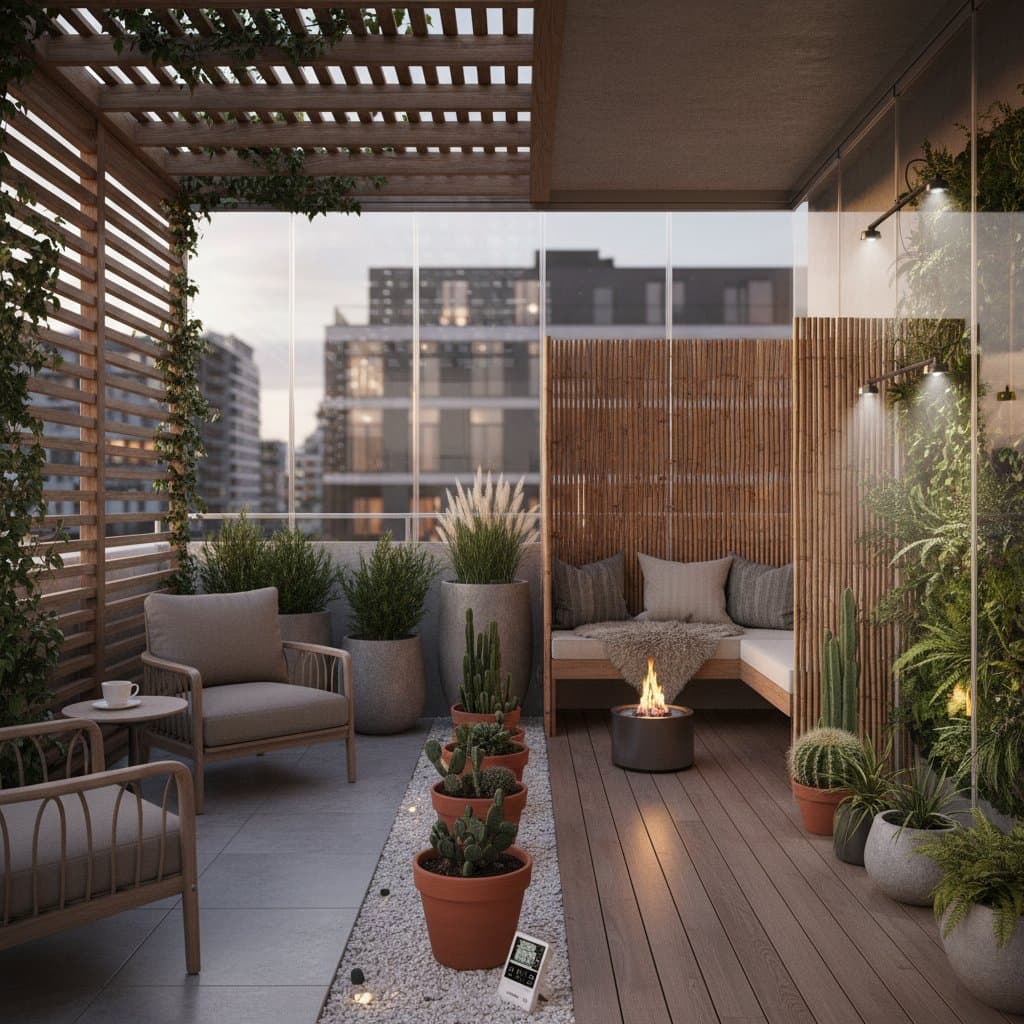
5. Add Moisture Balance
Excess moisture poses risks to furnishings and promotes mildew growth. Elevate potted plants using bricks or dedicated risers to facilitate proper drainage and avoid water accumulation beneath containers. Position a compact squeegee conveniently near the entryway to swiftly remove standing water following rainfall. Opt for breathable storage containers rather than impermeable plastic options, which can trap humidity and lead to condensation issues.
Incorporate moisture-absorbing materials, such as silica gel packets, into storage areas for added protection during humid periods. Regularly inspect drainage paths to ensure they remain unobstructed, preventing pooled water that could damage flooring or encourage pest activity. These measures maintain a dry, inviting environment that supports prolonged use of your balcony space.
6. Light It Evenly
Gentle illumination extends balcony usability into the evening hours without overwhelming the senses. Install strands of energy-efficient LED lights along the perimeter of the ceiling or railing to create a warm, ambient glow. Position a single, compact solar-powered lamp adjacent to the doorway to enhance safety and visibility during low-light conditions. Steer clear of intense spotlights, which draw insects and produce glare that interferes with indoor lighting.
Consider the placement of lights to complement natural daylight patterns; for instance, focus warmer tones in seating areas for coziness. Integrate dimmable options where possible to adjust brightness based on time of day or gathering size. Proper lighting not only improves functionality but also highlights architectural features, fostering a serene extension of your living space.
Troubleshooting Common Issues
Balconies present unique challenges influenced by weather and design. Address these proactively to sustain your microclimate zones.
Problem: Balcony feels too hot even after shade setup.
Extend the shade cloth outward by approximately 6 inches, or 15 centimeters, to promote better air circulation beneath the covering. Substitute darker fabrics with lighter-colored alternatives that effectively reflect solar rays and reduce heat absorption. Monitor temperature changes over a few days to fine-tune the setup for optimal cooling.
Problem: Cushions stay damp after rain.
Prop cushions vertically against a sturdy wall to allow gravity-assisted drainage and faster drying. Apply a protective waterproof cover during periods of non-use to shield against unexpected showers. Select cushions crafted from quick-drying, mold-resistant fabrics to minimize future moisture retention.
Problem: Wind still whips through.
Arrange planters in two staggered rows with intentional gaps rather than forming a continuous barrier; this configuration diffuses airflow while avoiding excess humidity buildup. Incorporate flexible windbreaks, such as bamboo screens, that permit some breeze passage. Test wind speeds in various spots to identify and reinforce vulnerable areas.
Problem: Plants struggle in mixed light.
Cluster plants that thrive in full sun within the most illuminated sections of the balcony. Employ mobile plant stands with wheels to reposition greenery according to seasonal light shifts, ensuring consistent exposure. Research specific light requirements for each species to prevent stress and promote healthy growth.
Problem: Electric cord exposed to water.
Form a drip loop in the cord, allowing water to cascade away from the electrical connection before it reaches the plug. Secure all outlets with durable weatherproof covers to guard against moisture ingress. Routinely examine cords for frays or wear, replacing any compromised components immediately to uphold safety standards.
Maintenance Routines
Consistent upkeep preserves the integrity of your microclimate zones and prevents minor issues from escalating. Perform these tasks monthly to sustain performance.
- Inspect and clean fabric panels, paying close attention to seams for signs of deterioration or fraying.
- Remove debris from corners and drainage areas to inhibit water pooling and potential mold development.
- Rotate planters by one-quarter turn to encourage uniform sunlight exposure and balanced plant development.
- Examine electrical cords and bulbs for wear, damage, or loose connections, addressing concerns promptly.
- Secure all clips, anchors, and fastenings to withstand wind and weather fluctuations.
Renew soft furnishings, including cushions and throws, after two or three intensive usage periods to maintain hygiene and appearance. During off-seasons, relocate these items indoors for storage, which prolongs their durability and protects against environmental degradation. Document maintenance activities to track patterns and anticipate needs.
When to Consult a Professional
Certain balcony modifications require expert evaluation to ensure safety and compliance. Engage a licensed contractor if you encounter electrical outlets, persistent drainage problems, or visible structural cracks. Inquire about the following during consultation:
- Weight-bearing capacities for added planters, furniture, or other elements.
- Guidelines for safe installation and operation of heating devices.
- Techniques for applying waterproof sealants to deck surfaces.
- Recommendations for establishing adequate slopes to direct water away from the structure.
A brief professional assessment can avert expensive repairs and enhance longevity. Confirm that all additional loads remain below your building's specified weight thresholds to avoid compromising stability.
Building Lasting Comfort Layer by Layer
Developing a welcoming balcony involves gradual, intentional additions rather than overwhelming overhauls. Initiate with a single zone, such as shading the sunniest area or erecting a wind barrier in the most exposed location. Observe shifts in air quality, light distribution, and overall feel following each adjustment to refine your approach.
Progress to incorporating insulating materials for warmth retention and subtle lighting for evening appeal. Organize accessories like tools and cushions for quick reconfiguration in response to weather variations. With time, these efforts yield a balcony that maintains stable temperatures, soft breezes, and ready seating options across all seasons.
Through deliberate microclimate zoning, you gain command over your outdoor environment, transforming a confined area into a seamless, comfortable extension of your indoor home.