
Step 5: Add Plants and Decor
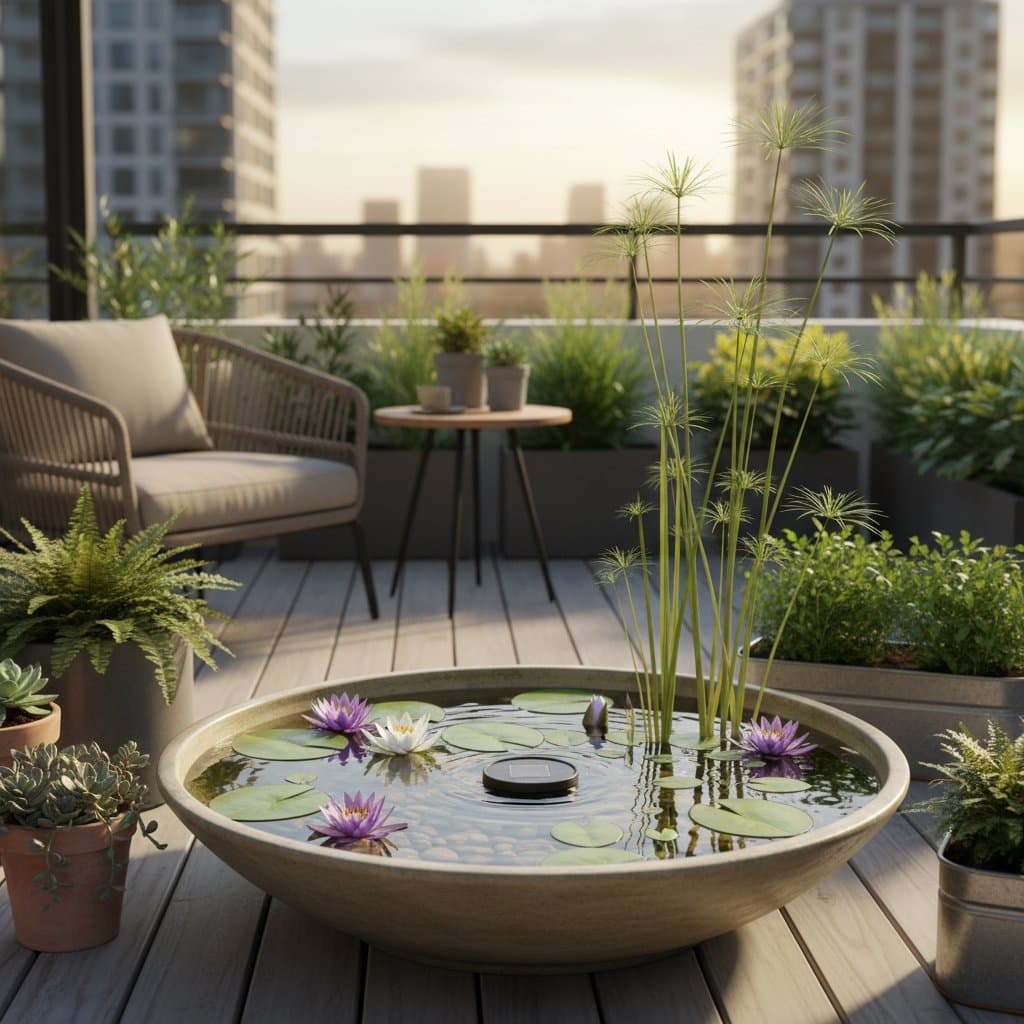
Select aquatic plants that thrive in confined environments, such as dwarf water lilies or submerged oxygenators like anacharis. Place rooted varieties in mesh pots filled with aquatic soil and anchored by small pebbles to prevent floating. Position taller specimens, including marginal plants with upright foliage, at the rear of the container to create a sense of depth, while floating options like water lettuce occupy the foreground for natural layering.
Incorporate varied textures to enhance visual interest; for instance, combine the broad, rounded leaves of miniature lilies with the delicate, grass-like fronds of dwarf sagittaria. Introduce one or two smooth river stones or polished glass pebbles for subtle accents that reflect light. Conclude the arrangement with a low-voltage LED light positioned to cast a soft glow, illuminating the water surface during evening hours without overwhelming the space.
Step 6: Adjust and Observe
Allow the assembled pond to settle for 24 hours before making final adjustments. Inspect the water for clarity and observe the circulation patternpump. Should excessive rippling disturb the calm, lower the pump's flow rate by partially closing the valve or selecting a gentler setting.
Monitor plant positioning and water levels during this period to ensure stability. Once equilibrium is achieved, the gentle trickle of water and shimmering reflections will provide an immediate soothing effect. Regular observation in the first week helps identify any imbalances early, promoting long-term harmony in the setup.
Safety Tips
Position all electrical cords and plugs at a safe distance from the water to prevent accidental submersion and potential hazards. Opt exclusively for pumps and lighting fixtures certified for outdoor use, which resist moisture and withstand weather exposure.
Avoid introducing fish to the pond unless a reliable system for temperature control and filtration is in place, as small volumes fluctuate easily. Prior to adding water, verify the balcony's structural load capacity through building documentation or professional assessment to accommodate the filled weight.
Supervise children and pets closely whenever they approach the pond area, installing temporary barriers if necessary to minimize risks of falls or tampering.
Troubleshooting
Problem: Water turns green or cloudy.
Solution: Direct sunlight often accelerates algae proliferation in static water bodies. Introduce additional floating plants, such as water hyacinth, to provide natural shading over 50 percent of the surface area. Perform partial water changes, replacing one-third of the volume weekly with dechlorinated tap water left to sit for 24 hours. Incorporate a small quantity of barley straw extract, approximately one teaspoon per five gallons, to inhibit algae growth through biological means without chemicals.
Problem: Mosquito larvae appear.
Solution: Stagnant conditions invite breeding; maintain continuous pump operation for a minimum of four hours each day to create surface agitation. Apply biological mosquito control products, such as dunks containing Bacillus thuringiensis israelensis, specifically formulated for aquatic containers. Refrain from applying any chemical insecticides in proximity to plants, as residues can disrupt the ecosystem and harm beneficial insects.
Problem: Pump noise increases.
Solution: Trapped air bubbles frequently cause unusual sounds. Disconnect the power source, gently tilt the pump to release air, and reconnect after drying the exterior. Establish a routine of cleaning the intake filter screen every seven days by rinsing under fresh water to clear accumulated debris like leaves or sediment.
Problem: Plants wilt or yellow.
Solution: Inadequate lighting or improper submersion depth often leads to stress in aquatic flora. Ensure plants receive four to six hours of indirect sunlight daily, adjusting container placement if shadows dominate. Maintain water levels so roots sit in 4 to 6 inches of depth, supplementing with liquid fertilizers designed for pond plants every four weeks during growth periods. Promptly remove and replace any declining plants to preserve overall water quality.
Maintenance and Storage
Weekly inspections form the foundation of a thriving balcony pond, requiring minimal effort to sustain its vitality. Skim away accumulated debris, such as fallen leaves or pollen, using a fine net to prevent decay and nutrient overload. Replenish evaporated water with room-temperature, dechlorinated sources to keep levels consistent, and test the pump's functionality to ensure steady circulation.
Every three to four weeks, carefully lift and rinse pebbles or substrate in a bucket of pond water to dislodge buildup without introducing contaminants. Steer clear of household cleaners, as even trace residues of soap or detergents can poison microorganisms essential for balance.
In regions prone to freezing temperatures, initiate drainage when forecasts predict below 32 degrees Fahrenheit. Empty the container completely, disassembling components for indoor storage to shield pumps and liners from expansion damage caused by ice. Durable ceramic vessels may remain outdoors if thoroughly dried and insulated with frost blankets. For temperate climates, year-round operation is feasible with biweekly cleanings and protection from extreme summer heat through partial shading.
Budget and Time
Typical balcony pond installations range from 40 to 120 dollars, varying with container size, plant selections, and optional features like solar-powered elements. Assembly requires one to two hours after acquiring materials, allowing time for precise placement and testing. Ongoing monthly care demands just 10 to 15 minutes, focused on basic checks and minor adjustments.
Budget-saving tips:
- Reuse an existing glazed ceramic planter or galvanized bucket, sealing any porous surfaces with pond-safe liner.
- Source hardy native species, such as pickerelweed or arrowhead, from local nurseries to reduce costs and support regional biodiversity.
- Eliminate wiring needs by installing a compact solar-powered pump, which operates efficiently in partial sun.
Upgrade ideas:
- Install a trickle spout or bamboo conduit to produce a relaxing water cascade sound.
- Integrate solar-rechargeable LED strips for ambient nighttime illumination that enhances reflections.
- Arrange multiple compact ponds on staggered shelves or railing mounts to create a cascading visual effect.
Seasonal Reminders
Spring
Begin the season by thoroughly cleaning all containers with a mild vinegar solution to remove winter residues. Reassemble and test pumps for leaks, then introduce fresh aquatic plants suited to emerging warmth. Inspect electrical connections for wear and ensure seals remain intact before refilling to full capacity.
Summer
Increased heat accelerates evaporation, so check water levels every three days and add dechlorinated water as required. Prune excessive foliage growth to maintain circulation and reduce shaded areas that foster algae. Position the pond to avoid midday scorch, using sheer fabric shades if intense sun persists.
Fall
Harvest and discard decaying leaves promptly to avoid fouling the water chemistry. As temperatures cool, reduce pump runtime if circulation slows, and prepare storage materials in advance. Conduct a final deep clean, dividing robust plants for propagation if desired.
Winter
Relocate mechanical parts to a frost-free indoor space immediately after draining. Secure empty containers with protective covers to block moisture and debris accumulation. Retain a few weighted objects, like stones, within the basin to counteract potential shifts from freeze-thaw cycles.
When to Call a Pro
Persistent leaks that deplete water levels overnight signal compromised seals or container integrity, warranting inspection by a qualified plumber. Electrical anomalies, including frequent breaker trips or flickering lights, require a licensed electrician's evaluation to ensure compliance with safety codes.
Inquire about precise load ratings for your building's balcony structure and optimal drainage pathways, particularly for larger or multi-unit designs. Engage a specialist in urban landscaping with expertise in water features for complex installations, such as elevated tiers or integrated smart lighting. Verify that all recommended materials carry certifications for elevated outdoor applications, including wind and weight resistance.
Your Next Steps
Micro ponds demonstrate the profound impact of minimal water elements in transforming urban balconies into sanctuaries. Initiate with a single basin, a selection of gravel, and a resilient plant to experience the calming influence firsthand.
Action steps for today:
- Measure your space. Identify a stable, level area measuring at least 18 inches in diameter that receives four to six hours of filtered sunlight daily.
- Gather a watertight container and a small pump. Calculate the anticipated filled weight, including soil and decor, against your balcony's capacity.
- Set up your first pond. Fill gradually with prepared water, introduce plants, and observe how light dances across the ripples.
A balcony pond extends beyond mere ornamentation; it establishes a delicate ecosystem that repays attentive nurturing with auditory tranquility, visual allure, and emotional repose.