
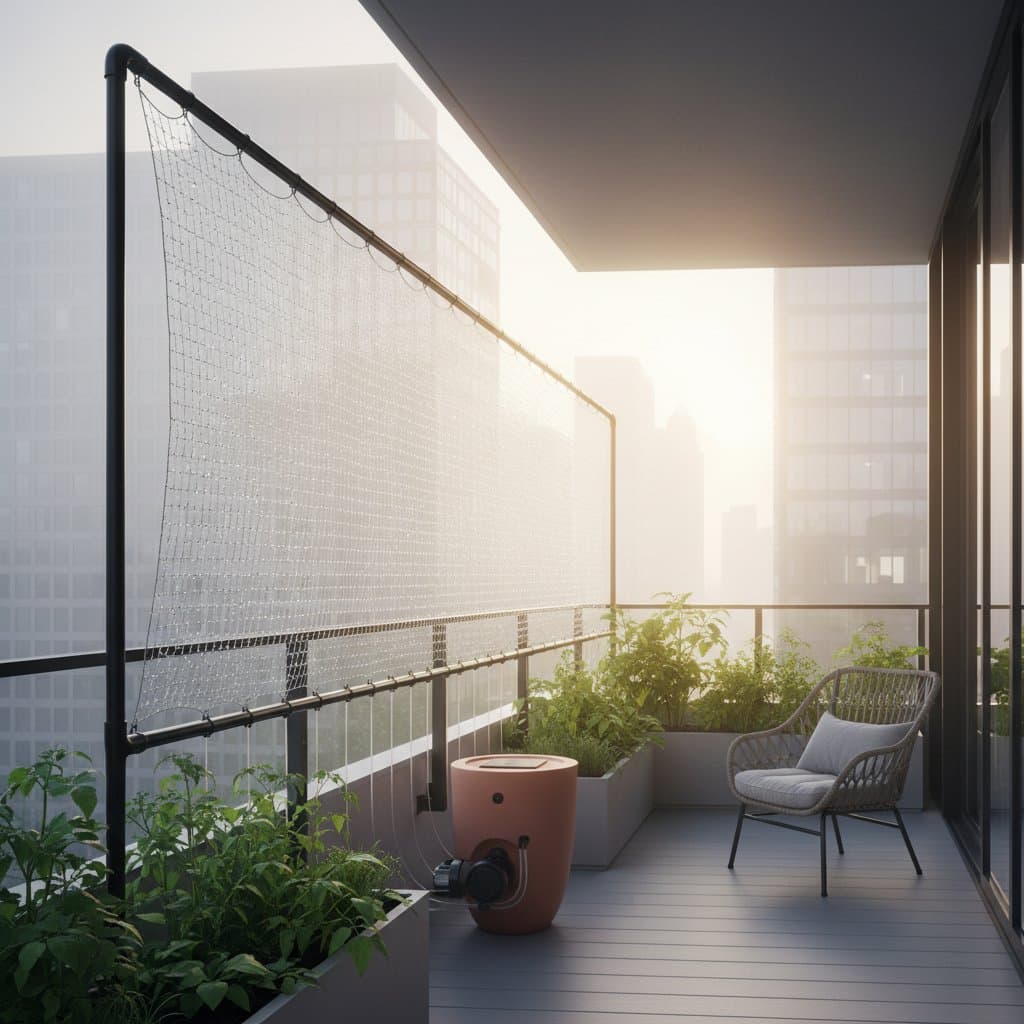
Introduction to Balcony Fog Harvesting
Urban environments often face water scarcity despite abundant humidity in the air. Fog nets offer a practical solution by capturing mist droplets on fine mesh surfaces, allowing them to coalesce and drain into collection systems. This method proves especially useful in coastal or foggy cities, where balconies become ideal collection points.
Homeowners can install these systems with minimal tools and expense. The process yields clean water suitable for non-potable uses, reducing reliance on municipal supplies. Benefits include cost savings, reduced plastic bottle waste, and a deeper connection to local weather patterns.
Materials Needed
Assemble the following items to construct a basic balcony fog net. Select a durable nylon or polyethylene mesh with openings of about 0.5 millimeters to optimize droplet capture without excessive wind resistance. A lightweight aluminum or PVC frame, measuring roughly 4 feet by 6 feet, provides sturdy support.
Additional components include a PVC gutter channel for drainage, a 10-foot flexible hose, and a 5-gallon collection bucket. Secure the setup with stainless steel brackets and zip ties resistant to corrosion. Basic tools such as a drill, level, and measuring tape complete the kit.
Step-by-Step Installation
Begin by selecting an optimal location on your balcony. Choose a spot exposed to prevailing winds and morning mist, away from exhaust vents or shaded areas that might reduce airflow. Measure the available railing or wall space to ensure the frame fits securely without obstructing doors or pathways.
- Attach the frame to the railing using brackets. Position it vertically at a slight forward tilt of 10 to 15 degrees to direct droplets toward the bottom edge.
- Stretch the mesh taut across the frame and secure it with clips or ties. Avoid sagging, as loose fabric diminishes efficiency.
- Install the gutter channel along the lower edge of the mesh. Slope it gently toward one end to guide water flow.
- Connect the hose to the gutter's outlet and route it to your collection container. Place the bucket on a stable, shaded surface below.
- Test the setup by misting the mesh with a spray bottle. Observe water flow and adjust angles as needed for even drainage.
This installation typically takes two to three hours. Once operational, the system requires little daily intervention.
Safety Precautions
Prioritize structural integrity during setup. A saturated mesh and frame may weigh up to 15 pounds, equivalent to seven kilograms. Verify that your balcony's railing or mounting surface can bear this load without risk of failure.
Opt for corrosion-resistant materials in humid or salty environments. Stainless steel or plastic components prevent rust from coastal air. Cover collection containers to block insects and debris from contaminating the water.
Reserve harvested water for irrigation, surface cleaning, or similar non-drinking purposes. If purification for consumption is desired, employ filtration and boiling methods. Review local building regulations prior to permanent installations to avoid violations.
Ongoing Maintenance
Regular upkeep ensures long-term performance. Inspect and clean the mesh monthly, or more frequently after dusty conditions. Gently remove the fabric, rinse it with mild soap and cool water, then allow it to dry flat before reattaching.
Monitor the collection container weekly for signs of algae or residue. Empty and rinse it promptly, storing water in shaded areas to maintain quality. Every few months, examine fasteners for looseness or corrosion, tightening or replacing as necessary.
A properly maintained fog net delivers consistent output across seasons. Mesh durability spans about five years under UV exposure, with replacements costing less than 15 dollars. The frame and accessories endure longer with occasional wiping.
Troubleshooting Common Issues
Address minor problems promptly to sustain efficiency. If water yield appears low, inspect the mesh for looseness and tighten it accordingly. Consider a finer weave if droplets pass through too easily. Reposition the frame by 10 degrees to align with shifting wind patterns.
Uneven dripping often stems from an improperly leveled channel. Insert a small spacer beneath the lower side to achieve balance. For blocked hoses, perform a monthly flush with clean water to clear algae or dust accumulations.
Seal leaks at joints using silicone caulk, or swap out damaged fittings. In windy conditions, vibrations may produce noise; add tension cords to the frame's rear for stability. These adjustments restore smooth, quiet operation.
Budget Considerations
Construct a basic system for 50 to 80 dollars, covering mesh, frame, hose, and container essentials. Assembly demands only fundamental tools and two to three hours of effort. Ready-made kits, complete with pre-cut frames and hardware, range around 100 dollars and offer comparable yields and longevity.
Ongoing costs remain low. Annual maintenance involves minimal expenses, primarily for mesh replacement every five years. This investment quickly offsets through water savings, especially in mist-prone regions.
Enhancing Storage and Use
Maximize utility by integrating smart collection methods. For plant care, attach the hose to a drip irrigation line feeding multiple pots. A 1-gallon storage tank with gravity feed sustains about 10 small containers daily during humid spells.
On spacious balconies, deploy dual nets at varied angles to harness crosswinds. Merge their hoses into a single reservoir for simplified management. Clearly label storage as "fog water" to distinguish it from potable sources.
Purification for expanded uses requires a carbon filter followed by boiling. This step enables applications like laundry rinsing, though non-treated water suffices for most outdoor needs.
Professional Assistance Options
Most users manage installations independently. Seek expert help in complex scenarios, such as high-rise buildings with rigorous safety standards. Professionals ensure secure anchoring to beams and compliance with codes.
For integrations with indoor plumbing, consult specialists on drainage slopes and wind resistance. Inquire about easy detachment for cleaning. Such services typically cost under 100 dollars and safeguard property integrity.
Broader Environmental Impact
Fog nets contribute meaningfully to urban sustainability efforts. Each gallon harvested supplants one from municipal sources, easing strain on infrastructure. In misty locales, communal setups have documented hundreds of gallons monthly from shared installations.
These devices thrive in humidity exceeding 60 percent, irrespective of precipitation levels. They operate silently without energy input, relying solely on gravity and natural airflow. Beyond practicality, they foster mindfulness of environmental rhythms amid cityscapes.
Getting Started Today
Launch your fog harvesting project this afternoon with these steps. Measure balcony dimensions to identify airflow-optimal spots free from obstructions. Acquire a starter kit encompassing 10 square feet of mesh and frame.
- Install and test the system to collect your initial gallon.
- Apply it to herbs or planters, observing immediate benefits.
- Log yields across weather variations, refining angles for peak performance.
This initiative empowers sustainable habits, yielding both water and satisfaction in resource stewardship.