
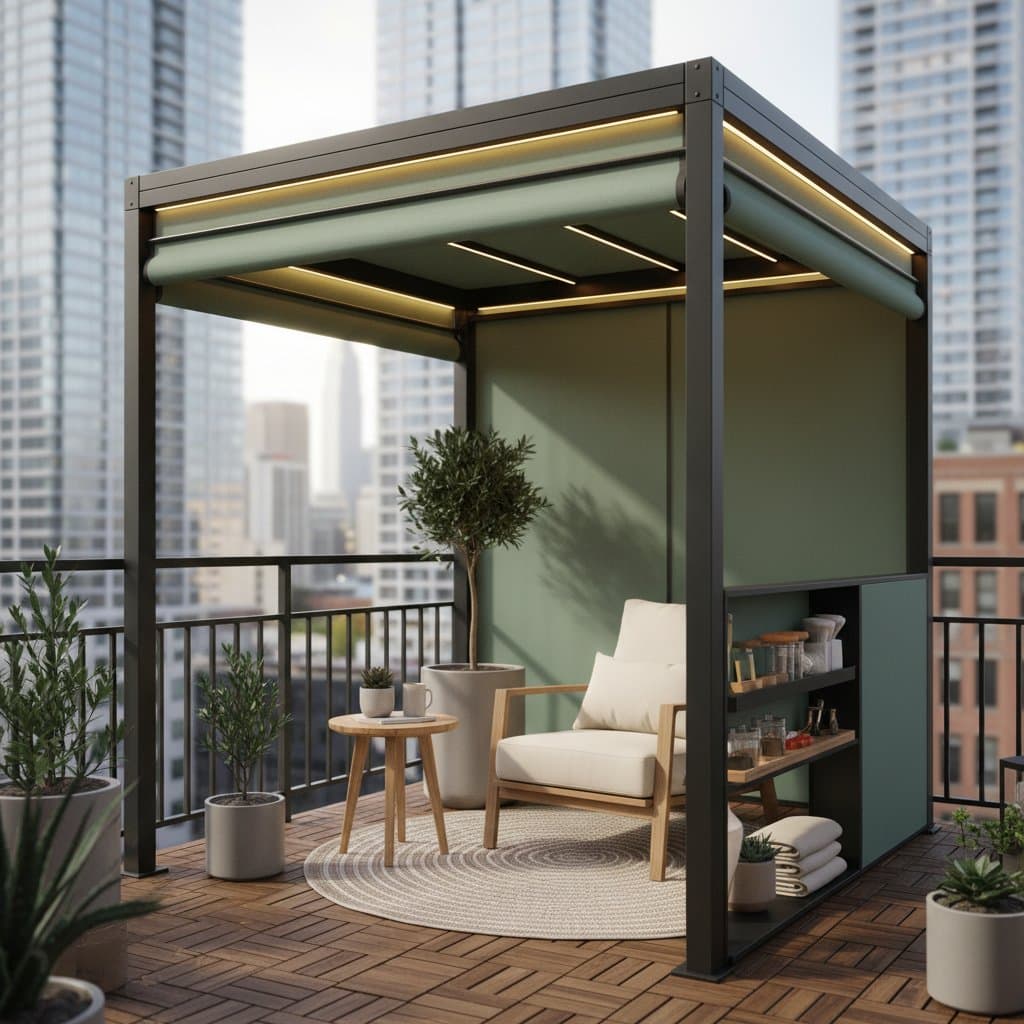
Completing Assembly: Steps 5 Through 7
Assembling a micro-pergola pod requires precision to ensure stability and functionality on limited balcony space. These final steps focus on adding protective elements and testing the structure for optimal performance.
5. Install the Shade Panels
Position the canopy fabric by sliding or clipping it into designated tracks along the frame. Ensure slats or panels overlap slightly to block sunlight effectively, particularly during peak midday hours. For retractable options, operate the mechanism multiple times to verify smooth action before securing all components tightly.
This step protects against UV exposure while allowing adjustable light control, essential for comfortable extended use.
6. Incorporate Accessories
Attach side panels to enhance privacy from neighboring views or street-level sightlines. Secure clip-on LED strips or solar-powered lights along the edges for evening ambiance. Place a durable, weather-resistant rug beneath the pod to delineate the seating area and add warmth to the space.
Accessories not only personalize the pod but also extend its usability into cooler evenings or social gatherings.
7. Test and Fine-Tune
Position yourself beneath the structure at various times throughout the day to evaluate shade distribution. Modify panel angles or canopy tension as needed to achieve even coverage without restricting natural airflow. Make adjustments incrementally to balance protection from elements with ventilation.
Regular testing during the initial setup prevents discomfort and ensures the pod adapts to your balcony's specific sun patterns.
Essential Safety Guidelines
Safety forms the foundation of any balcony installation, especially with elevated structures. Follow these protocols to minimize risks during use and maintenance.
- Wear protective gloves throughout assembly to avoid injuries from sharp metal edges or hardware.
- Avoid using the pod in strong winds; retract or fold the fabric if speeds surpass 20 miles per hour (32 kilometers per hour).
- Inspect and tighten all bolts at the start of each season, particularly after exposure to heavy rain or gusts.
- Route electrical cords for lighting away from potential water accumulation near drains or edges.
- Refrain from suspending heavy items, such as large planters or heating devices, from the roof beams, as they support only lightweight loads.
Adhering to these measures preserves both the structure's integrity and personal well-being in urban environments.
Common Issues and Resolutions
Even well-designed pods encounter challenges due to weather or installation variances. Address problems promptly to maintain performance.
Problem: The pod shifts on irregular surfaces.
Resolution: Insert rubber shims beneath the base plates or utilize adjustable leveling feet. Verify that all vertical posts remain plumb using a level tool.
Problem: The canopy fabric droops in the middle.
Resolution: Adjust tension uniformly across both sides. For water management, angle the frame slightly toward drainage points to prevent pooling.
Problem: The finish on metal parts loses color over time.
Resolution: Clean surfaces with a solution of mild soap and water, then apply a specialized UV-protective coating annually for outdoor metals.
Problem: Panels generate rattling sounds in breezy conditions.
Resolution: Install small rubber washers at joint connections to absorb vibrations and reduce noise.
These solutions draw from common user experiences and promote longevity without requiring full disassembly.
Cost Breakdown and Timeline
Investing in a micro-pergola pod balances affordability with durability for urban dwellers. Kits typically range from $350 to $900, influenced by material quality and included features.
Opt for powder-coated aluminum frames over basic painted steel for superior resistance to corrosion and easier upkeep. Incorporating privacy screens or integrated lighting may increase the total to approximately $1,100.
Two adults can complete assembly in two to four hours, with most effort dedicated to base leveling and panel alignment. Renting tools like a torque wrench or power driver for a day adds about $20 and accelerates the process significantly.
Affordable Alternatives:
- Substitute heavy metal bases with oversized planters filled with gravel to provide stable anchoring at lower cost.
- Employ leftover outdoor fabric for the canopy to experiment with color schemes seasonally without custom expenses.
Prioritize quality in core components; inferior connectors may corrode rapidly and compromise the entire setup.
Ongoing Care Practices
Routine maintenance keeps the pod functional and visually appealing amid city weather fluctuations. Dedicate time monthly to basic cleaning and inspections.
Wipe down the frame using mild detergent and water, followed by a thorough rinse to remove residues. Store fabric canopies in a dry state whenever possible to deter mold growth. Treat any mildew spots with a vinegar-water solution (one part vinegar to three parts water), then allow complete air drying before reuse.
Apply silicone-based lubricant to movable joints annually for smooth operation. Examine screws, bases, and weights prior to each seasonal change. During extended periods away or severe storms, relocate detachable panels indoors for protection.
With consistent care, expect the pod to endure five to seven years, delivering reliable shade and comfort year after year.
Integrating Storage Solutions
Maximize balcony efficiency by embedding storage directly into the pod's design, preserving open space for relaxation. Focus on vertical and multifunctional elements to avoid encroachment.
- Select a bench featuring concealed compartments beneath cushions for stowing blankets, tools, or cushions.
- Mount hooks on the posts to suspend lanterns, lightweight planters, or herb pots.
- Install slim shelves along a single beam for items like watering cans or compact umbrellas.
- Choose foldable chairs or tables that nestle under the structure when idle.
This approach fosters an organized oasis, ensuring essentials remain accessible without overwhelming the limited area.
Professional Assistance Scenarios
Certain balcony conditions demand expert evaluation to ensure compliance and safety. Recognize when DIY limits apply.
Consult a licensed contractor or structural engineer if the surface shows irregularities, cracks, or questionable weight-bearing capacity. Professionals assess load limits and recommend reinforcements if necessary.
Renters benefit from hiring a handyman for non-invasive installations, such as bracket systems that attach temporarily to railings. Labor fees range from $100 to $200, with emphasis on fully removable setups that leave no residue. Request written assurance of damage-free removal.
Seeking help early avoids costly repairs and aligns with building codes in dense urban settings.
Planning Your Balcony Upgrade
Begin the process by measuring available space precisely and drafting a simple layout. Evaluate at least two or three pod models compatible with your dimensions, prioritizing lightweight aluminum construction and UV-resistant fabrics.
Consider your primary needs, such as maximum shade or added privacy, to select the ideal configuration. This thoughtful preparation transforms a modest balcony into a versatile retreat, enhancing daily urban life with practical outdoor comfort.