
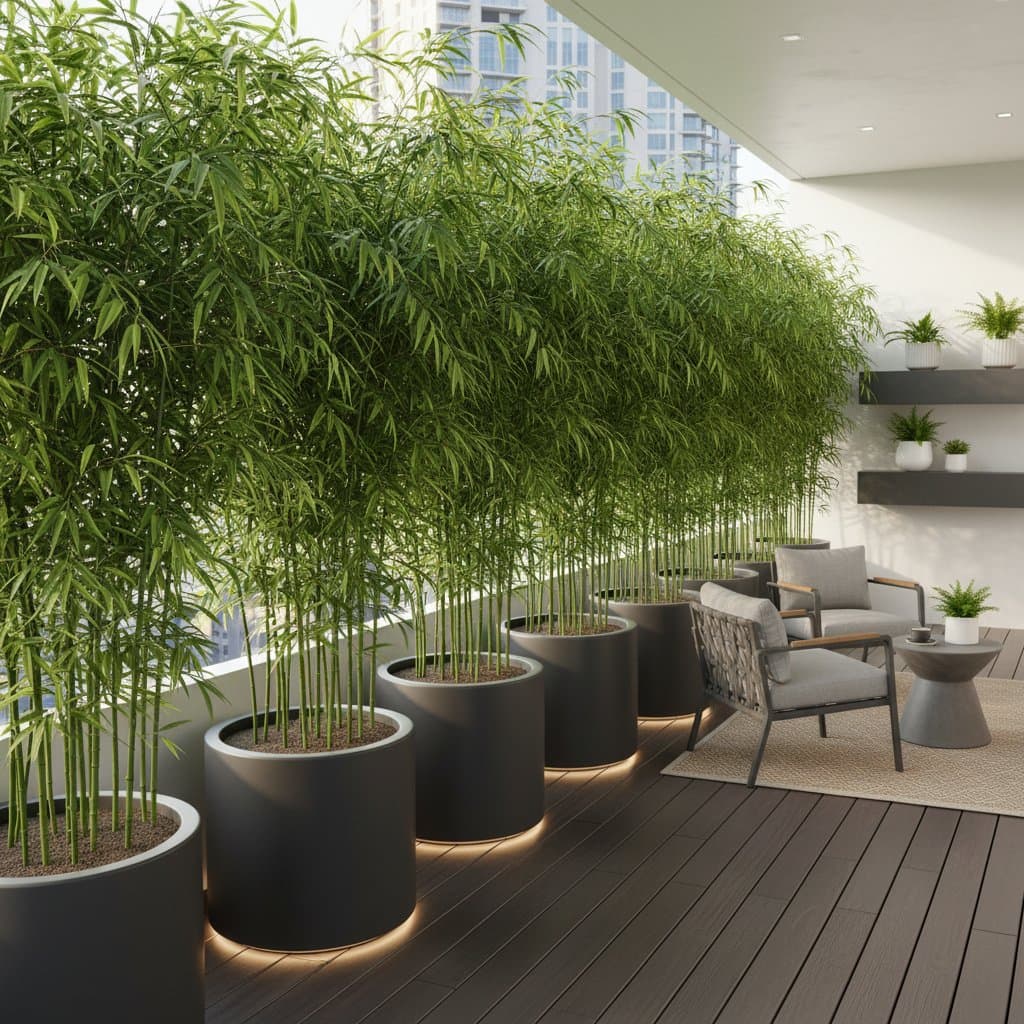
Create Instant Privacy with Fast-Growing Bamboo Screens
Urban living often means sacrificing privacy for the perks of city life. Balconies and patios become exposed to neighbors' gazes, street noise, and urban bustle. Fast-growing bamboo screens offer a natural solution that blocks views quickly, softens sounds, and enhances your outdoor space with greenery.
These screens use clumping bamboo varieties planted in sturdy containers. They establish dense foliage in weeks, creating a living barrier that feels organic and inviting. Homeowners in New York City and similar dense areas find this approach ideal for small spaces where traditional fencing proves impractical.
Why Choose Bamboo for Urban Privacy
Bamboo stands out for its rapid growth and adaptability. Certain species reach heights of six to ten feet within the first season, forming a thick screen that obscures sightlines effectively. Unlike hedges that take years to mature, bamboo provides near-immediate results.
The plant also excels at noise reduction. Its leaves rustle gently in the wind, absorbing urban clamor from traffic and conversations. This creates a calmer atmosphere on your balcony, turning it into a true retreat.
Bamboo thrives in containers, making it suitable for apartments and townhouses. It requires less space than sprawling shrubs and tolerates partial shade common in city environments. With proper care, these screens remain vibrant year-round, even in cooler climates.
Selecting the Best Bamboo Varieties
Focus on clumping bamboo to avoid invasive spread. Running varieties can overtake areas, but clumping types grow in tight clusters, staying contained within pots. Recommended options include Fargesia rufus, which offers red sheaths and fine leaves, or Bambusa multiplex, known for its dense upright canes.
Consider your climate and space constraints. In USDA zones 7 through 10, most clumping bamboos perform well. For New York winters, select cold-hardy species like Fargesia jiuzhaigou that withstand temperatures down to minus 20 degrees Fahrenheit.
Evaluate mature height and width. Aim for varieties that reach eight feet tall but spread no more than three feet. This ensures the screen fits balcony railings without overwhelming the area. Check local nurseries for stock suited to urban conditions.
Choosing Containers and Soil
Sturdy containers form the foundation of your bamboo screen. Opt for large pots at least 24 inches in diameter and depth to accommodate root growth. Plastic or fiberglass options resist cracking in freeze-thaw cycles, while ceramic adds aesthetic appeal.
Ensure pots include drainage holes to prevent waterlogging. Bamboo dislikes soggy roots, which lead to rot. Place saucers beneath to catch excess water, protecting your balcony floor.
Use a well-draining potting mix enriched with organic matter. Combine equal parts garden soil, compost, and perlite for aeration. This blend retains moisture without becoming compacted, supporting healthy cane development.
Step-by-Step Installation Guide
-
Position your containers along the balcony edge where privacy is needed most. Space them 18 to 24 inches apart to allow for growth while creating a continuous screen.
-
Fill each pot with the prepared soil mix, leaving two inches of space at the top. Water the soil thoroughly to settle it before planting.
-
Remove the bamboo from its nursery pot and gently tease apart any circling roots. Plant at the same depth as in the original container, firming soil around the base.
-
Water deeply after planting to eliminate air pockets. Apply a layer of mulch, such as bark chips, over the soil surface to retain moisture and suppress weeds.
-
Secure taller plants with stakes if winds are strong. Use bamboo ties to avoid damaging canes. Monitor for the first week to ensure establishment.
This process requires basic tools like a trowel, gloves, and watering can. Most setups complete in an afternoon, yielding visible privacy gains within four to six weeks.
Maintenance for Lasting Lushness
Water bamboo consistently, providing one inch per week during dry spells. Check soil moisture by inserting a finger two inches deep; water if dry. In rainy periods, reduce frequency to avoid overwatering.
Fertilize in spring with a balanced, slow-release formula high in nitrogen. Apply according to package directions to promote foliage growth without excessive cane production. Avoid over-fertilizing, which stresses the plant.
Prune annually to maintain shape. Remove dead or damaged canes at the base with clean shears. Thin crowded areas to improve air circulation and light penetration, preventing disease.
Repot every two to three years or when roots fill the container. Choose a slightly larger pot and refresh the soil. This keeps your screen vigorous and prevents stagnation.
Benefits Beyond Privacy
Bamboo screens deliver more than visual barriers. They improve air quality by filtering pollutants common in cities. The plants release oxygen and humidity, fostering a healthier microclimate on your balcony.
Aesthetically, they introduce texture and movement. Feathery leaves sway with breezes, adding life to concrete surroundings. Pair with flowering companions like impatiens for color accents.
These screens boost property value subtly. Potential buyers appreciate low-maintenance greenery that enhances usability. In rental situations, removable containers allow easy relocation.
Consider wildlife appeal. Bamboo attracts birds and butterflies, bringing nature closer. However, monitor for pests like aphids and treat with insecticidal soap if needed.
Build Your Serene Urban Escape
Implementing bamboo screens transforms exposed balconies into private havens. The quick growth ensures you enjoy benefits soon after setup. With thoughtful selection and care, these natural dividers provide enduring privacy, noise control, and beauty.
Start small with one or two pots to test the approach. Observe how the greenery integrates with your space. Soon, your urban outdoor area will feel worlds away from the city rush.