
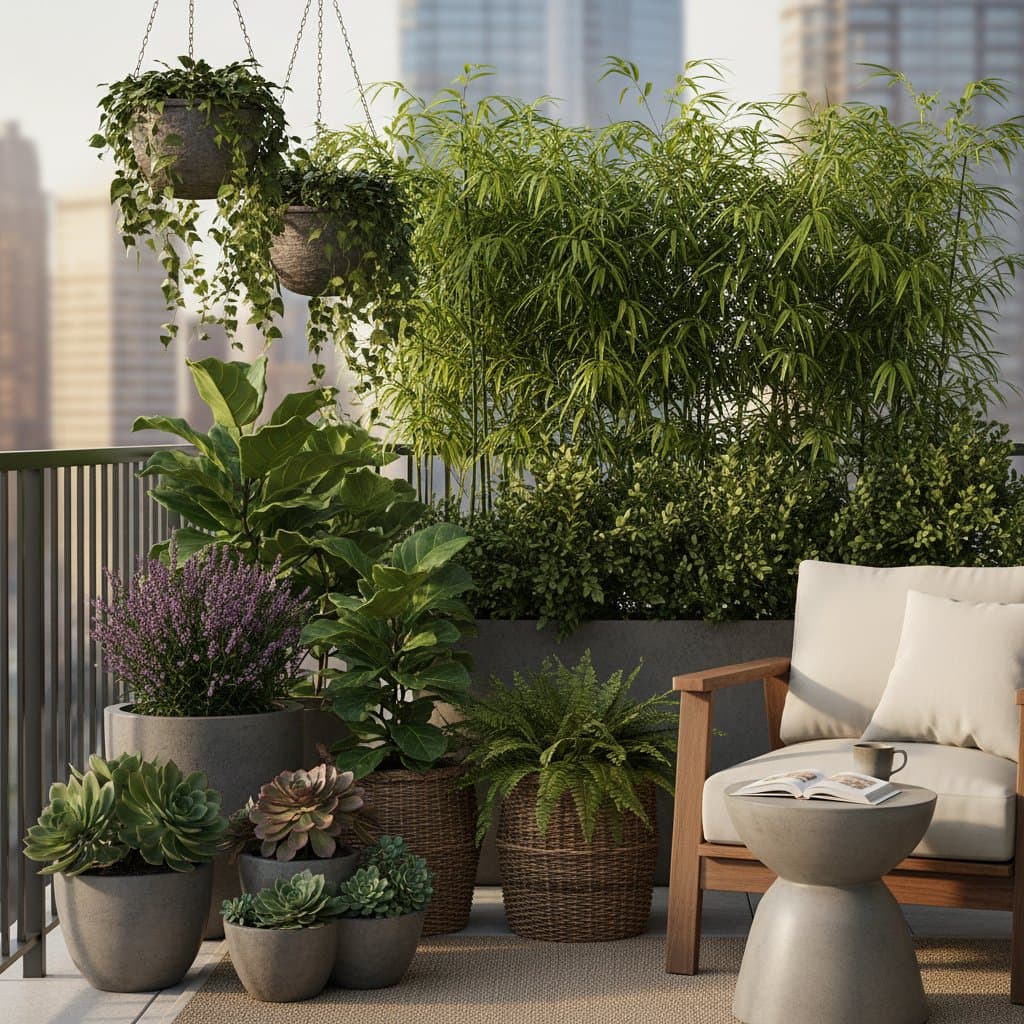
Soundproof Your Balcony with Noise-Blocking Plants
City living brings a constant hum of activity, yet persistent sounds from traffic, neighbors, or nearby construction often disrupt the calm. A balcony offers potential for relaxation, yet it can amplify these disturbances. Fortunately, strategic use of noise-blocking plants provides a natural solution to dampen echoes and foster tranquility.
These plants form a living barrier that absorbs sound waves through dense foliage and structured arrangements. Readers gain insights into selecting effective varieties, positioning them for optimal impact, and maintaining their health. This approach not only quiets the space but also enhances privacy and aesthetic appeal.
How Plants Reduce Noise
Plants mitigate sound by intercepting and dispersing acoustic waves. Thick leaves and layered stems capture vibrations, while underlying soil and containers add mass to block transmission. Such elements create a multifaceted shield that softens urban clamor without synthetic materials.
Additional benefits include improved air quality from oxygen release, natural shading to cool the area, and visual softening of hard surfaces. Even modest installations yield noticeable results as plants establish roots and fill space over time. This method suits various balcony sizes and urban climates.
Essential Tools and Materials
Basic supplies suffice for effective implementation. Focus on durable items that support plant growth and stability.
Required items include:
- 6 to 10 large planters, each 12 to 18 inches in diameter, made from weather-resistant materials like terracotta or plastic
- High-quality potting mix formulated for drainage to prevent waterlogging
- A watering can or hose equipped with a gentle nozzle to avoid soil disturbance
- Balanced fertilizer designed specifically for potted plants to promote steady growth
- Trellis or lattice panels for supporting climbing varieties and expanding vertical coverage
- Selected noise-blocking plants suited to local conditions, prioritizing density and resilience
Step-by-Step Guide to Installation
Step 1: Assess and Plan the Layout
Begin by measuring the balcony's perimeter and railing height. Identify primary noise sources, such as streets below or adjacent buildings, to target placement accordingly. This evaluation ensures efficient use of resources.
Target a foliage barrier reaching 4 to 6 feet in height along exposed edges. Sketch a simple diagram to visualize pot positions and vine supports, accounting for sunlight patterns and wind exposure.
Step 2: Select Appropriate Plant Varieties
Choose plants with robust, sound-absorbing qualities that thrive in container settings. Prioritize species that develop dense canopies and withstand urban stressors like pollution and variable light.
Recommended options:
- Clumping bamboo: Grows rapidly to form thick screens, requiring minimal pruning for upkeep.
- Boxwood shrubs: Maintain evergreen coverage with small, overlapping leaves that excel at mid-frequency absorption.
- Areca palm: Features soft, frond-like foliage that gently diffuses higher-pitched sounds while adding tropical flair.
- English ivy or Boston ivy: Versatile climbers that adhere to trellises, creating full vertical barriers.
- Ficus benjamina or rubber plant: Broad, leathery leaves capture a wide range of frequencies and provide year-round density.
Incorporate a blend of evergreen and deciduous types for seasonal interest. Verify hardiness zones match your location to ensure longevity.
Step 3: Position Plants for Optimal Effect
Arrange planters along the balcony's perimeter, spacing them 6 to 8 inches apart to allow air circulation and root expansion. Position taller specimens in high-noise zones, such as near traffic-facing sides.
For enhanced thickness, install a secondary row offset from the first, using shorter plants in front. Secure trellises to railings or walls, guiding vines upward to maximize surface area and privacy screening.
Step 4: Plant and Establish the Garden
Prepare each container by filling it three-quarters with potting mix, ensuring even distribution. Place plants at their original nursery depth, then firm the soil around roots to eliminate voids without compacting excessively.
Water thoroughly until excess drains from the bottom, establishing initial moisture. Monitor for the first week to adjust based on settling.
Step 5: Ongoing Care and Refinement
Rotate containers biweekly to promote uniform growth and prevent leaning. Prune selectively to maintain shape and density, removing spent foliage promptly.
Apply fertilizer monthly during the growing season, following package dilutions. If gaps persist in coverage, introduce filler plants like ferns or add suspended baskets for layered protection.
Key Safety Considerations
Verify the balcony's weight capacity through building management before installation; distribute pots evenly to avoid strain. Anchor taller containers with brackets to resist wind gusts.
Wear protective gloves during handling to guard against soil-borne irritants or thorny stems. Position plants away from electrical outlets to minimize moisture-related hazards.
Common Issues and Solutions
Rapid soil drying: Apply a 1-inch mulch layer, such as bark chips, over the surface to conserve water and regulate temperature.
Persistent noise penetration: Strengthen the barrier by adding mass, such as stacking smaller pots or selecting thicker-foliaged alternatives.
Foliage discoloration: Inspect for poor drainage; repot if necessary and reduce watering frequency to match plant needs.
Year-Round Maintenance Practices
Clean leaves periodically with a soft, damp cloth to remove dust, preserving their acoustic efficiency. In winter, insulate pots with burlap wraps or relocate sensitive varieties indoors.
Store unused trellises in a dry area, propped vertically to avoid warping. Annual soil refreshment replenishes nutrients and supports vigor.
Cost and Timeline Expectations
Initial investment ranges from $100 to $300, varying with container quality and plant maturity. Assembly requires approximately half a day, assuming materials are pre-purchased.
Visible noise reduction emerges within four to six weeks as plants acclimate, with full density achieved by the following season through consistent care.
Adapting to Seasons
Spring: Apply fertilizer and trim for balanced form to encourage new growth.
Summer: Irrigate in the morning to minimize evaporation and fungal risks.
Fall: Reinforce pot stability in anticipation of autumn winds.
Winter: Shield roots with frost-protective coverings to sustain health.
Professional Assistance Options
For intricate designs like automated watering or integrated vertical gardens, consult a local landscaping expert. Inquire about structural assessments, custom drainage, and climate-adapted selections to ensure seamless integration.
Building Your Serene Balcony Haven
Commence with a single section, acquiring three robust plants and matching pots to test the concept. Gradually expand coverage, observing how sounds mellow and seclusion grows.
This evolving green wall not only tempers noise but cultivates a restorative outdoor sanctuary tailored to urban demands.