
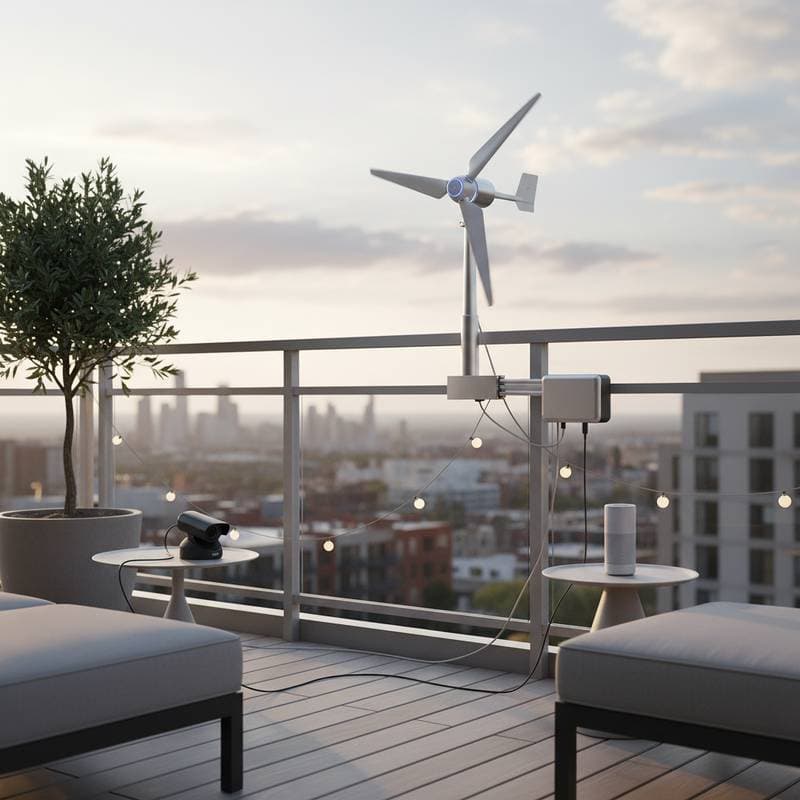
Harnessing Balcony Breezes: Wind Turbines for Powering Smart Outdoor Devices
Urban living often limits access to traditional renewable energy sources, yet balconies offer untapped potential. A balcony wind turbine captures consistent airflow from city streets and buildings to generate electricity for essential outdoor devices. These compact systems enable residents to power smart lights, security cameras, wireless speakers, and sensors without relying on grid extensions or batteries that require frequent replacement.
This comprehensive guide explores the mechanics of balcony wind turbines, outlines precise installation procedures, and provides strategies for optimal performance. Readers gain insights into selecting the right model, ensuring safety, and maximizing energy output to support a more sustainable lifestyle in compact spaces.
Overview
A balcony wind turbine functions as a miniature generator equipped with a rotor that converts kinetic energy from wind into electrical current. These units typically mount on railings or short poles and feature blade diameters ranging from 18 to 36 inches. Smaller models generate enough power to charge a smartphone or illuminate LED fixtures, while larger variants sustain a battery bank capable of supporting multiple devices simultaneously.
Key advantages encompass renewable energy generation in elevated or isolated areas, reduced dependence on indoor power sources, and reliable backup during electrical disruptions. Such systems serve as practical demonstrations of sustainability integrated into everyday routines. Turbine outputs generally fall between 20 and 200 watts under favorable conditions, sufficient for low-power items like network-connected cameras, automated sensors, and ambient lighting.
Tools and Materials
Preparation involves assembling essential components for a secure and efficient setup:
- Compact wind turbine kit rated at 12 to 24 volts, selected based on expected wind speeds and device demands.
- Sturdy mounting bracket or pole constructed from steel or aluminum, with a minimum thickness of 2 inches to withstand vibrations.
- Charge controller designed to regulate voltage and prevent battery overcharge or damage.
- Outdoor-rated battery pack with capacity of 100 to 300 watt-hours for energy storage during variable winds.
- Weather-resistant cables, along with basic tools such as an adjustable wrench, Phillips screwdriver, and bubble level for alignment.
Safety equipment includes protective gloves, impact-resistant eyewear, and stable footing. For installations above the second floor, employ a fall-arrest harness or consult a certified professional to mitigate risks.
Steps
Step 1: Assess Wind Access
Observe airflow patterns on the balcony over several days to identify consistent breezes. Ideal locations feature unobstructed exposure to prevailing winds, such as those facing wide avenues or adjacent rooftops, rather than enclosed alleys that cause turbulence. A practical test involves hanging a lightweight fabric strip; persistent movement indicates viable conditions for energy capture.
Step 2: Measure Space and Compatibility
Evaluate the installation area to ensure turbine blades maintain at least 12 inches of clearance from adjacent surfaces like walls or railings. The mounting hardware must secure to structural elements, such as reinforced metal or solid wood, avoiding fragile components that could fail under load.
Step 3: Mount the Turbine
Secure the bracket with corrosion-resistant bolts or adjustable clamps engineered for exterior applications. Position the rotor assembly at a height of at least 3 feet above the balcony surface to optimize wind exposure and enhance safety. After fastening, manually test stability by applying gentle pressure; any noticeable movement requires additional reinforcement.
Caution: Perform installation only in mild weather to avoid accidents from sudden gusts or equipment instability.
Step 4: Connect Electrical Components
Link the turbine output to the charge controller using color-coded wires, followed by a connection to the battery terminals. Verify all voltage specifications align to prevent mismatches that could harm components. Secure cables with insulated ties, routing them along protected edges to eliminate hazards like tripping or exposure to elements.
Step 5: Test Output
Activate the system and monitor blade rotation in light wind. Consult the charge controller's indicator for confirmation of power generation; a steady signal denotes successful operation. Should output fail, inspect connections for secure fits and correct polarity, ensuring blades rotate freely without obstruction.
Safety Tips
Position turbine components beyond the reach of children and animals to prevent accidental contact. Always isolate electrical connections prior to any maintenance or adjustments. Steer clear of conductive ladders during wiring tasks, and adhere strictly to the voltage limits of batteries and attached devices.
Correct installation minimizes risks, as these units operate with minimal noise when balanced properly. Monthly visual inspections help detect early signs of wear, maintaining long-term reliability.
Troubleshooting
Problem: Blades rotate, yet no electricity generates.
Fix: Inspect wiring for loose connections or incorrect polarity. Confirm the charge controller settings match the system's voltage requirements.
Problem: Unusual noise or excessive vibration occurs.
Fix: Retighten all mounting fasteners and balance blades if necessary. Incorporate vibration-dampening rubber gaskets between the bracket and railing to reduce transmitted sound.
Problem: Battery fails to retain charge effectively.
Fix: Evaluate battery age and capacity; replace with a unit offering at least 200 watt-hours to buffer against low-wind intervals.
Maintenance and Storage
Wipe turbine blades biweekly using a soft, moist cloth to clear debris such as pollen or avian residue. Examine metal elements for signs of rust, applying protective sealant as needed. In anticipation of severe weather, disassemble and store the unit indoors to shield against high winds or impacts.
Routine care remains straightforward, with quarterly reviews recommended after extreme conditions like prolonged rain or subfreezing temperatures. Focus on cable insulation integrity to sustain electrical performance.
Budget and Time
Entry-level balcony wind turbine kits range from $120 to $300, varying by blade size and build quality. Additional expenses for charge controllers typically add $30 to $60. Assembly and initial testing require two to three hours of focused effort. Batteries endure three to five years under normal conditions, yielding operational costs of mere dollars monthly for generated clean energy.
Seasonal Reminders
In spring and summer, monitor for increased dust accumulation that may reduce efficiency; clean more frequently during pollen seasons. Winter preparations include insulating cables against frost to avoid cracking, while fall inspections target leaf buildup on blades. Adjust expectations for output, as urban winds may intensify in cooler months but require protection from ice formation.
When to Call a Professional
Seek expert assistance for installations exceeding the third floor, where height amplifies fall risks. Electrical complexities, such as integrating with home systems or troubleshooting persistent faults, warrant a licensed electrician's involvement. Structural concerns, like balcony load-bearing capacity, also necessitate evaluation by a building professional to ensure compliance with local codes.
Key Takeaways
- Balcony wind turbines provide accessible renewable energy for urban dwellers, powering devices with outputs of 20 to 200 watts.
- Proper site assessment and secure mounting form the foundation for safe, effective operation.
- Regular maintenance and troubleshooting extend system lifespan, delivering cost savings over time.
- These setups promote energy independence while reducing reliance on traditional power sources.
Practical Implementation Guide
- Evaluate local wind patterns using simple indicators to confirm suitability.
- Choose a turbine model aligned with your balcony's dimensions and power requirements.
- Schedule installation during stable weather, prioritizing safety protocols throughout.
Embracing balcony wind turbines fosters a proactive approach to sustainability, turning overlooked urban spaces into productive energy hubs. With minimal investment, individuals achieve greater self-sufficiency, contributing to broader environmental goals one breeze at a time.