
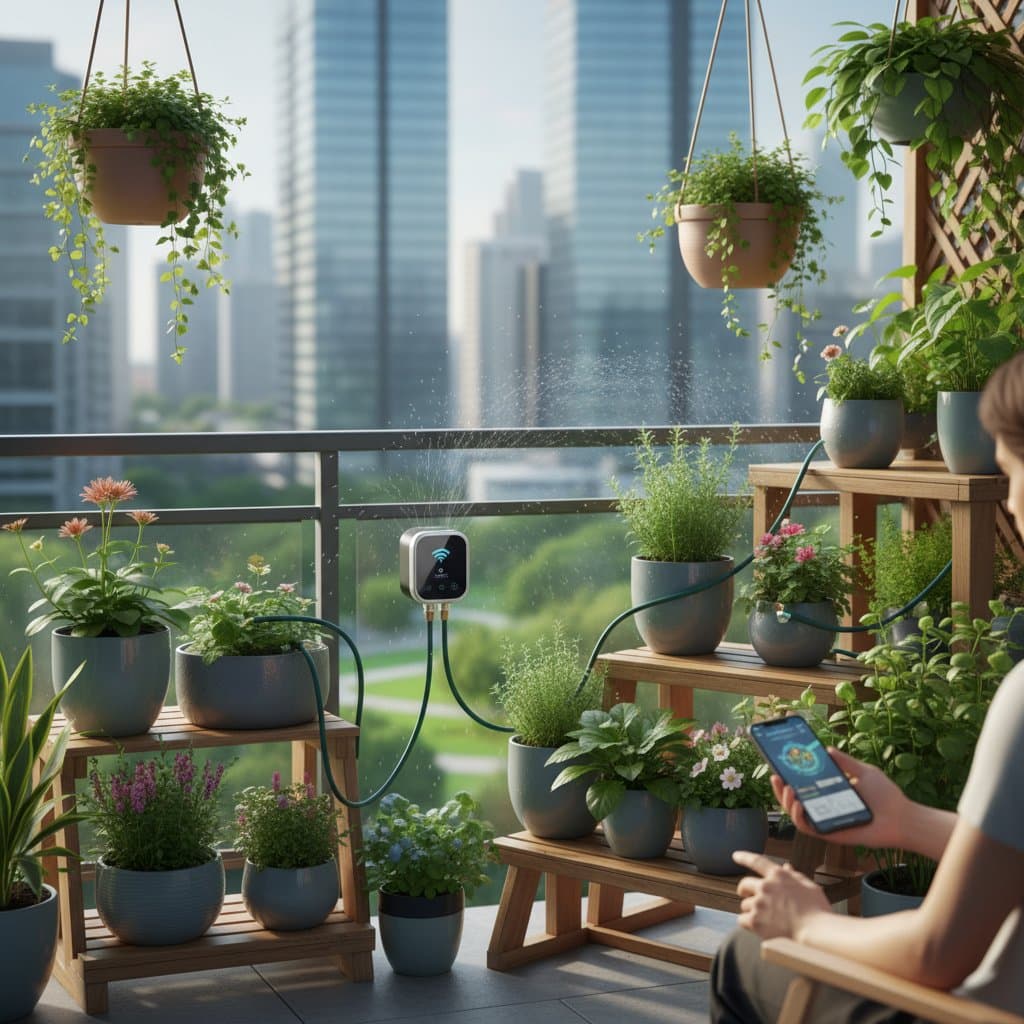
Introduction to Automated Balcony Gardening
Balcony gardens offer urban dwellers a connection to nature, but manual watering demands consistent effort. An automated system delivers precise hydration, freeing up daily routines while preventing over- or under-watering. This approach suits small spaces and varied plant needs, promoting healthier growth with minimal intervention.
Step 1: Plan Your Layout
Assess the balcony dimensions and pot positions to map water paths. Identify the water source, such as an indoor faucet or outdoor spigot, and note sun exposure for plant-specific adjustments. Sketch a simple diagram labeling each pot and estimating tubing lengths to avoid excess material.
Count the number of plants and group them by water requirements, like herbs needing frequent moisture versus succulents requiring less. This organization allows for zoned irrigation, ensuring efficiency from the start.
Step 2: Select Essential Components
Choose a battery-operated timer for scheduling water delivery, ideally with multiple cycles to match daily or weekly needs. Opt for 1/4-inch mainline tubing, durable connectors, and adjustable drippers rated for low pressure. Include an inline filter to trap debris and a pressure regulator to maintain steady flow.
For gravity systems without direct water access, select a 5-gallon reservoir and a submersible pump. Verify compatibility with balcony conditions, such as weather-resistant materials for outdoor exposure.
Step 3: Assemble the Tubing Network
Connect the timer to the water source using threaded adapters for a secure fit. Run the main tubing along balcony railings or walls, securing it with clips every 12 inches to prevent sagging. Branch off secondary lines to individual pots, cutting tubing to precise lengths with a sharp utility knife.
Position drippers at the base of each plant, inserting them into the tubing ends. Use T-connectors for splits and end caps to seal unused lines, creating a closed loop that maximizes pressure distribution.
Step 4: Position Drippers and Set Schedules
Insert one or two drippers per pot, adjusting flow rates from 0.5 to 2 gallons per hour based on soil type and plant size. For larger pots, place drippers near the root zones to target moisture delivery. Secure lines with stakes or weights to keep them in place against wind.
Program the timer for short sessions, such as 10 minutes twice daily during peak summer heat. Factor in rainfall by incorporating a rain sensor if available, pausing cycles during wet weather to conserve resources.
Step 5: Test the System
Activate the water supply and observe each dripper for uniform output. Inspect connections for leaks; if detected, trim the affected tubing squarely and reattach fittings firmly. Confirm that moisture reaches the soil in every pot without bypassing targets.
Monitor runoff at the base; excessive pooling indicates over-delivery, so shorten run times or lower flow settings accordingly. Run a full cycle and measure output in a few pots to verify even distribution across the setup.
Budget Considerations
An automated balcony irrigation system proves affordable for beginners. Expect costs in these ranges:
- Timer: $25 to $60
- Tubing and connectors: $15 to $30
- Drippers: $10 for a pack of 20
- Filter and pressure reducer: $15 to $25
- Total for a small setup: $65 to $115
First-time installation requires two to three hours. Subsequent tweaks or expansions take mere minutes, allowing quick adaptations as your garden evolves.
Strategies to Minimize Expenses
Employ a gravity-fed reservoir from a bucket if no faucet exists; add a low-cost pump under $20 for automation. Clean and reuse tubing annually to extend its life. Select versatile adjustable drippers that suit multiple plant types, reducing the need for replacements.
Invest in the filter and pressure reducer despite initial costs; these components prevent clogs and bursts, avoiding expensive repairs down the line.
Maintenance and Organization Practices
Organize supplies for effortless upkeep, ensuring the system operates reliably season after season.
- Store spare connectors, drippers, and plugs in a clearly labeled container.
- Mount the tubing cutter on a nearby hook for easy access.
- Keep a fine brush or pin available to unclog emitters promptly.
- For pump users, coil cords tightly and position them away from moisture.
If managing multiple zones, attach tags to tubing sections identifying groups like vegetables or ornamentals. This labeling simplifies adjustments and troubleshooting.
Advancing Your Garden Automation
With automation in place, your balcony thrives independently, shielding plants from drought stress and fostering steady progress. Begin by evaluating your current setup and acquiring core items like a timer and basic kit. Dedicate a calm weekend slot to assembly and initial testing.
Observe plant vitality post-installation: foliage remains turgid, development balances, and soil maintains consistent dampness. This shift grants not only spared time but also greater assurance in sustaining a vibrant urban oasis.